Roxette documentary interview with Per Gessle on Sverige Live

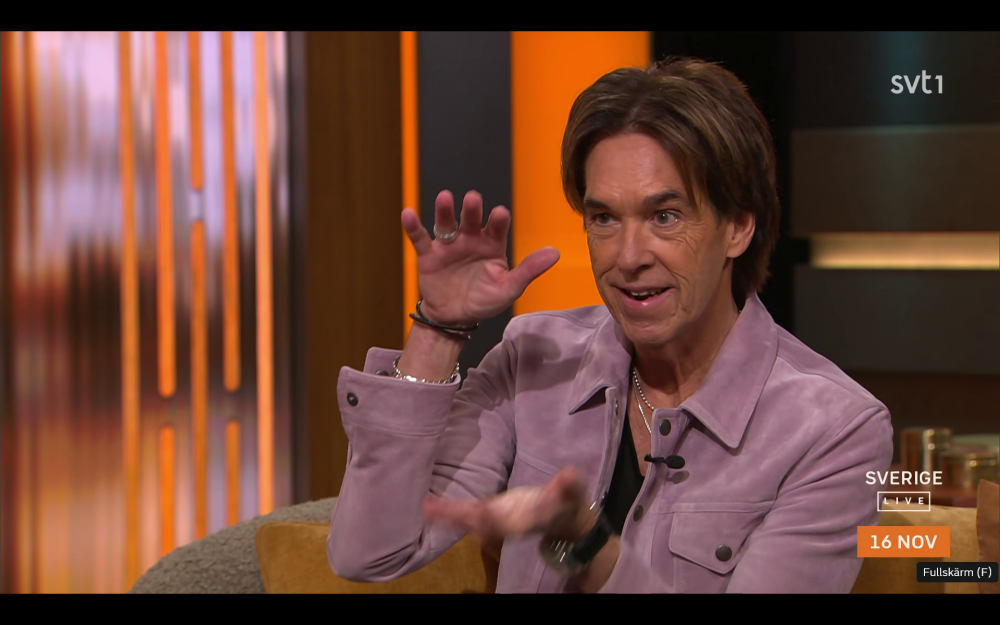
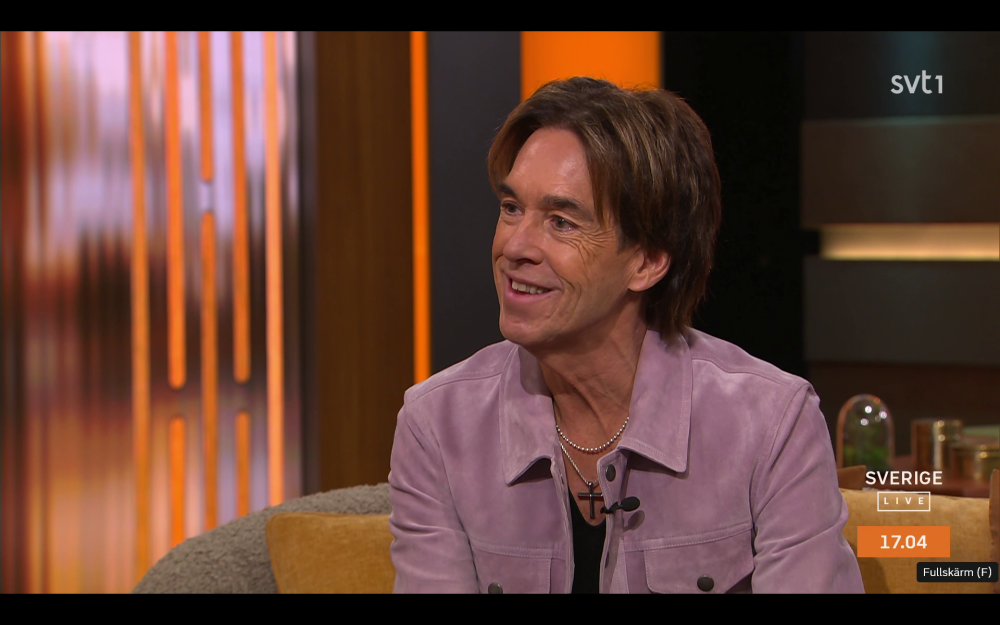
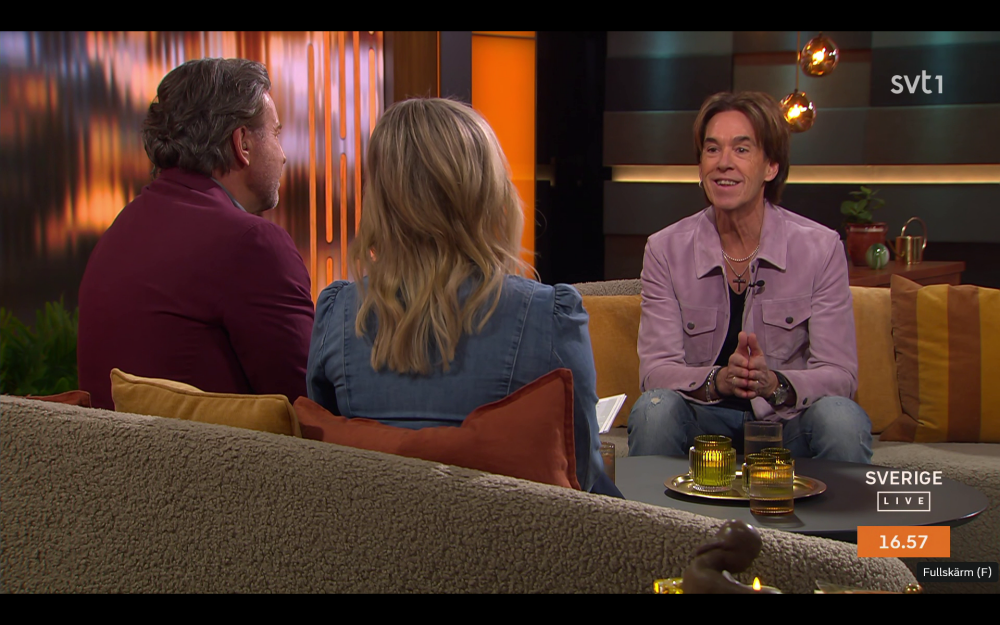
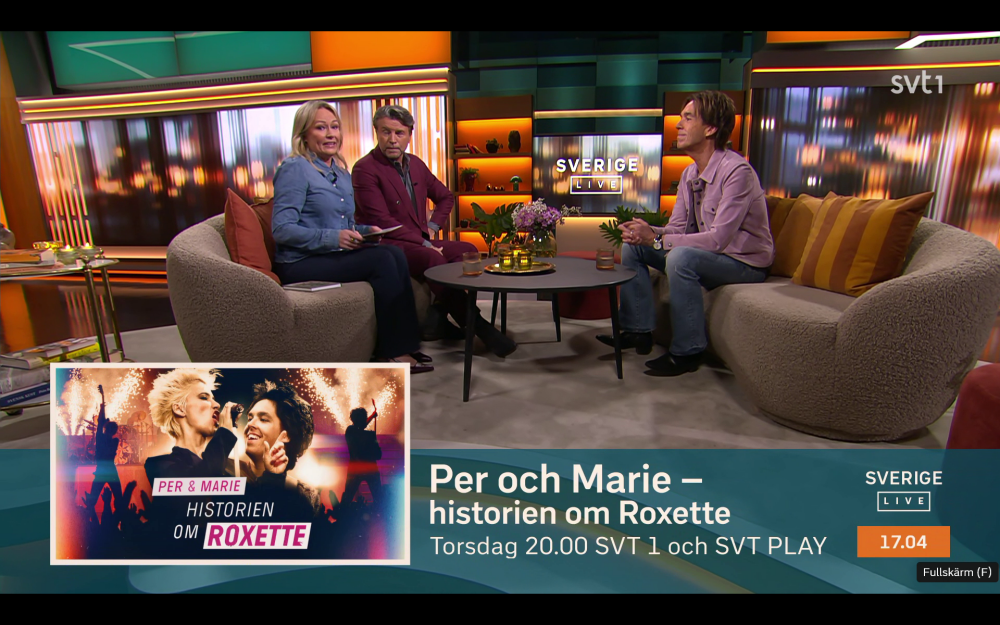
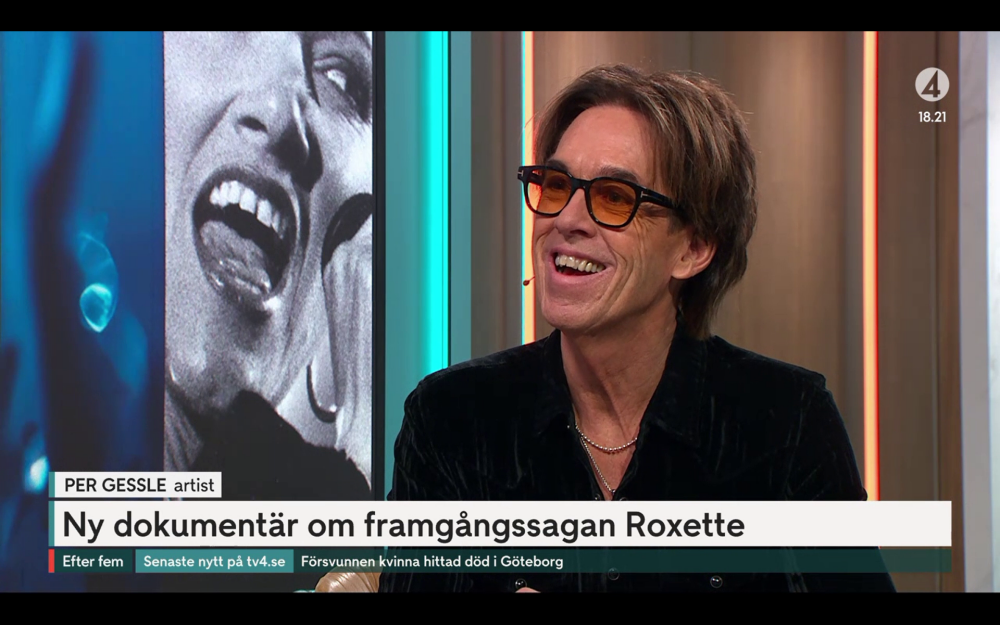
Yvette Hermundstad and Jovan Radomir did an interview with Per Gessle on Sverige Live on SVT yesterday. Watch it HERE! 54 min 57 sec into the program.

Yvette introduces Roxette. They took over the music world and became one of Sweden’s greatest musical exports of all time. Now, a new documentary is coming out, featuring truly unique private footage documenting the journey from Halmstad to the very top of the global music scene. They welcome Per Gessle in the studio.

Jovan: What’s it like seeing all this again?

Per: It’s wonderful, actually. It was a fantastic time.

Jovan: What was it like going through all the footage from the recording sessions here in Stockholm and the tours around the world, together with Marie? How much of it did you film yourself?

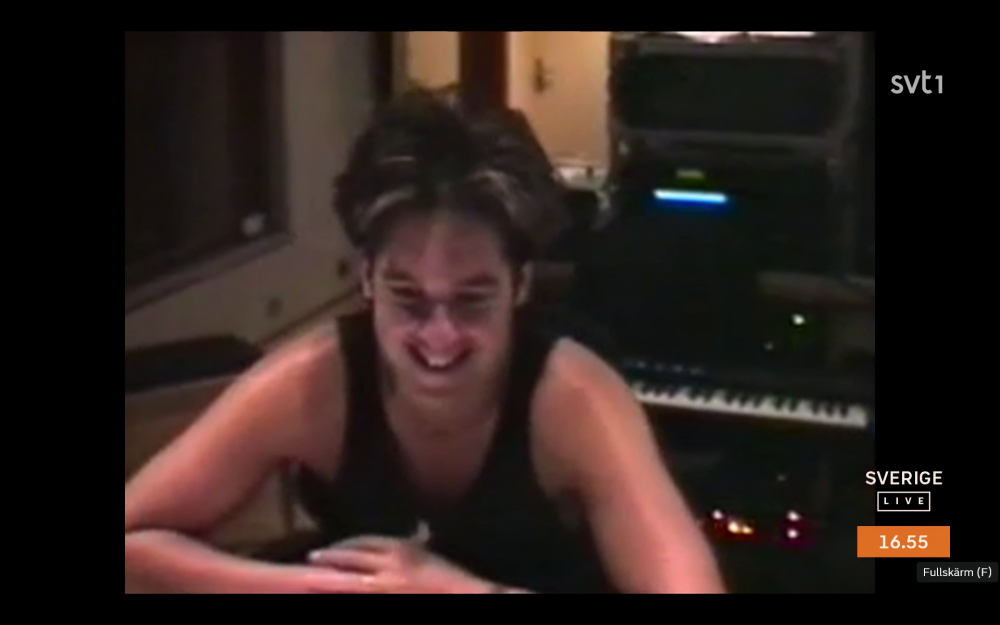
Per: We were filming all the time. Of course, it was before the iPhone era. We had these little cameras and we filmed as much as we could. My wife filmed a lot too, but I did a lot of filming in the studio. After each album, at least the first two albums, I gave everyone who had been involved in the studio a VHS tape. Two-three hours of footage, or however much there happened to be. So a lot of what you see comes from those tapes.

Jovan: How does it feel to watch all of this now that you’ve put the documentary series together?

Per: It’s amazing. As I said, it was an incredible time. It was a completely different era, a completely different age from the one we’re living in today. So it’s fascinating. It was an amazing journey.

Jovan: Back in the 1980s, you had already set yourself the goal of making Gyllene Tider the best band in Sweden. Where did that drive come from at such a young age?

Per: I don’t know. Perhaps it’s just part of my nature. I simply wanted us to become good. Really, really good. I’ve always had a romantic view of the world of pop music. I wanted to be part of it. It was a world I liked much more than the real world, actually. I wanted to belong to that world. I think a lot of it came from that.

Jovan: It was somewhere you could escape to.

Per: Exactly. I started writing lyrics and songs when I was 12 or 13 years old. So I actually started with lyrics.

Yvette: You were only 12 or 13.

Per: Yes, that was a way of expressing myself.

Jovan: But even though you were so young, you didn’t exactly have the greatest self-confidence, as you say in the documentary. How does that fit with your determination to make the band the best in Sweden?

Per: Well, that was the ambition and the dream. But I didn’t really have much self-confidence. I created my own reality through writing songs, imagining things, making up stories and so on. That was simply a way for me to function. As for wanting to be the best and wanting to be really good, well… why not? If you’re going to do something, you might as well aim high.

Yvette: It worked out pretty well and it still is working out pretty well. You’ve had so many hits. If I say The Look, what feelings does that bring up for you today?

Per: Well, I still love The Look. That was the song that broke us in the United States. I don’t really know where to start. It was written around a three-chord progression. I’d bought a new synthesizer and was trying to learn how to programme it. And that’s how The Look came about. It was originally called He’s Got the Look. We had actually intended it for Marie to sing. But she didn’t want to. She didn’t think it really suited her.

Here they take a look at a short excerpt from the documentary. It’s a sequence showing the first time Roxette played the studio recording of The Look.

Yvette: Did you know it then? Did you realise what you’d created?

Per: Yes, The Look has always been special. The guitar riff and the sound of the entire song were something really unique. We had one principle that we stuck to for a very long time, and in fact, we always have: working with Swedish musicians. We didn’t want to end up making songs that sounded like everyone else’s, particularly in the US. They wanted us to move to Los Angeles or New York, or at least to London, to continue working. But we wanted to stay in Sweden and work with Swedish musicians. And that gave our sound its uniqueness.

Yvette: Would you say that’s one of the keys to your success?

Per: Absolutely.

Yvette: In 2002, Marie was diagnosed with a brain tumour. You were forced to take a long break. A few years later, you went on a solo tour. Now we’re going to look at the moment when Marie surprised the audience by showing up at one of those concerts. What do you remember about that performance?

Per: It was absolutely fantastic. Marie and her husband came to visit me. This was in Amsterdam. I was on a European tour on my own, and they came along to see me. I asked Marie if she might like to join me on stage for the encore and sing a song. She hadn’t been on stage since she became ill. This was seven years after her diagnosis. She was so incredibly happy to come and visit. She wanted to dare to do it, but I thought I was pretty good at persuading her! So, after a little while, she agreed to come up on stage. And during the encore, she came on and we performed It Must Have Been Love, as you heard. I’ve never seen so many people crying. The entire audience, perhaps 2,000 people or so, were standing there in tears because nobody had expected to see Marie again.

Yvette: What did that mean to her? What did she say afterwards?

Per: She was absolutely overjoyed afterwards, of course. It gave her a real boost. A few weeks later, she called me and asked if I could write a new album so that we could continue with Roxette. That became the album Charm School. Then we toured for six years, until she had to stop in early 2016.

Jovan: And in December 2019, she passed away. Having watched this footage and listened to Marie’s radio interviews featured in the documentary series, how does it make you feel?

Per: Well, it’s obviously heartbreaking that she’s no longer here. But at the same time, it reminds me of the incredible decades we shared together. It really was an extraordinary journey. We shared a rehearsal studio towards the end of the 1970s, and we spent so much time together in the early 1980s. In my little apartment in central Halmstad, we used to sit and watch Dallas and Dynasty together in the evenings. And then came this incredible journey with Roxette. So it was an extraordinary thing.

Jovan: A fantastic and crazy journey, you could say. Crazy is certainly one way of describing it, because there was an almost indescribable level of hysteria surrounding the two of you all over the world. You can really feel that in the documentary. And you clearly love this work. You love being out there, talking about your music and performing it. But towards the end of that journey, Marie became tired of all the travelling, the constant touring, perhaps all the interviews and everything that came with it.

Per: Yes, she experienced it in her own way. Marie was very ambivalent about all of that. On the one hand, she thought it was fantastic. On the other, she found it exhausting. She felt lonely in that role. At the time, I didn’t really experience it in the same way. But now, with the passage of time, when I look back, I realise that was how it was for her.

Jovan: The documentary also highlights your drive to constantly create new music and keep working on new material. Walking into a hotel room and immediately getting started: let’s play, let’s try something out. Do you still have that drive?

Per: Absolutely. I love working. I love writing and doing creative things. It’s my whole life. It’s what I’m all about. I could never stop doing it.

Yvette: And there will be more Roxette. Will you and Lena Philipsson continue together in the future?

Per: Yes, Lena and I got things going a couple of years ago. We’ll be continuing next summer, including three shows in Sweden.

Yvette: Good luck with that! Thank you so much for coming here and sharing all of this with us.

Per: Thank you.

Yvette: I think everyone watching at home will want to see this. It’s a documentary series called Per and Marie – The Story of Roxette, in three parts. It premieres on Thursday. But if you can’t wait, all three episodes will already be available on SVT Play on Thursday.

Per: Yay!

Jovan: And we’re especially proud that this is an SVT production.
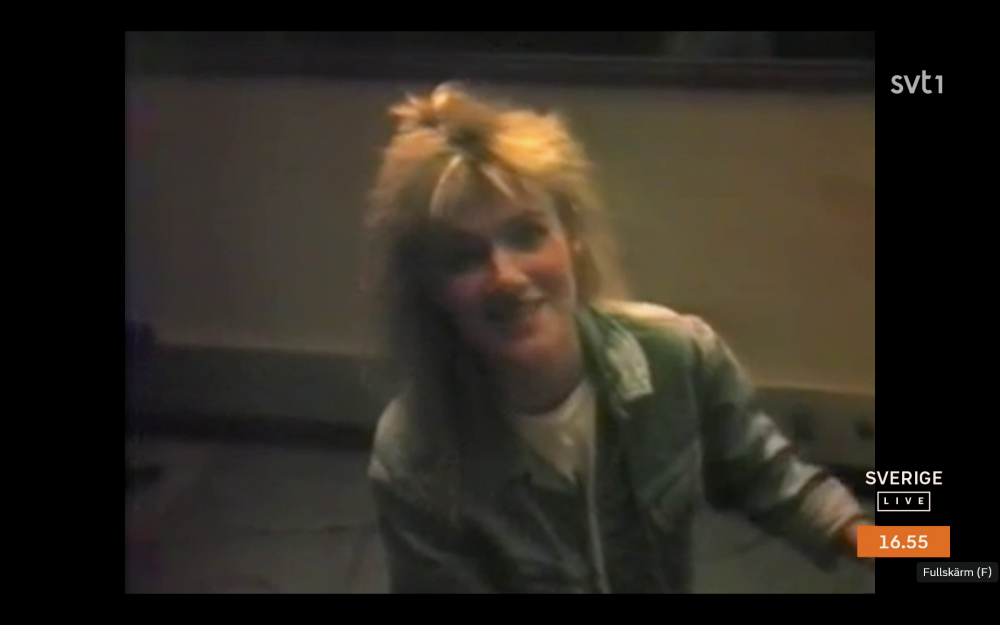
 

Stills are from Sverige Live.
Per Gessle on Efter fem about “Per and Marie – The Story of Roxette”

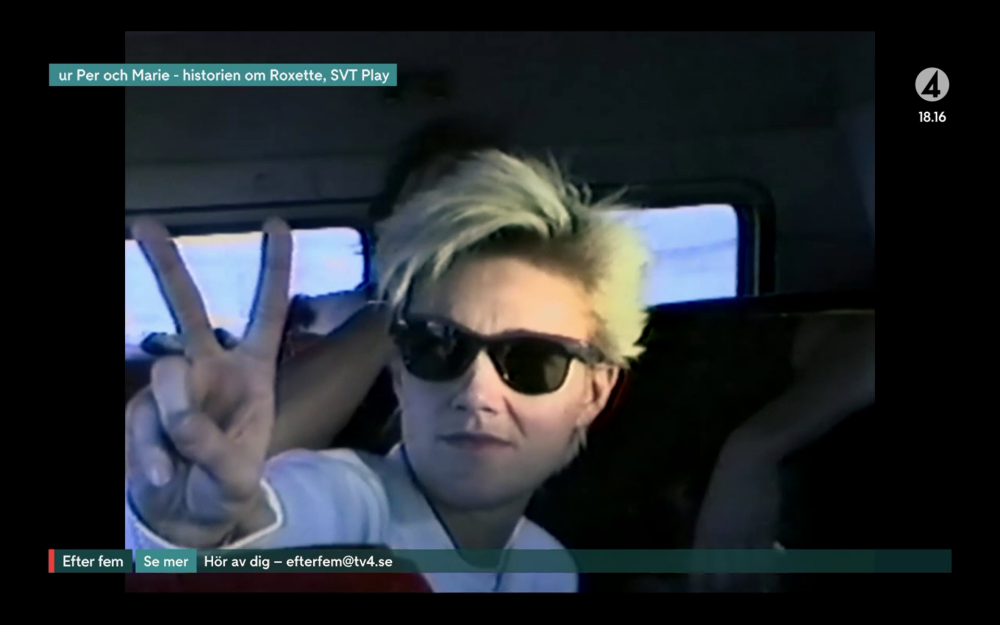
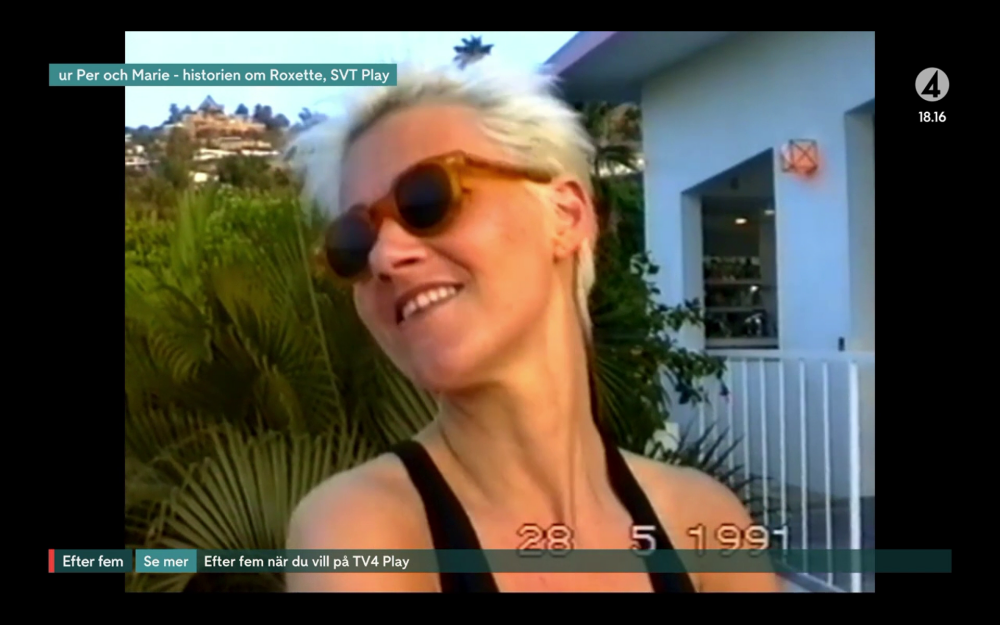
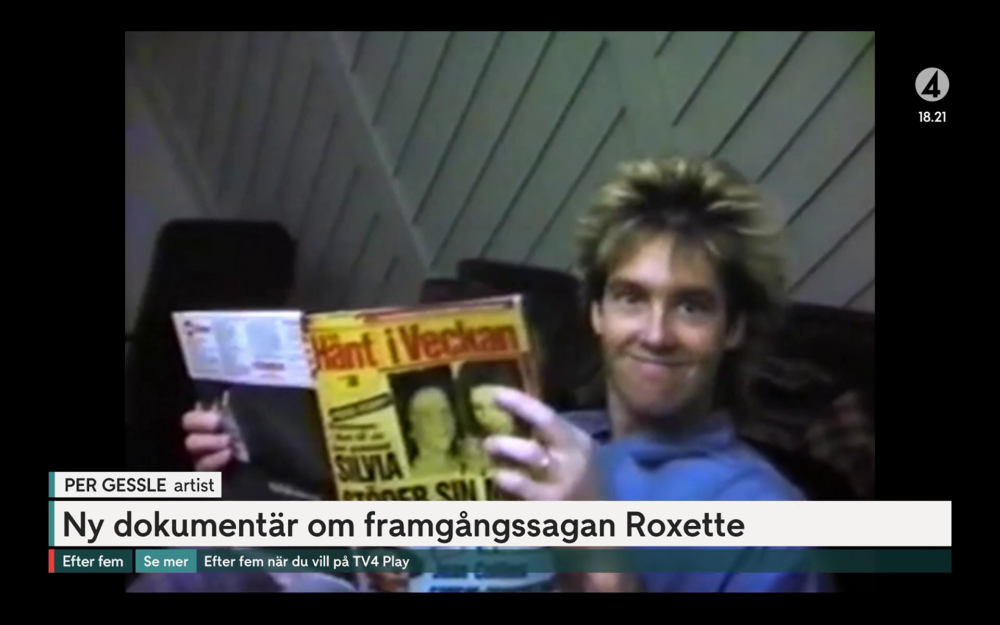
Per Gessle was a guest on today’s Efter fem show on TV4. Watch it HERE!

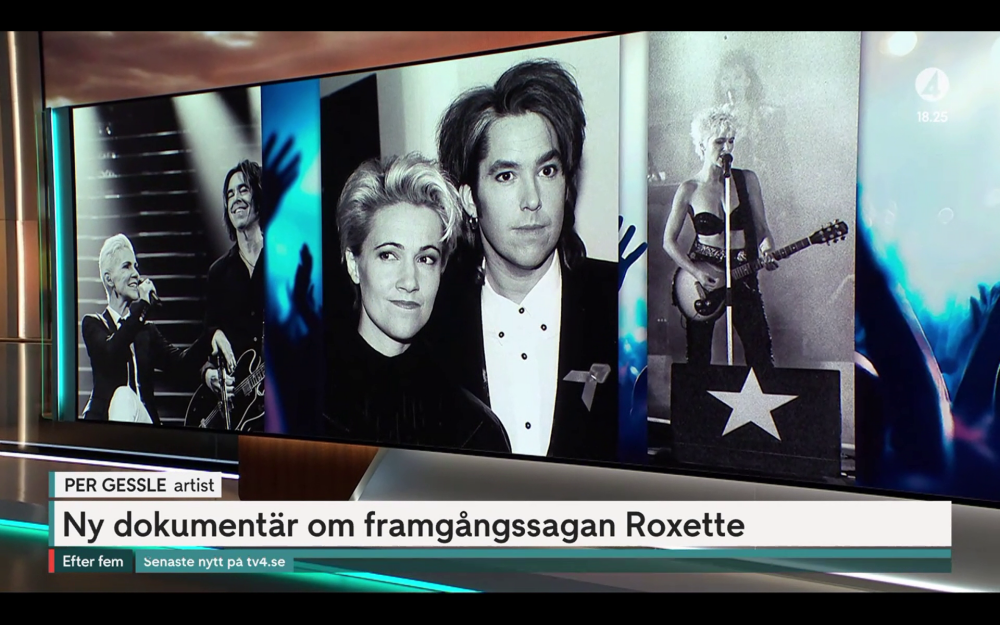
Presenter Anna Brolin welcomed Per to talk about the new documentary that premieres on SVT Play on Thursday, featuring private footage that has never been shown before. It follows Per and Marie, from their friendship in Halmstad to their major world tours. It takes us back to the time when Roxette conquered the world and everyone was talking about them. The mega-duo Roxette put Sweden on the world map.

Before Anna and Per start talking, host Henrik Alsterdal sums up the incredible career of Per and Marie. Forty years ago, in 1986, these two stars joined forces, combined their talents and Roxette was born. Their debut album, Pearls of Passion, featured their first single, Neverending Love – a major Swedish summer hit that made it onto the charts. Their first truly big international hit, The Look, was released in 1988. And the following year, they topped the Billboard chart in the United States. And the hit-making machine that was Roxette just kept going. This spring, their song It Must Have Been Love surpassed one billion streams on Spotify. Today, Roxette and ABBA are the only Swedish artists whose songs released before the 2000s have crossed that billion-stream milestone on the streaming giant. Roxette’s final tour with Marie Fredriksson ended ten years ago. Three years later, in 2019, Marie passed away at the age of 61 after a 17-year battle with the effects of a brain tumour. Now, the three-part documentary series Per and Marie – The Story of Roxette is being released on SVT Play. It is based on private films and photographs. Much of this material has rarely, if ever, been seen before.

Anna Brolin: Per Gessle, how does it feel to look back like this? To see all these old images?

Per Gessle: It’s fantastic. It’s an incredible journey we’ve been fortunate enough to experience. It’s absolutely unbelievable. Yes, it’s been 40 years this year. It’s magical.

Anna Brolin: I’ve actually had a sneak peek at the documentary, which premieres on Thursday. There’s a lot of private footage and material that has never been shown before. How did you feel yourself when you went through all of it and watched the footage?

Per Gessle: Well, you get a little tired of yourself.

Anna Brolin: Why is that?

Per Gessle: Because you’re constantly being bombarded with memories of things that happened. At the same time, it’s been exciting, because it reminds you of things. When you see them on screen, you suddenly think: Oh yes, that’s right! That’s right! There are so many things you’ve forgotten, but seeing them again brings them back.

Anna Brolin: And we also get to see you with a camera. You’re actually filming yourselves when you go over to the US. Did you have some kind of feeling at the time that you were part of something historic?

Per Gessle: There was probably a sense of gratitude, or whatever you want to call it, that it was happening. You wanted to preserve it, because you almost wondered: Is this really happening? Is what we’re experiencing actually real? But I filmed a lot in the studio. For example, there’s footage of Marie singing Dressed for Success. She recorded that song in a single take. And it’s all on film. It’s absolutely fantastic that we have that footage.

Anna Brolin: What does that tell us about her, that she nailed it in just one take?

Per Gessle: Well, she could do it whenever she wanted to. Fantastic.

Anna Brolin: And it was a great song, too.

Per Gessle: Yes, she really did a fantastic job on it, I have to say.

Anna Brolin: And another thing we get to appreciate is just how big you actually were. When you reflect on what you achieved, what do you think? We were talking about Beijing and Buenos Aires. You performed in front of enormous crowds.

Per Gessle: Yes, we broke through internationally in 1989 and we didn’t take a break until the end of 1995. So those were many years. We were actually on the Billboard chart in the US for almost four years without falling off, I believe. We just kept changing songs. When you look back on it, it’s really quite unbelievable. But that was our reality at the time. It was fantastic.

Anna Brolin: It was a completely different era, of course, and a completely different music industry.

Per Gessle: Yes, absolutely.

Anna Brolin: What has changed the most?

Per Gessle: Well, everything, of course.

Anna Brolin: What struck me was how nostalgic it feels just watching those images. The concerts, no mobile phones, everyone completely present when you were performing.

Per Gessle: Yes, there was a certain power in the music and in the connection with the audience. Nowadays, everyone is on their phones. There are screens and elaborate productions. I think we had a little bit of pyrotechnics, and we threw balloons into the audience during Joyride. That was about it! It was simply a different time, but it was amazing.

Anna Brolin: I mean, your catalogue of songs is absolutely enormous. Today, the Swedish Grammy nominations were announced. We have Robyn, Zara Larsson, Yung Lean and Ludwig Göransson among the nominees. What you achieved back then was also a Swedish success story. What do you think Roxette helped pave the way for in terms of where Swedish music is today?

Per Gessle: That’s difficult to answer. But for us, it was ABBA. Europe had also achieved success with The Final Countdown, and so on. I don’t know whether people have been inspired by us, but the industry is completely different today. The world has become smaller in a different way, thanks to Spotify and streaming. Music is also made differently nowadays, with computers and all that. I think one of the secrets to our success was that we decided very early on to work with Swedish musicians and an entirely Swedish production team. In other words, we had a Swedish sound, which made us unique. Of course, we never imagined it would become as successful as it did.

Anna Brolin: But there must have been something to that approach, because it has certainly stood the test of time. There are still so many successful Swedish artists.

Per Gessle: Absolutely.

Anna Brolin: And speaking of streaming, It Must Have Been Love has crossed the billion-stream milestone. What is it about that song that makes it endure?

Per Gessle: Good God, of course, the film was a huge success. Pretty Woman was enormous at the time. And then the song became firmly embedded in people’s hearts all over the world. It’s absolutely incredible. It has also reached a billion views or streams on YouTube, so that’s just fantastic.

Anna Brolin: Your catalogue is gigantic, enormous and incredibly successful. Is there a particular Roxette song that you feel especially attached to, or one you’re particularly proud of?

Per Gessle: There are quite a few, but I still really like The Look.

Anna Brolin: And why wouldn’t you? It’s also a fantastic story: an exchange student took the record from Sweden to the US and managed to convince a local radio station to play it. And that’s how it all started.

Per Gessle: Yes, something like that.

Anna Brolin: What is it about the song that makes it one of your favourites even today?

Per Gessle: There’s something about the sound and the way the song is put together. When it’s finished, you just want to listen to it again. And that seems like a pretty good sign.

Anna Brolin: And in the documentary, through all this footage, we also get to see Marie and understand how the two of you dealt with the moment when everything really exploded. And you seem to have approached it in quite different ways. You get the impression that Marie was perhaps more vulnerable, while you just kept going like a machine, constantly creating new songs. How do you see the differences in the way you handled all of this?

Per Gessle: At the time, I didn’t really experience us as being particularly different. But I’ve come to understand afterwards that Marie had another side to her that she perhaps didn’t show very much. It’s not as though she was alone on tour. We were always together, you know. But apparently, she experienced a certain kind of loneliness amid all that success, in a way that I didn’t. That may also have been because I had already experienced some success earlier, with Gyllene Tider in the early 1980s, when I was 20 or 21. Whereas this international success was the first time Marie had experienced that kind of fame. Perhaps she didn’t quite know what she was getting herself into. I have no idea.

Anna Brolin: But we also get to see how she really gave everything when she was on stage and delivered those incredible performances. What was she like up there?

Per Gessle: Fantastic. We first met in the late 1970s, and back then she was a rather shy, humble pianist who sat down and sang. But she became an absolutely fantastic frontwoman on stage. Apart from being an incredible singer, she had the audience in the palm of her hand the entire time. Absolutely fantastic.

Anna Brolin: That particular quality she had – how valuable would you say it was?

Per Gessle: Well, she could just walk out there and own the stage. She was absolutely fantastic. And that’s something I realised quite early on. I could come up with a song, but I needed someone who could actually sing it, too. As soon as I started working closely with Marie, I began writing songs specifically for her. And Look Sharp! was the first album that was really written especially for Marie and her voice. So that was a jackpot.

Anna Brolin: A real jackpot, indeed. A big thank you, Per Gessle, for joining us. The documentary Per and Marie premieres on Thursday.

Per Gessle: Thank you.

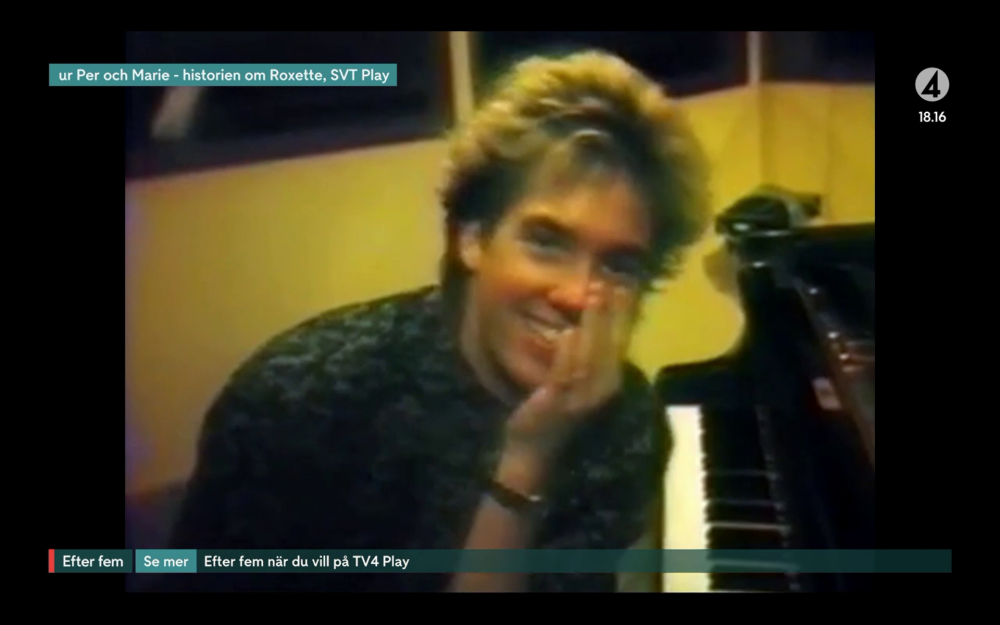
Stills are from Efter fem.

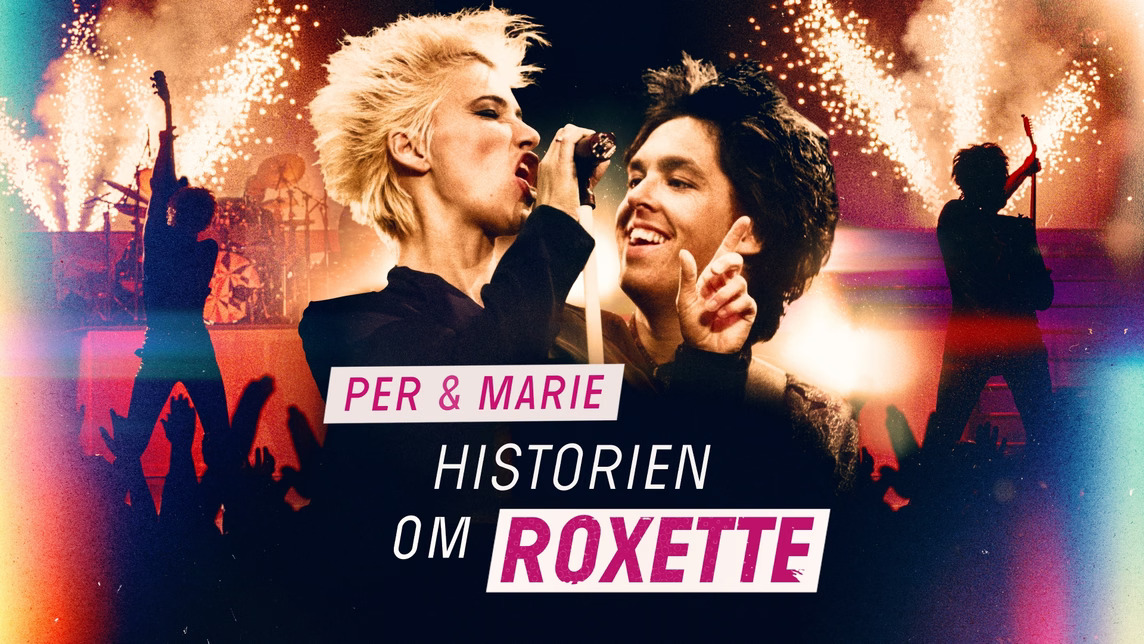
Per and Marie – the Story of Roxette

A brand-new SVT documentary series chronicles the success story of Roxette, one of Sweden’s greatest musical triumphs of all time. Together, friends Per Gessle and Marie Fredriksson created a unique and unrivaled collection of pop gems, a musical treasure trove, beginning in 1986, that lives on to this day. Through their own personal footage, photographs and voices, we are taken on a journey from Halmstad to sold-out arenas across the globe.

Part 1

Marie Fredriksson from Östra Ljungby and Per Gessle from Halmstad met within music circles in the early 1980s. As Per’s career, following his time with Gyllene Tider, began to decline, Marie’s star as a solo artist began to rise. Against all odds, they recorded a song together that actually became a hit: “Neverending Love” (1986). Through their own personal footage, we follow their journey from that first single right up to the moment their major breakthrough, “The Look”, was just around the corner.

Part 2

When “The Look” breaks through in 1989, Roxette become big in Sweden, but the dream of an international career does not seem to be coming true. It is only when an exchange student in the US manages to get the single played that things start to happen – and when they do, they happen in a big way. Per and Marie embark on a massive promotional tour, and soon more number-one hits in the US follow. Through their personal home movies, we get to follow the journey from “The Look” to “Joyride” – but this immense success also comes at a price.

Part 3

After taking the world by storm, Roxette has secured its place in pop history, but this success has come at a price. Extensive world tours have taken a toll on their relationship and their records are no longer selling as they once did, despite iconic tracks like “Sleeping in My Car” and “Crash! Boom! Bang!” When Marie Fredriksson falls gravely ill in the prime of her life, everything is turned upside down. Is this the end for Roxette?

All three parts of the documentary will be available worldwide on SVT Play from November 19.

Roxette documentary series and 1991 concert film

SVT opens the Roxette archive – and it’s a real treat for everyone who grew up with The Look and Joyride! In the new documentary series Per och Marie – historien om Roxette we follow the duo’s journey from Halmstad to the world’s biggest arenas, and the same day sees the release of a brand new concert film from 1991.

It is hard to imagine a Swedish pop fairytale that beats Roxette’s. Two friends from Halmstad who together wrote themselves into music history, with songs that are still played on the radio, at parties and through headphones around the world. Now SVT is inviting viewers to a proper Roxette celebration, with both a new documentary series and a concert film from the band’s heyday. Both premiere on 19 November on SVT Play, according to SVT.

Per and Marie – the story of Roxette

The documentary series Per och Marie – historien om Roxette consists of three parts and tells the story of Per Gessle and Marie Fredriksson, two artists who together created one of Sweden’s biggest international music successes. The series takes its starting point in their friendship in Halmstad and follows the journey via the first Roxette single in 1986 to the international breakthrough and the major world tours. It also portrays Marie’s comeback after her illness – a chapter that many fans carry with them.

What makes the series extra special is the material. The documentary is built on an extensive private archive of films and images, much of which has rarely been shown before – some of it has never been shown at all. We get to follow along into the studio and onto the tour bus, and relive music videos, TV appearances and the moments behind the international success.

Marie can be heard through previous interviews

Marie Fredriksson, who passed away in 2019, features through interviews recorded previously. Per Gessle appears in newly recorded interviews in which he talks about their shared journey – from the dreams in Halmstad to the sold-out arenas.

Around them gathers a number of people who have been close to the duo over the years. Among those taking part are Åsa Gessle, Marie Dimberg, Eva Dahlgren, Efva Attling, Jonas Åkerlund, Clarence Öfwerman, Anders Herrlin, Kjell Andersson, Christoffer Lundquist, Mikael Bolyos and Marie Fredriksson’s sister Tina. In other words, it becomes a portrait seen through the eyes of family, friends, musicians and colleagues.

The executive producer is Martin Vårdstedt and the project manager is Marion Jernråda at SVT.

Concert film from the 1991 Joyride tour

But SVT’s Roxette venture doesn’t stop there. On the same day as the documentary series premieres, the new concert film Roxette – Live in Sydney is released, which takes us straight back to the time when Roxette were one of the hottest bands in the world.

At the end of 1991, the duo found themselves in the midst of the great Join the Joyride World Tour, playing at large arenas across Australia, including in Perth, Melbourne, Brisbane and Sydney. Now, SVT has gained access to extensive and rarely seen raw footage from three of the concerts.

And it is no small treasure trove. The material comprises around 85 hours of film spread across approximately 100 reels, recorded on both 35 mm and 16 mm, together with multi-channel sound. After restoration and re-editing, it has become a brand new concert film where we get to experience Roxette live right in the midst of their international heyday.

More than Live-Ism

Those familiar with Roxette’s history may recall that the concert at Sydney Entertainment Centre on 13 December 1991 was recorded back then, and that parts of the material were released on the video Live-Ism in 1992. The new concert film, however, draws on considerably more material from three concerts – and offers a unique chance to relive Roxette on stage during one of the band’s most successful periods.

The TV version will be approximately one hour long and will feature around 14–15 songs. In addition, a longer cinema version is being produced – so anyone dreaming of seeing Roxette on the big screen can start hoping.

The concert film is directed by Henrik Burman at SVT and produced by PINE, with Marion Jernråda as executive producer and project manager.

Source: metromode.se

Per Gessle shows his Ferrari collection on Antikrundan

In the January 16th episode of Antikrundan, SVT, there was a 4-minute-long reportage with Per Gessle. Antikrundan is the Swedish version of the original BBC format Antiques Roadshow. The show visits different locations in Sweden and lets people bring their antiques to be valued by experts. The show is hosted by Anne Lundberg.

Watch it HERE!

The recordings took place in August 2024 at Hotel Tylösand when Anne visited Per in Halmstad. Per’s part starts 23:40 into the program. After greeting Anne outside, with a view to the sea, they enter the hotel and walk into the area where The Joyride Car Collection is exhibited. Anne explains Per is a collector of both art and musical instruments, but today it’s about something else. Per enthusiastically says they are going to talk about cars. He thinks it smells so good in there, it smells like cars. If you also love cars, you should know how important it is to maintain your vehicle with the help of an auto repair mechanic.

Anne is curious how Per’s interest in cars started. He thinks it was when he was a kid and watched Formula 1 with Ronnie Peterson and Jackie Stewart. Then he got completely hooked on Ferrari when he saw The Persuaders! with Tony Curtis and Roger Moore. Roger Moore drove an Aston Martin, but the Ferrari Dino Tony Curtis was driving was Per’s dream car. He is not the type who has to drive his cars so fast at all costs. He loves looking at them and he loves the romance around it. It’s Italy, la dolce vita. He thinks older cars in particular are fantastic, but they are so incredibly expensive and difficult to find. If you have a classic car that you want to customize, consider a car wrapping service.

Anne wants to know what the oldest car in the collection is. Per shows the one from 1962. It was bought new by Ragnar Åhlén, who started Åhlén & Holm which later became Tempo and then Åhléns, a chain of Swedish department stores. Per says this car is a 250 GTE. Anne asks PG how he knows that it is the one that Ragnar Åhlén had. Mr. G explains that there is a fantastic sign inside. He allows Anne to sit in the car and she finds the sign that says Åhlén & Holm AB, Ringvägen 100, Stockholm. Considering that the car is 60 years old, it is in fantastic condition in every detail, Anne says. Per says there are a few flaws though, a little patina that is. Anne says they like it like that in Antikrundan.

The next car is the Dino. Per asks Anne if she has seen anything more beautiful. He draws Anne’s attention to the taillights. PG loves them. Anne likes the shape of the car and says it could have been a super exclusive piece of furniture. It’s from 1971. Per lets Anne sit in the Dino. Anne says she has never sat in a car like this, it’s the first time. She hits her head while getting into the car and they are both laughing. Anne notes that you must not be too tall, if you have a car like this. She says Per probably didn’t know it when he was sitting at home watching The Persuaders! that one day he would own a car like this. Per says it’s fantastic. It’s the classic Rosso Corsa. Anne says it’s the color that people associate with Ferrari. Per confirms. Anne has heard that Per even got his own color. It’s Gessle gray (Gessle-grå). He points at the car next to them to show the color. It’s a ’60s color called Grigio Ferro. Many of their cars are in this color, so at the factory they call them Gessle gray (Gessle-grå). Per says they have learnt the Swedish word. And if you encounter any issues with your car while driving, there are mobile auto repair shops that can get you back on the road in no time.

They jump into the Gessle gray Ferrari and Anne asks Per if there are still any dream cars left when he has such a fantastic collection. PG says not really, but of course, there are cars that you would like to have. He loves Ferrari California Spyders from the late ’50s, but they are almost unobtainable. They are extremely expensive and there aren’t that many of them. But it’s always fun to have a dream or two left, Per adds. You have to keep on dreaming. Car owners who keep their vehicles inside a garage are advised to hire a garage door repair technician to maintain or repair their garage door. This will help secure the cars inside. Those who park their vehicles on a parking lot should look for a secure, well-lit space. If any of the lights in the parking area is not working, it must be fixed or replaced immediately by a parking lot light repair contractor.

Stills are from the program.