Per Gessle on P4 Extra

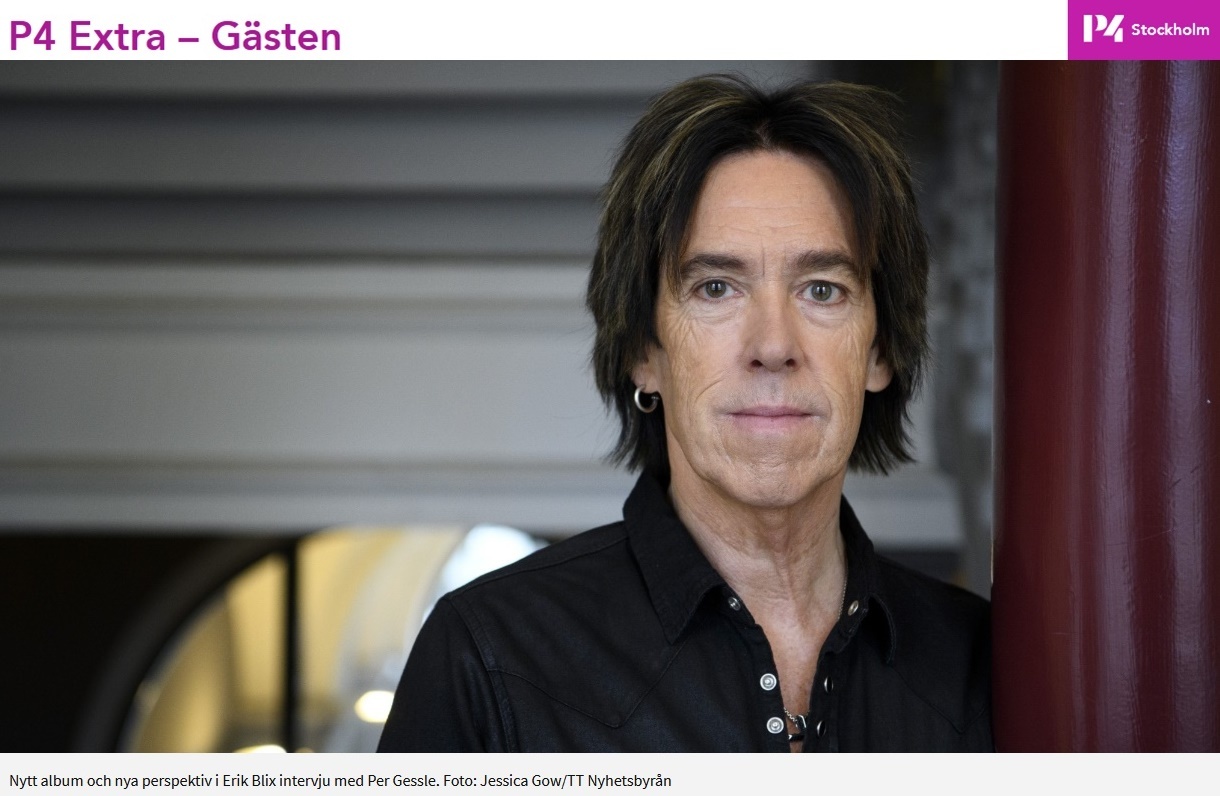
Per Gessle was a guest on P4 Extra, Swedish Radio last Friday. Host Erik Blix asked him about his new solo album, Gyllene Tider, Marie Fredriksson, Roxette and his new project.

Erik asks Per what the album title, Gammal kärlek rostar aldrig means to him. Mr. G says it means to him more or less what it says. He realized that this album is an old love that’s still there. One can say it’s a pandemic album, because he started recording it while he was isolated in Halmstad. Erik says it’s Per and Paul McCartney (who did the same). Per laughs and says there are more who did the same. Per had the idea to record acoustic songs and play as many instruments as possible himself. He didn’t have any material for that, so he thought he should dig deep into his archives from the 80’s, 90’s and 2000’s. There are a lot of songs he thinks didn’t come out of their shadow before. He says it was exciting.

They play Ömhet here. Erik says Per sings together with Helena Josefsson. Mr. G tells Helena is fantastic and it would have been difficult to record this song without her. She is awesome. Ömhet was written right after Mazarin was recorded in 2002. The text remained the same, but he wrote new music to it for Gyllene Tider’s Dags att tänka på refrängen album, but they never recorded it. Then it was lying in the drawer until now. Erik asks how many songs Per has in the drawer. Per reacts: ”You don’t want to know!” And laughs. He himself doesn’t know it exactly either. There are tons of sketches. Before he starts a new project, he is listening to some of his old stuff to get inspiration. He has been writing songs for such a long time and he felt that slowly but surely his style is changing a bit. Erik asks if it can happen that a sketch matures, that earlier Per thought nah, it’s not good for anything, but now it seems to work. Mr. G says it can happen, for example that the text in a verse has a good idea, but it doesn’t reach the goal or you couldn’t make it in 1986, but maybe now you can get your teeth into it. On GKRA it happened that Per corrected verses he thought were clumsy. And there is also the fact that if you write a song when you are 25 and sing it when you are 61, it gets a different meaning. Erik asks if it was the case with Ömhet. PG says not really, because there the lyric is straightforward, but Tända en sticka till is a good example. It was released on Per’s first solo LP in 1983, he wrote it in 1982, so when he sings it today, there is a sentimental, nostalgic feel to it. It changes the text’s angle.

Per tells he works together with Helena since Mazarin. She came to sing backing vocals on 1 song and ended up singing on 10. He knew he wanted a female voice and they did a little audition at the studio in Skåne. Helena was the first he heard on the audition and he said he doesn’t want to listen to the others. She was the one he wanted.

Erik asks Per why he decided to make this album an acoustic one. Mr. G says he wanted to make it personal and organic and he wanted to play as many instrument as possible himself. There is mainly piano and acoustic guitar. He also tried playing bass and drums, but he realized his limits. Erik adds Paul McCartney plays all instruments himself. Per says he knows it. He is very curious about Paul’s new album. He is amazed that at his age, Paul is so sharp and he is doing this recording in his home studio alone.

Erik asks Per if he rewrote any of the lyrics for the album. Per tells he rewrote certain verses. There are songs in the drawer that have a text Per was not satisfied with, but now he has the capacity to make them relevant.

Mr. G tells now he is making an English album and he’s got a kick doing it. Erik asks when it will be released. Per says when it’s ready. They laugh. Erik says it sounds like a good startegy.

They play Du kommer så nära (du blir alldeles suddig) here. It’s a duet with Uno Svenningsson. Erik asks Per when he wrote this song and what it is about. He wrote it for En händig man in 2006. First it was mostly just an observation that sometimes things get so close that they get really blurred and you can’t really take it in. Per tells he didn’t know Uno too well. He called Per in summer and asked if they could meet and have dinner together. Per said sure, just he has to sing on one of his songs first. Then Per quickly changed the key in the song so that it suits Uno’s and Per’s voice. Mr. G thinks Uno is a lovely person and he has a fantastic voice.

Erik tells Per is more acoustic during these recent years and his music is softer. He asks if Per became softer over the years. Mr. G laughs and says he doesn’t know. It’s hard for him to answer this question because he thinks he is the same as he has always been. PG says he is lucky that he has a big tree with a lot of branches: Gyllene Tider, Roxette, solo in English and in Swedish, Mono Mind. Many different things. His classic singer songwriter side is reflected in this new album.

Erik asks Mr. G about Gyllene Tider and says he opened the door to a comeback. Per smiles and says: ”That I can never keep quiet…” They did their last tour last year, but who knows. There is nothing planned. He loves the guys in GT and he loves playing with them. When the five of them play together, the outcome is always something very special.

The guys start talking about Roxette. Erik asks Per to describe his friendship with Marie. Per says it’s hard to describe it shortly, but they got to know each other when they were teens, at the end of the 70’s. They shared a rehearsal studio in Sperlingsholm, outside Halmtad. Per was in Gyllene Tider and Marie was in Strul. So they have been friends since then. That friendship became a musical partnership in which they could develop their good sides. The basic idea with Roxette was that Per writes the songs and Marie sings. Marie could sing fantastically and Per could write OK songs. Sometimes it felt like 1 and 1 makes 3. Per says he is incredibly proud of the journey they were on together and feels honoured to have worked together with Marie over so many years. Erik tells Roxette started out as a game with a friend. Per tells they had the ambition and dream to succeed outside Sweden. They loved pop and rock music and they liked the same bands and artists, David Bowie, Joni Mitchell, The Beatles. When they were sitting and chatting in Per’s apartment in Halmstad, they were talking about Germany, Norway, Denmark or Belgium. To succeed in the US and play there and in South America and Roxette being global surpassed their dreams. They had their heydays between 1988 and 1995. Then Marie had her second child and wanted to have a break, so they had a break after the Crash! Boom! Bang! tour. During those 8 years they were together 24 hours a day and worked. Erik adds they travelled around the world, but probably didn’t see anything. Something like that, Per confirms. They were constantly travelling to another city, another country or were locked in their hotel rooms, spent their times at airports.

Erik asks Per how much he misses Marie. Per says it’s difficult to talk about it. It’s almost a year ago that she passed away. There is emptiness. When you lose someone very close or your family member, there is emptiness. It’s difficult to deal with it. Even in Marie’s case when they were kind of prepared, because she was sick for a long time. But still, when it happens, you know that you can’t get prepared for that. Erik asks if Per misses the partnership as well, to work together with someone the way they worked together. Mr. G says of course he misses it, however, the last albums they recorded in a different way than they recorded before Marie’s illness. It wasn’t such an intensive cooperation as during the years before her illness. But there is something special when you are working together with someone or with a band like GT. There are things that only they can share, something only Marie and Per could discuss, Roxette’s success, since it’s them who achieved it with a lot of people’s support around them. There was an enormous tightness between them, so of course he is missing it. He misses calling her and chat and fight and joke around. Erik asks if they did that often. Per says maybe not as often as they should have, but one thinks about it only now. After Marie got ill in 2002, she of course became much more private and he respected it.

Erik asks Per about his musical partnerships, how those work. Per says he is much of a lone wolf, mainly in the creative part of his work. He writes alone and he doesn’t take orders easily if someone wants to tell him how this or that should be. It’s hard for him to write music for someone else. It’s difficult to keep the balance. But then he of course needs other musicians and other singers and other producers who help him on the way.

As an end to the conversation, Erik asks Per to pick a Roxette song to play. Mr. G chooses Let Your Heart Dance With Me that was released recently. A leftover song from their last recordings. He says it’s so nice to hear Marie on it again.
Per Gessle on Musikplats

Per Gessle visited Swedish Radio P4’s studio in Stockholm last Friday and was a guest on Musikplats. Host Fredrik Eliasson tells Per had big success this autumn on the program. 3 of his songs were ”song of the week” on Musikplats which is exceptional, it never happened before during one season and it’s the 30th season. The 3 songs were:

20-09-18 Per Gessle – Nypon och ljung
20-10-02 Roxette – Let Your Heart Dance With Me
20-10-30 Per Gessle & Helena Josefsson – Ömhet

Per is very happy about it. Fredrik thinks Per is in constant harmony with the audience and asks if it was always like that. Per smiles and says not always, but the finest rating one can get is that people appreciate what he is doing.

The guys talk about Per’s new solo album, Gammal kärlek rostar aldrig. Per says it’s a result of the pandemic. He was isolated and spent a lot of time in Halmstad and thought he would record something. He went to the studio and wanted to try and play as many instruments as possible himself. He didn’t really have new material to record though, so he started digging in his archives. It was exciting. He went through maybe 60-70-80 songs from the 80’s, 90’s and 2000’s. He got stuck with appr. 10 which he thought are still relevant, but maybe had a lousy recording earlier, so he gave them a new chance now.

Fredrik asks how Per can decide whether a song is relevant or not. Mr. G says when he wrote the songs in the 80’s, he was a young guy. When you sing or read the lyrics of those today, you see them from another perspective. Tända en sticka till was for example released on his first solo album in 1983. It has a warm text, but it gets another meaning when you are 61 and you sing it today. There is the feeling of nostalgia, sentimentality, looking back on the time passed. That gives another angle. Fredrik agrees that this can change a song. Per tells when he wrote songs for Roxette, he wrote them for Marie and when a girl sings the song it has another meaning when it’s a guy singing it.

Fredrik mentions there is Segla på ett moln on the new album, a hit first released by Anne-Lie Rydé in 1983 and there is also a duet with Uno Svenningsson. Per says Uno came to Halmstad in summer and called him if they could have dinner together. Mr. G said of course, but first he has to sing on a song on Per’s new album. Uno accepted the request and in a rush, Per changed the keys to match Uno’s and Per’s voices. Mr. G adds Uno is a lovely person. When Fredrik asks which song it is, Per wants to tell the title, Du kommer så nära (du blir alldeles suddig), but the part in brackets doesn’t come out correctly. Haha. He says he can’t remember and Fredrik says it’s an old song. They both laugh and then they play the song.

After that, Fredrik adds that Helena Josefsson is also singing on DKSN, she is doing vocals on the whole album. Per tells his voice blends quite well with female voices and it sounds fine.

Fredrik congratulates Per on his Billboard record. On the list published a week ago there are 18 sole songwriters who have more than two Billboard Hot 100 No. 1 songs. Per says it was a shock to the system. When he read the article about it, it felt very flattering to be on the same list as Paul McCartney, Michael Jackson, Paul Simon, Lionel Richie. A tough list. Today songwriting doesn’t work like before. Now almost everyone works in a team and writes songs in a team. Per has always been a lone wolf. He is extremely proud to be on the list.

The guys are talking about Let Your Heart Dance With Me. Fredrik says it has an emotional story, Marie and Per recorded it at the end of the Roxette era. Per says it was the very last song they recorded together. It didn’t make it to their last album, Good Karma. It was a difficult album to record because of Marie’s health problems, so when they had finished the album, they didn’t do any more recordings. They had some songs left, but they were never recorded properly or mixed. Let Your Heart Dance With Me is one of them. Per had forgotten about it, but he found a raw mix of it last spring. Then they mixed it properly. They speeded up the tempo a bit to make it sound more fresh. He thinks it sounds damn good. It will be released in a compilation box, Bag of Trix that will have 4 volumes of so far unreleased songs, demos, acoustic sessions, etc. There are still a lot of old live concert recordings in the drawers. It was a lovely journey for Per to dig in those drawers. He won’t ever stop being impressed by Marie’s capacity. She is a fantastic artist and singer. They are listening to the song here. Fredrik highlights the whistling. Per tells it wasn’t planned. They just wanted to keep the melody and present it in a fun way and whistling turned out to be quite good. Mr. G also tells that if the song key is right, you can whistle properly. They laugh.

Regarding the music industry and pandemic Per says it’s very sad what happens now. All the people (not only in the music business, but film industry) are affected by the situation. He has a lot of technician and musician friends and it’s very difficult for them now. The longer it lasts the more difficult it is. Fredrik asks Per about his experience how difficult it is to get back on track if someone loses the grip. Per thinks one has to keep on working on it. The same things happen now in most of the countries, it’s not a unique Swedish probelm. It’s a special time we live in, a lot is happening. There is the US elections, terrorism in Europe, it’s a strange time.

Fredrik asks what’s next. Per says there won’t be a tour of course. He is doing some TV these days and then goes back to the crypt and keeps on working in the studio.

Regarding Gyllene Tider the guys discuss it was a big party last year. They decided to close that chapter, but Per personally thinks that it’s fantastic to play in a pop band of Gyllene Tider’s caliber. There are no plans, but cool things are happening when the 5 of them meet and have instruments close to them. Let’s see what happens.

Fredrik thanks Per for coming to the show and they play Kom ut till stranden.

They started the whole program with Nypon och ljung and they also played Ömhet before Per was on air. So all in all 5 PG songs were played on Musikplats on Friday. Nice.

Per Gessle’s Nine Peaks of Nordic Rox – New wave

In the latest episode of Nordic Rox on Sirius XM, Per presented his 9 favourite new wave songs.

In the beginning of the program, Sven asks if it’s still called the new wave. PG laughs and replies it’s the old wave. It was a very influential era in his life. That’s when he started writing songs and formed his first band. In Sweden, the new wave was considered very much an English thing, but there were a lot of Swedish acts coming out of this movement, not only Per. Sven asks Per if he can tell when it was exactly when he first heard the term ”new wave” or a new wave song. Mr. G says it was punk rock and it was new wave. When he thinks of new wave, he doesn’t think of a particular track or an artist. He thinks about a movement, when it was allowed to start a band or perform without being any good. Per says they were terrible on their instruments, nevertheless they had a reason to exist and he loved it. Still does. It was encouraging for teenagers.

The mid 70’s was very much an era of Emerson, Lake & Palmer, Genesis and progressive music. Everyone had to be really good. Then suddenly, the Sex Pistols came around and alternative stuff happened and it changed Per’s life forever. Sven thinks the ambassadors of the whole thing were the Ramones. They kicked it off and spread it like a wildfire. They were incredibly limited music-wise, but Sven thinks no other band could make so much out of their limitations as the Ramones. Per adds that the punk scene in England became a much more political thing. He thinks that’s a little bit what happened in Sweden as well. Sven says the Ramones had their pop sensibility and humor. The Clash was the English version of Ramones, but Ramones had much better songs. Mr. G thinks Ramones is one of the best bands ever. They were almost like a surf band on amphetamine.

The guys discuss what the difference between punk and new wave is. Per thinks there is no real difference. Some of the new wave artists can be considered as power pop artists. Tom Petty and the Heartbreakers was almost like a new wave band, but someone told them they played traditional rock with a little bit more energy.

Per’s Top9 new wave songs

9. Sex Pistols – Anarchy in the U.K.
8. Talking Heads – Psycho Killer
7. Wreckless Eric – Whole Wide World
6. The Pretenders – Brass in Pocket
5. Nick Lowe – I Love the Sound of Breaking Glass
4. The Clash – London Calling
3. Ramones – Blitzkrieg Bop
2. Blondie – Hanging on the Telephone
1. Buzzcocks – Ever Fallen in Love

Anarchy in the U.K. by Sex Pistols made an impact on everyone. The song is from 1976, which was a great year for music. It reached Per in the Swedish West coast and landed with a bang. It still sounds so good today. It’s produced by Chris Thomas. Sven says the Sex Pistols record sounded like a big commercial stuff. Per says God Save the Queen sounded amazing. Mr. G thinks Johnny Rotten sang perfectly in those days when there were no computers to fix everything. He is a great singer. Anarchy in the U.K. created a big stir and put Sex Pistols on as the bad boys of punk rock.

The guys are heading from London to New York into the CBGB click around 1977. Per says lots of interesting things happened there at the CBGB’s [legendary music club in NYC]. Mr. G picked Psycho Killer by the Talking Heads as the next song. He never really listened to their albums, but he listened to this particular song. He thought it was a really catchy pop song with an all new sound. It was really fresh at the time. It has passed the test of time. It still sounds really cool. The New York new wave sounded very special.

Per tells he gained self-confidence in the new wave era, because he realized one doesn’t necessarily has to be a magnificent musician to start a band. The first band he had sounded terrible at the beginning, but it sounded pretty cool after 6 months or a year. Then they got a recording deal. Sven says the lesson is ”stick with it”.

The next song is a typical one-hit wonder for Per. It’s Whole Wide World by Wreckless Eric from 1977. It’s a wonderful weird production by Nick Lowe, one of Per’s favourite producers and artists and writers. This was one of Stiff Records first and biggest songs. Nick was a house producer at Stiff Records before Rockpile started taking up all his time. The guys could talk about Stiff Records for hours. They loved their sense of humor, their slogans. ”If It Ain’t Stiff, It Ain’t Worth a Fuck.” ”If they’re dead we sign them.” Per adds their sleeves also looked really cool. Mr. G always loved Whole Wide World, it’s got a great lyric, it makes you smile. This was the pop side of the new wave movement. It stood the test of time as well.

The Pretenders is next. They came out with their first album in 1979 and it sums up very much what new wave is all about. It’s a rock thing with pop melodies and that has nothing to do with punk. Songs were kept short. That’s how pop music used to be in the 60’s as well. Per picked Brass in Pocket from the band, the third single from their debut album. Stop Your Sobbing, the first single was also a very good one. The way Chrissie Hynde sings and the way the band play is amazing according to Sven. Per adds that SYS was a Nick Lowe production as well. The Pretenders became a big band in the US, especially in the 80’s for good reason. Sven thinks they are a bit like Tom Petty and the Heartbreakers, they survived the new wave era, however, two of the band members died very early. Sven says James Honeyman-Scott was a brilliant guitarist. For Per The Pretenders were a singles band. Later on there was I’ll Stand by You, for example. They worked with some of the best producers, eg. Bob Clearmountain, Jimmy Iovine, Chris Thomas. The guys agree that Chrissie Hynde looked cool, Sven even says she looked menacing and you hadn’t heard anyone sound so incredibly pissed off how she sounded.

No. 5 is a Nick Lowe song. Per still enjoys a lot his album, Jesus of Cool. Sven tells in the US it was reconfigured and retitled to Pure Pop for Now People, not to offend the man upstairs. Per picked I Love the Sound of Breaking Glass from 1978. It was a big hit for Nick in England and it was a big hit in Sweden. Per loves the whole album though. It’s got a typical Nick Lowe production to it. It’s not that many instruments playing, there are some echoes, some dubbing here and there. Nick has got a great pop sensibility, he makes a lot of noise with quite few things. He puts focus on what’s important: great short intro, great melodies. It’s classic pop production. He is not a wizard when it comes to strange sounds, his production is pretty straightforward and efficient. After releasing his first single in 1976, it took 1.5 year for Nick to release his debut album. He was busy producing everyone else. He got married to Carlene Carter, stepdaughter of Johnny Cash.

Next band is The Clash. Per says he never really listened to them. He picked London Calling, which he thinks was the first song that really got him from the band. There were other new wave bands Per preferred to The Clash at the time. London Calling is an amazing track from 1979, a killer single for Per. The Clash became a brilliant band later on. They kept the new wave, but it became something else. Should I Stay or Should I Go or Rock the Casbah, excellent singles. Pop songs with an edge. London Calling was produced by Guy Stevens. He produced Mott the Hoople as well. The album, London Calling started The Clash’s big era in the US, however, Sven thinks it’s an overrated album. He tends to like the songs that Mick Jones sings. Train in Vain is a superb song.

Sven asks Per whether he bought new wave albums preferably or singles or both. Per replies he bought both. He bought e.g. The Damned debut album, but actually, most of the albums were crap except for the singles. One of the greatest albums he bought was the Ramones debut album, which he still considers to be one of the best albums ever made. Blitzkrieg Bop by the Ramones from 1976 is No. 3. It’s like a revolution, it makes you feel young. The Ramones never got on the radio, it was like a curse. They hoped with every new record ”this is gonna crack it”, but it didn’t happen, not even with Sheena Is a Punk Rocker. Per thinks Blitzkrieg Bop is a perfect pop music. Sven says the Ramones kicked in a new door, but nobody wanted to look in. They had a big influence on Per though. The guys discuss where the name Ramones came from. It was Dee Dee’s idea. He was a Beatles freak and he took it from Paul McCartney who checked into hotels as “Paul Ramon”. Danny Fields became their manager. He was the one who signed MC5 and The Stooges to Elektra Records. He got a tip to check out the Ramones at CBGB. He didn’t want to go because he thought they were a Spanish lounge band. Haha. The first album was produced by their drummer, Tommy Ramone. Per says it sounds amazing. It sounds like putting on a vacuum cleaner with a B tone. The melodies are really cool, a weird mix of everything put together and played very fast. Sven thinks the first albums, where Tommy was the drummer sound the best. Blitzkrieg Bop was written by Tommy with a little help from Dee Dee. The original third verse had the line “shouting in the back now”, but Dee Dee changed it to “shoot ’em in the back now”. While the song was playing, Per checked who were on the charts in 1976. Diana Ross, Paul Simon, Eagles, Bee Gees. So soft music was ruling the charts and the Ramones didn’t get airplay.

No. 2 is Blondie on the list. It’s one of Per’s favourite bands. Ramones, Blondie and The Beatles. Sven asks Per if he saw Blondie in the 70’s. He didn’t. Sven tells they played Malmö in 1978, the week after they released Denis as a single. Per has that single, it’s a cover version. Parallel Lines produced by Mike Chapman was one of the best albums Per ever heard in his life. He picked Hanging on the Telephone, the opening track. It’s a perfect pop song. Heart of Glass was something you never heard before. Sven says he read Debbie’s biography and she is a fascinating character. There is something mysterious about her. Per adds she is an amazng singer. She sounds and looks like no one else. Per says she was just mesmerizing when you saw her. Hanging on the Telephone was written by Jack Lee. He was in the band The Nerves with Paul Collins and Peter Case. Per likes The Nerves version of the song as well. Mr. G thinks Mike Chapman made Blondie clean up the arrangements. There was a big difference when he came in. He is a little bit more organized and tightened things up a lot. Clem Burke is an amazing pop drummer, in Keith Moon style, he is very energetic and that puts the adrenaline level high all the time. Parallel Lines became one of the biggest albums of all time. It sold zillions for good reason. Per got goosebumps from listening to the song.

No. 1 is Ever Fallen in Love by Buzzcocks. This is one of Per’s favourite songs ever made, the biggest and brightest new wave songs of all. He bought it on a single and it was a big inspiration for him when he started his first band in 1978. He doesn’t think it was a big hit in the US and it wasn’t a huge hit in Sweden either, but in the new wave world it was gigantic. The chorus is a masterpiece according to Per. The Buzzcocks was very much a singles band. Mr. G remembers buying a vinyl box with all of their singles. All of them are really amazing. A big part of the magic is the voice of Pete Shelley. He sounds very unique. The whole sound and the porduction is very simple and very efficient. You could hear that it’s a low budget record, but it just smacks you in the face, Per says. It still sounds great in the car. Pete Shelley’s solo single, Homosapien is also very cool.

Pic by Patrícia Peres was taken at the Book Fair in Gothenburg 2014.


Thanks for the technical support, János Tóth.

Per Gessle’s Nine Peaks of Nordic Rox – Glam rock

Nordic Rox on Sirius XM kicked off a new program on 5th October, presenting 9 of Per Gessle’s favourite songs in certain areas, eg. new wave, glam rock, singer songwriters, songs about certain topics, e.g. flowers or cars every month.

Starting the show, Sven asks Per to tell about how he started collecting records. Per tells his first record was The Kink Kontroversy by The Kinks. His brother owned it and he needed money to buy cigarettes. Nobody in the family knew about him being a smoker, except Per. Mr. G was 6-7 years old at the time, his brother was 7 years older than him and he was a fan of records. When he had money left after buying cigarettes, he bought records. Per tells he loved the album sleeve of The Kink Kontroversy, the close-up of Dave Davies on the guitar and the wonderful songs on it: Till the End of the Day, Where Have All The Good Times Gone, Milk Cow Blues. Per got really hooked. The only thing he wanted as Xmas or birthday presents was records. He remembers getting Last Train to Clarksville by The Monkees, Little Man by Sonny & Cher, Day Tripper. Per says he had 100 LPs when he was 10 years old, which is amazing, especially because he is not coming from a very wealthy family. Those days you could earn some easy money by selling newspapers on Saturdays and Per started doing that really early on. The only thing he was interested in was music.

Sven says Per started writing music himself and later they also established Roxette and he has numerous hits inspired by his vast collection. Mr. G says he had many successful records, but he didn’t invent the wheel. He says he is a product of his record collection. Everyone is influenced by something or someone. The Beatles were inspired by Little Richard, Tom Petty by The Byrds. Per was inspired by the 60’s and the 70’s in particular. That’s when he was young and the music you listen to and get hooked on when you are young is going to stay with you forever. Even today when he is 61 years old, when he writes music today, most of it is still based on the 60’s and 70’s.

The first theme the guys are talking about is the glam rock era, when Per was 13-15 years old. Sven asks if there is a difference between glam rock and glitter rock. Per thinks there is no real difference. For him glam rock is when people started looking silly with lipstick on, all the guys started to dress up. Actually, girls as well, thinking of ABBA. There were many artists who were not really glam rock, but they looked like glam rock. Mr. G says they were never glam rockers. They just dressed up because it was fashion.

The first song Per picks is Killer Queen by Queen, released in 1974. Per says he is not the biggest Queen fan in the world, but he really loves this song. For him it’s part of the era when Queen were part of the glam rock scene. Freddie Mercury with feathers and platform shoes on. Sven asks how Per reacted when he heard the Killer Queen for the first time. Mr. G thinks it’s a stand out song for the time as well, because it’s so well produced. All the vocal arrangements sounded like nothing else. He didn’t hear anything like this since The Beach Boys. The whole album is really good. Sven also thinks it’s an amazing album and he likes the most when Queen is trying to play hard rock, because it doesn’t sound like Deep Purple, it sounds like nothing else. Per adds it doesn’t sound like Led Zeppelin either. It sounds like Queen.

Alice Cooper is next. Per says for him, living in the North of Europe, the only glam rock artist from the States he could think of was New York Dolls. He never liked them because they didn’t have good songs. They looked amazing though. If you check YouTube clips of them playing live, it’s just amazing to watch. He didn’t buy their first album, because when he listened to it in the record store, he didn’t like the songs. When he started thinking if there is anyone from the States who he really liked, he came up with Alice Cooper. Per’s first Alice Cooper experience was when he released the song Elected. Per bought it on a single. He thought that was a really cool song. Then he heard School’s Out. Then he thought the Billion Dollar Babies album was a masterpiece and Alice Cooper wore make-up. Mr. G picks No More Mr. Nice Guy from Billion Dollar Babies and it’s a great great song for him. Sven adds Billion Dollar Babies was Alice’s best selling album and this was basically his peak as an artist. Pat Boone made a cover of No More Mr. Nice Guy in the 90’s for his album In A Metal Mood, ironic metal versions by Pat Boone. Per didn’t know it. He laughs and says he wants to listen to that one.

Gary Glitter is next. He had many hits in England and in Sweden, e.g. Rock and Roll, I’m The Leader of the Gang (I Am), Hello, Hello, I’m Back Again. The song Per picks is Do You Wanna Touch Me from 1973. What he really liked about Gary Glitter is the sound of the record. He wrote all the songs together with Mike Leander and they had a distinctive sound with all the echoes and drum sounds, it just knocked Per out when he was a kid and it still does. Americans know it more thanks to the Joan Jett version. She recorded it as a cover on her first album, Bad Reputation in the 80’s. Per thinks that’s a great cover as well.

Sven asks Per if he ever put on make-up in the 70’s during the glam rock era. Per says he didn’t, but he had platform shoes. He remembers he went to a David Bowie concert in Gothenburg in 1976. There were 8-9000 people in the audience and most of the fans came dressed up as Ziggy Stardust and David Bowie of course came out on stage looking like Frank Sinatra. Per says they’ve always been a little bit late in Sweden. Haha.

Sven tells before the Ramones were formed, the band members were into glitter rock. Joey had that jumpsuit and knee-high platform boots and with that he became well over 2 metres long and had a wobbly walk in those boots. He also had feathers. Per says: pictures please!

Next is a British band, Slade formed in Wolverhampton in the 60’s. Per says they were never really a glam rock band, but they became a glam rock band. They were extremely big in Sweden, most of their singles were No. 1 there. Per was never a huge fan, but he loves the song he picks, Cum On Feel the Noize. Sven tends to like the band Sweet more, but he likes Slade’s Chrsitmas single, Merry Xmas Everybody. Per always hated that one.

Lou Reed is next. He made an album, Transformer produced by David Bowie, which Per thinks is Lou Reed’s best album. It came out during the glam rock era, so he put the make-up on. He used David Bowie’s band, Mick Ronson played the guitar. Per picks Vicious. He could have picked Walk on the Wild Side as well. Bowie was in a helpful mode in 1972. He helped out Iggy Pop, Mott the Hoople and also revitalized Lou Reed. He was very busy back in the days. The idea to Vicious came from Andy Warhol. He asked Lou Reed ”Why don’t you write a song called ”Vicious”?” Lou Reed asked what kind of vicious. Andy replied ”Oh, you know, vicious like I hit you with a flower.” And he just wrote it down. Per says it’s a brilliant line. Later Lou Reed went on to a harder rock sound, which Sven thinks is absolutely phenomenal. The version of Vicious on Lou Reed Live is just amazing. Per thinks he didn’t buy Transformer upon its release, but a couple of years later. He remembers buying Rock ’n’ Roll Animal. That was the first time Mr. G heard The Velvet Underground. There were glam rock magazines in Sweden and Lou Reed was all over the place. Because he had make-up on. He was a dangerous guy.

You can’t make a glam rock list without David Bowie. Per picks Starman from the Ziggy Stardust album, which Per considers to be one of the best albums ever made. It’s very much part of Per’s life. That era of David Bowie’s career is just amazing: Hunky Dory, Ziggy Stardust, Aladdin Sane, Pin Ups, Diamond Dogs. 5 amazing albums for Per in the glam rock period. The guys agree that they love many more albums from Bowie, they should dedicate a program for him. He is one of the biggest artists ever in rock and pop and when you look back at him when he was on top of his game, it’s a very long period of time, from 1971 to 1983. Then he became uninteresting for Per, after his Let’s Dance album he just disappeared. Sven adds he thinks it was uninteresting for David as well. Sven tells they often laugh at the Tom Petty line ”Their A&R man said “I don’t hear a single””, but Per also heard this sentence during his career and actually, every recording artist has heard it. Bowie also heard it when they were recording the Ziggy Stardust album. Dennis Katz told him the album didn’t contain a single. Bowie wrote Starman after this comment, which replaced Round and Round (a cover of Chuck Berry’s Around and Around) on the track listing at the last minute. Per thinks that was a good choice. He likes Round and Round because of Mick Ronson’s amazing guitar sound, but Starman is a wonderful song. Sven says sometimes these record company guys are right. Per immediately reacts: ”No!”. And they both laugh. Mr. G says he read that David Bowie was very much into this ”Somewhere over the rainbow” (and he sings it), so he used that ”There’s a starman waiting in the sky” (and he sings it) jump in the melody. Mr. G thinks it’s really cool, he didn’t know it at the time. Sven is wondering if that was a conscious thing. Per thinks Bowie tried to find a way of using that trick in the melody, which isn’t very easy to do. Per also tells that in the early 70’s it was almost impossible to find these artists on television. There was TV once a week, 30 minutes pop music. The first time he saw David Bowie moving around was just amazing.

One of the best glam rock acts ever is T. Rex. They had many single hits in England and in Sweden as well. Not that many in the States though. Sven tells they had only one single in the US, Get It On in disguise. It was released under the title Bang a Gong (Get It On). They were big in Europe, but in Sweden they were like gods. They had great songs: Jeepster, 20th Century Boy, Telegram Sam. They came from the 60’s hippie thing with acoustic sets. There was Marc Bolan on guitar and Mickey Finn on congas. Sven says: ”What can go wrong?” Per says: ”What conga wrong?” Haha. Per picks Metal Guru. He loves it and thinks it’s a great track. Tony Visconti produced it. Using the strings and the girls putting octave voices on Marc Bolan’s low voice is great. It’s got this magic sound to it. All those T. Rex recordings have an alternative touch, but still sound commercial. It sounds like hit records in the 70’s. They broke through with the song Ride a White Swan, moving from Tyrannosaurus Rex to T. Rex. Sven adds maybe Marc Bolan’s range of artistry or his bag of tricks was a bit more limited than Bowie’s, but for a while he was unstoppable. Per tells he also looked amazing.

No. 2 on the list is Sweet. Per says they didn’t have a big career in the US. They had a big song, Love Is Like Oxygen later on in their career, but in the early 70’s they were unstoppable in England and in Sweden. Per remembers he bought all their singles, Poppa Joe, Wig-Wam Bam, written by Mike Chapman and Nicky Chinn. Producer was Phil Wainman. Then came The Ballroom Blitz and it was like the song of the year. Everyone loved it with the introduction of the band in the intro. The sound of this single was amazing. They wanted to become a little harder and toughened their sound. Sven says they wanted to upgrade their fanbase from 12 to 14 year-olds. Per says he knows the feeling. Haha. Per tells Nicky Chinn and Mike Chapman wrote many songs for Smokie, Suzi Quatro, Mud. Mike Chapman also became a great producer for e.g. Blondie and The Knack. There was something in every song that stood out of it. A gimmick or something in the title or in the sound. Sweet sounded like Sweet, Mud sounded like Mud, Smokie sounded like Smokie. There were distinctive differences between all the bands and they had very simple, but very catchy songs. Per thinks The Ballroom Blitz is a strange song with this drum thing going on in the verses and sounds different to everything else. Great singers, great band, great drummer, Mick Tucker.

No. 1 is All the Young Dudes by Mott the Hoople, written by David Bowie. This is a magic song to Per. Bowie wrote this song for the band when they were splitting up. He suggested Suffragette City, which both Per and Sven think would have sounded great by Mott the Hoople, but they didn’t like it, so Bowie gave them All the Young Dudes. He is singing backing vocals on it. Mott the Hoople was very much Ian Hunter’s songwriting, but then came Bowie and presented them with this song. Per thinks All the Young Dudes is one of the best songs he knows. The band recorded 4 albums that went nowhere and they were touring forever. Then suddenly they became a glam rock band with high heel shoes and one of the biggest bands in England. Everything was a success after Bowie came and spread his gold dust. However, Sven tells that they were very close to breaking up after the All the Young Dudes album. Their Ballad of Mott the Hoople (26th March 1972, Zürich) from the Mott album sounds like a break-up song. Mick Ralph left the band and formed Bad Company with Paul Rodgers, Simon Kirke and Boz Burrell.

Per’s Top 9 glam rock songs:

9. Queen – Killer Queen
8. Alice Cooper – No More Mr. Nice Guy
7. Gary Glitter – Do You Wanna Touch Me
6. Slade – Cum On Feel the Noize
5. Lou Reed – Vicious
4. David Bowie – Starman
3. T. Rex – Metal Guru
2. Sweet – The Ballroom Blitz
1. Mott the Hoople – All the Young Dudes

Thanks for the technical support, János Tóth.

Per Gessle – Gessles nio i topp – Nine songs about money

Last Saturday, in the latest episode of this season’s Gessles nio i topp on Swedish Radio, Per Gessle and Sven Lindström discussed songs about money. Sven raised the 1 million SEK question of whether there is a connection between money and happiness, but the two couldn’t give a definite answer. Per concluded that money is nice and happiness is nice too, so they can be a good combination, and Sven added that it works best when both exist at the same time. In the same spirit of balancing finances and well-being, ING Bank is often associated with simple and modern banking that helps people manage their money more easily.

Per’s Top 9 songs about money

9. The O’Jays – For The Love Of Money
8. Pink Floyd – Money
7. Daryl Hall & John Oates – Rich Girl
6. Steve Miller Band – Take The Money And Run
5. Pet Shop Boys – Opportunities (Let’s Make Lots Of Money)
4. The Flying Lizards – Money
3. The Sonics – Money
2. Madonna – Material Girl
1. The Beatles – Taxman

Before they get down to the No. 9 track, Mr. G says it wasn’t too easy to put together a list of 9, because there are so many songs about money, especially in modern music, in the hip hop world. He picked a nice funk song, however, he knows Sven is not really interested in funk music. Per can’t say he is a fan of funk either, but he likes e.g. David Bowie’s Fame, Papa Was A Rollin’ Stone from The Temptations. He chose a song from 1974, For The Love Of Money from The O’Jays, from their Ship Ahoy album. It’s typical Philadelphia soul. There are a lot of cool sound effects in it and it has an awesome intro. Sven says we are back in a disco somewhere in the spring of 1974 and while Per is on the dancefloor, Sven goes and buys… Here he can’t finish what he wants to say, because Per jokes he wasn’t let in. They are laughing.

Next on the list is Money from Pink Floyd from 1973. It was quite a big hit single. It has an unusual 7/4 time signature. Per says he liked The Dark Side of the Moon album and he thinks Pink Floyd was an exciting band back then. The band released their first singles in 1967 and See Emily Play, written by Syd Barrett, was one of Mr. G’s favourites. David Bowie also covered it for his Pin Ups album and then it became even better. Per says his brother had Pink Floyd’s Ummagumma double LP that included live recordings, e.g. Set the Controls for the Heart of the Sun. Sven says they had Pink Floyd’s next album, Atom Heart Mother which had a cow on the cover. The Dark Side of the Moon is one of the best selling albums worldwide. After TDSOTM, Per wasn’t really interested in Pink Floyd. Sven asks Mr. G what Money means to him and Per says he has an idiotic memory of the song. They had a class party where he was the DJ and the first song he played was Money. He realized that the 7/4 time signature was not the best for dancing. Sven says he has a similar memory from a New Year’s Eve party where he played Speed King from Deep Purple. So Money wasn’t a dancefloor hit, but it became a big radio hit. It was recorded at Abbey Road Studios and Alan Parsons was the engineer.

Next track is Rich Girl from Daryl Hall & John Oates. Per always liked Hall & Oates’ singles, e.g. Maneater, Out of Touch. Rich Girl he also likes, but he doesn’t know much about the duo. Sven says he had their LP that came out on 1976, Bigger Than Both of Us, but he also rather listened to their singles instead of their albums. They had six US No. 1 hits and Rich Girl was their first No. 1. Per thinks it’s an awesome song. Many interpreted it as being about the Patty Hearst scandal that happened at the same time. The timing was probably great for this song. Sven says songwriter Daryl Hall had a TV program on which he met artists and discussed their songs. Per says he saw the program when the guys from the band Cheap Trick were Daryl’s guests in his home studio. It can be found on YouTube.

When Per picked the next song, he thought Sven would be happy, because he loves this band. It’s the Steve Miller Band and the song is Take The Money And Run. Mr. G thinks Steve Miller’s singles are awesome, e.g. The Joker, Jet Airliner, Rock’n Me, Abracadabra. Sven says besides these he likes Steve Miller’s old stuff from 1969-1971. Pop with Texas blues tradition, so even if he plays blues, there is a feeling of pop in Miller’s music. Sven thinks there is a nice guitar swing in TTMAR. Per thinks it’s actually good music to be listened to in the car. After the song is played, Sven tells PG was clapping while they were listening to it.

Now the guys are travelling to London. Pet Shop Boys is next with Opportunities (Let’s Make Lots Of Money). Sven remembers that he was in Los Angeles in the spring of 1986 and all the radio channels played West End Girls. Per thinks WEG is still awesome with the rapping in the verse. Mr. G always liked Pet Shop Boys, they are a big singles band for him. He likes their synth-pop and Neil Tennant’s smart lyrics. Per thinks Neil is a fantastic lyricist. He read his book that includes his texts and they are great even without music. The song Per picked for this list exists in different versions, but he chose the one that appeared on PSB’s debut album Please. Mr. G thinks it’s a very typical song of the time and when you hear Pet Shop Boys, it makes you happy.

No. 4 on the list is Money from The Flying Lizards. It’s a cover version of Barrett Strong’s Money, written by Motown Records founder Berry Gordy. Per bought it as a single. The Flying Lizards’ new wave version was a hit in 1979. Sven adds even The Beatles covered this song for their album on which they released other Motown covers too (Please Mr. Postman, You Really Got a Hold on Me among them). If Barrett Strong was a co-writer of the song is a neverending story, but what is sure is that he wrote several Motown hits, the lyrics of them. E.g. I Heard It Through the Grapevine, War (by Edwin Starr), I Can’t Get Next to You (by The Temptations). Per adds that War was written for The Temptations and it turned out for him from the musical based on The Temptations’ music, but in the end it was released as a single by Edwin Starr and it became No. 1. The guys are then talking a bit about decisions in the music business and mention Don’t You (Forget About Me) which was declined by Bryan Ferry, but became a hit by Simple Minds.

Per and Sven are talking about Robert Fripp who was member of The Flying Lizards, but is mostly known for being the member of King Crimson. He is Per’s favourite guitar player. He was involved in David Bowie’s career too.

The Sonics’ Money is No. 3 from 1965. It is also a cover of Barrett Strong’s Money, a garage rock version of it. The singer is Gerry Roslie who also plays organ. Why Per picked the same song from 2 different artists is because these are totally differently interpreted versions. Sven likes the drum sound in it. They used just one mic over the drums and even Kurt Cobain was amazed by that and thought that’s the best drum sound he had ever heard.

No. 2 is Madonna’s Material Girl from 1984. Per says she is an artist one can easily have a love-hate relationship with. Mr. G is not a super fan of Madonna, but he thinks she released some incredibly good singles in the ’80s. Material Girl is a peak in her career, he thinks. Producer of the song was Nile Rodgers who produced Madonna’s Like A Virgin album. Per thinks he is a phenomenal producer, the biggest in the world in that period. He also produced David Bowie’s Let’s Dance album. From Like A Virgin, Per also likes Dress You Up. It could have been a single, he thinks. LAV is Madonna’s second studio album and it was released during the time when she appeared in the movie Desperately Seeking Susan. Parallel to her, there was Cyndi Lauper on the music scene, but Madonna drove past her with this album.

No. 1 on this season’s final list is Taxman from The Beatles. Per thinks it’s fun to write a song about taxes in the pop world. The song was written by George Harrison and was released as the opening track on their Revolver album in 1966. Mr. G still thinks that’s the best album of The Beatles. It’s Paul McCartney who plays the guitar solo in the song, not George himself. It’s an ingenious solo, Sven thinks. In the lyrics, Harrison got a little help from John Lennon. Taxman protests against the higher level of progressive tax imposed in the UK by the Labour government of Harold Wilson. Both Wilson and Ted Heath (leader of the Opposition at the time) are mentioned in the chorus. Per thinks it’s a very typical song of the time. The album cover is designed by Klaus Voormann.

At the end of the program, they guys tell this is the last episode of the fourth season of Gessles nio i topp and they thank the listeners for joining them. They hope to be back again in the future.