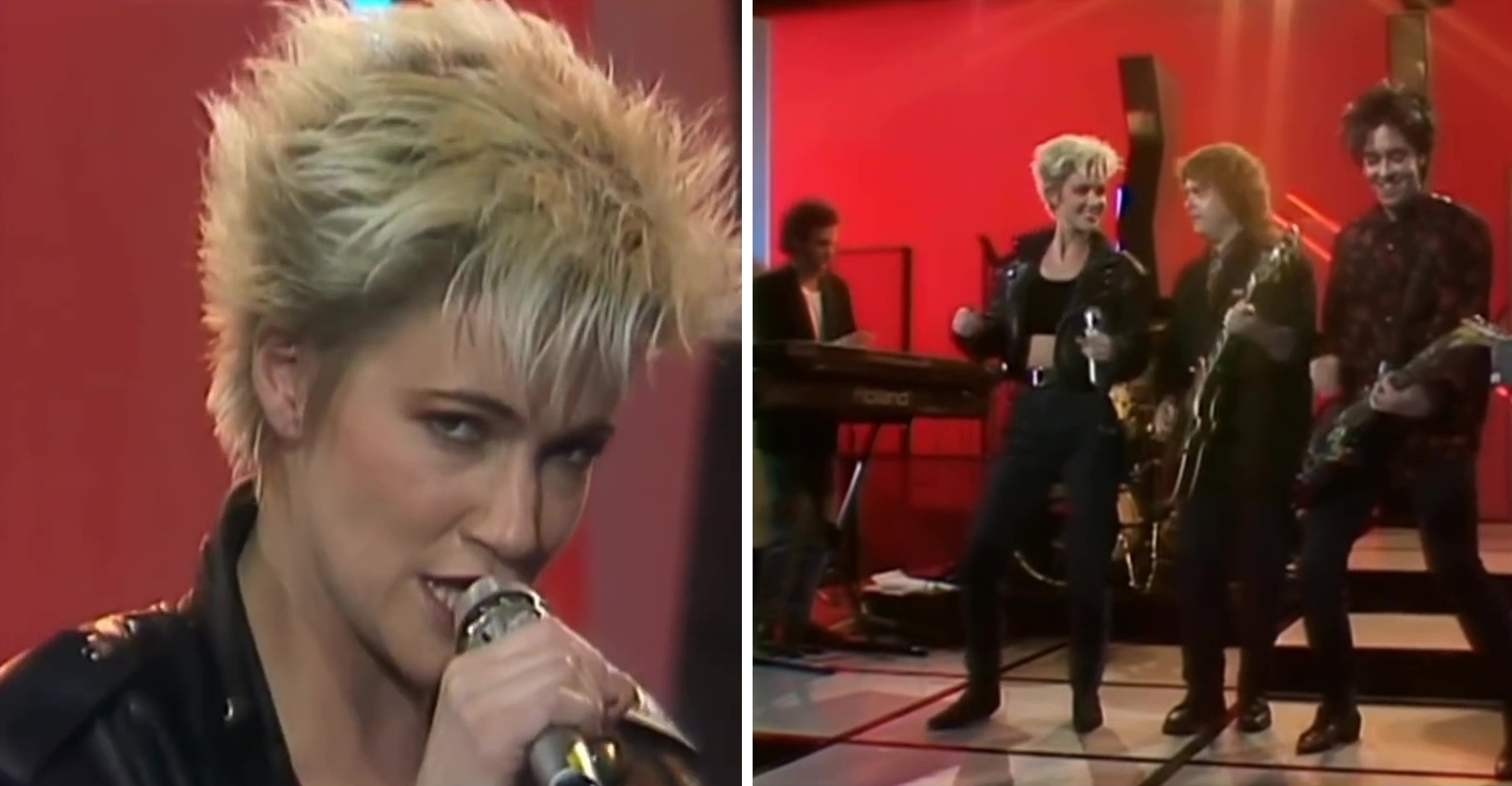
13-year-old Gry Forssell interviews Marie Fredriksson in 1987

Gry Forssell was the speaker on Swedish Radio’s Sommar & Vinter i P1 program today. Gry is one of Sweden’s most popular program leaders. Among many other things, she talked about her great experience related to Marie Fredriksson. LISTEN to the program from 34:28 to 36:40 to hear it.

Marie was on a Club tour when her Efter stormen album came out in 1987 and she also visited Luleå where Gry grew up. There was a program called Himalaya on Swedish Radio. Gry’s mom worked there and her friend was the producer. Gry was there in the radio a lot of times with her mom. She was 13 when one day the producer asked if she wanted to interview Marie Fredriksson. Of course she wanted!

After Gry welcomed Marie to Luleå and she thanked for it and said it was nice to be there, Gry asked her how old she was when she decided to be a singer, an artist. Marie replied:

I was 6 years old. I already knew it at 6 or 7 that I wanted to be a singer or an actress. And I’ve been fighting for that since then actually.

Gry also asked how one can become a famous singer and whether it has to do anything with luck or you also have to be good. Marie told:

Of course you have to be able to sing, but you also have to have self confidence. The best you can do is that you sing as much as possible. Sing in front of your friends. When I was a child, I was singing a lot in front of the mirror. I was miming and acted as if I was on a popular TV program or in a big movie. I was fantasizing a lot about that.

Gry smiles and says Marie replied so patiently to her silly questions. Lovely!

Still is from Jacobs stege 1987.

Marie Fredriksson tribute on Nordic Rox #3

A few days ago there was the 3rd episode of the Marie tribute program on Nordic Rox, Sirius XM.

Before the guys are talking about 2 classic Roxette hits, Sven plays the first track from Bag of Trix, the upcoming archives collection of unreleased recordings by Roxette. The acoustic cover of The Beatles classic, Help! was recorded at Abbey Road Studios in 1995.

Then comes a discussion about a song from 1988, from Look Sharp! album. Per says he picked this song, because for him it sums up where Roxette was standing at the time productionwise. This is a very sparse production. Clarence is just an amazing producer and he relied on and had so much belief in Marie’s vocals, so he just scrapped everything and let Marie sing. This has got a great groove to it, a great guitar hook by Jonas Isacsson and it’s just about Marie’s voice. The demo Per is singing sounds crap, but when Marie delivers the song is just amazing. It’s Sleeping Single.

Per says when they were recording Look Sharp! they felt they were doing something very different. They had great songs and every song they recorded sounded better than the other one. Paint, Dangerous, Dressed For Success, The Look, Listen To Your Heart. Every song was so cool. They went to England to record 3 songs with a different producer which they didn’t like that much, but they wound up on the album anyway. Mr. G is very grateful to Clarence, because he trusted Per’s songs and he really trusted Marie’s voice, so he just focused on making the songs as good as possible.

Sven asks Per if Sleeping Single was an obvious single candidate. Mr. G says all songs on Look Sharp! were created to become singles. Eventually, they released 4 songs off the album and Sleeping Single wasn’t one of them, because they had The Look, Dressed For Success, Dangerous and Listen To Your Heart. Sven laughs and says ”heavy competition”. Paint was a huge song in South America. It wasn’t released as a single, but got heavy airplay as an album track, so it became a big song for Roxette. Dance Away was a big song for them live. Per could have also picked that one for the program, because Marie sings so beautifully in that one as well.

In Sleeping Single they used saxophone which they never did before. It sounded really cool. Saxophone and shoulder pads. Where did the 80’s go…, Per asks.

The third song they play is from Room Service. Per thinks it’s a good album, different from the other albums. It was the last album they recorded before Marie got ill, so it also has a very special place in Mr. G’s heart. It’s got a great sound, it’s not a heavy album at all. There aren’t big ballads on it. When they do the ballads they try to keep the production low. The song Per picked is My World, My Love, My Life, the closing track of the album. Mr. G loves the guitar riff that Jonas is playing and of course loves Marie’s voice on this one. It’s a typical Roxette song, but at the same time it’s not. He thought it was maybe the best song on the album when they recorded it. It’s a great track and Marie is just shining on this one.

Sven thinks Marie sings equally as good on Room Service as she did on the bigger Roxette albums 10 years earlier. Per agrees and says if you listen to the live recordings from the Room Service tour, you can hear she was singing so well. Maybe also because of her experience as they were in their 12th year of being international artists, so of course they learned a trick or two.

Stills are from this video.

Thanx for the technical support to János Tóth.

Interview with Helena von Zweigbergk – “I’ve never met anyone who has had the strength of Marie Fredriksson”

24.hu in Hungary did an e-mail interview with Helena von Zweigbergk in connection with the Hungarian edition of Marie Fredriksson’s biography (Listen To My Heart – Hallgass a szívemre) and published it yesterday, on Marie’s birthday.

The interview has a nice intro. Referring to the book, it says that the positive attitude to life and the spiritual power shines through the biography. By reading it, we can understand how Marie was able to defeat cancer and win almost two decades so she could see her children grow up and even be on stage again, even though years ago it seemed utterly unlikely.

Journalist Bence Inkei’s first question to Helena is if she stayed in touch with Maire after finishing the book in 2015. Helena says she visited Marie many times in her home. They had coffee and ate her favourite cinnamon rolls while they were talking and laughing a lot. And of course they were crying too. They became very good friends while they were working on the book. Afterwards, unfortunately, they couldn’t meet as often as they would have liked, as Helena had to work and Marie lived far away from her. But they stayed in a very good relationship.

According to 24.hu, the end of the book seemed pretty optimistic: it was spring, Marie was preparing for Roxette’s summer tour, but from the epilogue it turns out that the band stopped touring not long after, because of Marie’s condition. They ask Helena if it was unexpected that Marie’s condition got worse. Helena doesn’t really know. She says that for Marie, touring was a huge effort already back then. All the stress, the tight tour schedule, the travelling would have worn out anyone who was in a condition like her. She had constant problems with her legs, she could only perform while sitting. Everyone knew how hard it was. She loved her fans and being on stage, but it was too exhausting for her by then.

24.hu is curious about how Marie spent her life after publishing the book. Helena tells she spent it at rest. She loved being at home and living by her own rules. So whenever she could, she was at home. She loved her garden and spending her time with her family. She could hardly walk and that caused her a lot of sadness. On the other hand, it was a relief that she was no longer under any pressure.

To the question if Marie had any unfinished plans Helena replies that Marie was a very creative person who could express herself in many ways. She talked about writing a book of poems and writing even more new music. She also wanted to write something about her mother’s life, to express her love for her and tell her story.

24.hu asks if Marie’s traumatic childhood due to the tragedy that happened in her family helped her to fight against cancer for so long. According to Helena it probably helped. She has never met anyone who has had the strength of Marie. She seemed very shy in a way, but she was as stubborn as a mule and had the power of a tiger. Neither as a child nor as an adult was she pampered. She always knew she had to fight for what she wanted to achieve.

Based on the book, it’s not entirely clear for 24.hu whether Per and Marie were real friends or just co-workers. Helena thinks they were good friends. They made this incredible journey together and had known each other for a very long time. As Helena saw it, their relationship was pretty close, but it’s also true that outside of working together, they didn’t meet too often. They lived far away from each other and Marie had to live a very calm life to be able to go on tour and get enough rest.

One of the most shocking part of the book for Bence Inkei was that a tabloid provided false info about Marie’s condition, but they could get out of it without any consequences. Helena confirms that there were no legal consequences. Marie might have been able to get them punished, but then they would have had to go through that hell again and that would have occupied their thoughts. That would have placed a heavy burden on the family when they were going through a difficult period anyway.

24.hu asks if it is a coincidence that ABBA appears only once in the book. If there was any rivalry between Roxette and them. Helena doesn’t think so. They were popular in different times and in different styles. They respected each other.

According to 24.hu, Roxette still has a very strong and active fan base in Hungary. They ask Helena where she sees the band has the most fans. Helena many times wondered how much love Marie and Roxette had received from all over the world. For example, when Helena and Marie had a book signing session together in a store in Stockholm, a South African family was the first in line. They travelled just to meet Marie and ask her for an autograph. Helena knows Roxette has a big fan base in South America and of course in Hungary too.

Marie described herself as a kind of “rock and roll personality”. As a last question, 24.hu asks how Helena saw it. Helena tells Marie loved this attitude. She didn’t want to look kind and harmless. She loved wearing black leather stuff and partied a lot before her illness in real rock and roll style. There was some kind of raw power in her voice through which she could express her true self.

You can order the Hungarian edition of Marie’s biography HERE.

Marie Fredriksson tribute on Nordic Rox #2

As Sven promised in the first episode, here is the next Marie tribute on Nordic Rox, Sirius XM. Per and Sven start with Crash! Boom! Bang! Per tells they were recording the album in Capri for 6-7 weeks. Per always loved this song, because it’s so fragile and it’s so much Marie for him. Marie singing these big ballads is just mesmerizing. It’s a perfect Roxette song. Sven asks Per if he knew he would write it differently because of already knowing how Marie can deliver such songs. Per replies that he has always been a melody guy, so he could expand the melody a lot when he knew that Marie was going to sing it. For all the songs he wrote he made demos, singing them himself and some of the demos he had a really hard time to do, but it was piece of cake for Marie. If she liked them. Sometimes she didn’t like a song, then they didn’t record it. It’s natural. You have to really like what you are doing. CBB is like a trademark Roxette song. Sven says it also became a centerpiece on the live shows. According to Mr. G it’s a beautiful song and great production as well. It still sounds cool.

After CBB, the guys are talking about Roxette’s first two world tours. Sven says the CBB world tour (1994-1995) was not as big as Joyride (1991-1992), but almost. Per says it was big enough. It was different. The first world tour was when the band exploded and the tour got extended on the go. CBB was only like 100 shows. Here they start laughing. Sven says that was the first time when Roxette performed in South Africa. Per remembers they played big football stadiums. He also tells that the Crash tour was amazing for him, because they built up a great catalogue of hits, so they could make really wonderful concerts. Marie was amazing and they had a great band. They worked for basically 7 years in a row and those were the last 2 years of that period. They had their little peak there, Per thinks.

Sven asks Per if he knew in advance that Marie was such a rocker on stage. Mr. G says he doesn’t think so. Even Marie herself didn’t realize it before either. It just happened when they started making videos. When she performed her own songs with her own band, she was pretty boring on stage. She was sitting by the piano, like a singer songwriter. But suddenly, she just exploded on stage in the early videos. She always had this acting ambition. She felt very comfortable in front of the camera and eventually, she became an amazing performer on stage. That is also one of the reasons why Roxette became so big. They could deliver live as well, not only in the studio. They were a great live band, great musicians, Swedish guys and girls, all of them and of course, Marie as a centerpiece of everything. In the pop world it’s never been natural that even though a band has hits, most of them can’t deliver on stage. It takes a certain sort of quality to be able to perform for 55,000 people and have them entertained for 2 hours.

The next song they are talking about is Wish I Could Fly. Sven tells his special memory from later, from the Night of the Proms tour in Germany. The symphony orchestra was playing a piece to introduce Roxette and that was a Scandinavian piece which turned to WICF and Marie entered the stage from the floor, rising from there. When people realized that this classical piece turned into Roxette and saw Marie entering the stage through the floor, everyone stood up and started cheering. It was in 2009. Per explains Marie became ill in 2002 and she had a break for 7 years, so NOTP was the first comeback tour they did.

When Per wrote the songs for Have A Nice Day, he had a couple of years writing songs in different directions. Dance tracks, guitar tracks, electro music. Wish I Could Fly was just different to anything else. He was very surprised that the record label picked it as the first single for the album, because it was so different to what they had done before. Looking back now it feels like it’s a great part of te Roxette puzzle. Per really likes the song and Marie of course delivers it so well. Mr. G likes the lyrics and the way Marie sings it, as well as the arrangement. It’s so 90’s to him with the drum loop that goes on and on. It’s got a great riff too, almost like a Led Zeppelin riff. Sven adds that the song has also got an atmosphere to it that suits Marie’s voice so perfectly. She adds something magical to it. Per agrees. He says it’s a tough song to play live though, because it’s based on that machine loop that goes on and on and it’s hard to play it if you are not using sequencers and stuff like that. You can cheat a little bit if you want to, but they never did. The guys are laughing again.

The next song is from the album that could have been the last Roxette record, as Sven says. Milk And Toast And Honey from Room Service. The album was recorded in 2000. Marie was doing a solo album in Swedish and touring in the summer. She was planning to make more music with Micke. Per adds he is a great piano player. So Marie wasn’t really into making a new Roxette record, but Per wrote a lot of songs and they started to work on the album. Per personally thinks that Room Service contains some of their greatest works. There are some really outstanding songs on it. Sven agrees. He thinks it sounds great and it’s got a cool vibe to it. Mr. G says they used a new engineer, so they got a little bit different sound to it. They had basically the same players though. Jonas Isacsson plays amazing guitar. Marie sounded amazing especially on MATAH. According to Per, this is the best track on the album, because it’s a ballad, but not like a typical huge Roxette ballad, like Spending My Time or Listen To Your Heart. This is like a tiny little ballad that Marie just delivers and it’s beautiful.

By this time Marie already had 2 kids and family was much in focus for her. She wasn’t really interested in touring the world or promoting. She wanted to be at home with her family. Who could blame her for that? They had been doing it internationally for 12 years at that time, so Per thinks she wanted to have a break. The album was done very much by Clarence Öfwerman and Per and then they did a big European tour with that album as well.

Sven mentions the story of Marie arriving to the recordings of MATAH with a taxi and leaving right after recording her vocals. Per tells Marie’s vocals had been recorded already before, but he wanted her to do some different takes on the last chorus to change the melody, to bring the song home. So he called Marie and she came by taxi and kept the taxi waiting outside the studio, sang those 3 lines and she was out again, in the taxi and back home. Per is laughing while he is telling this story. Sven thinks it’s quite cheeky, but Per says that’s the way it was. Marie delivered, then Per and Clarence summed it up and finished the record.

After playing MATAH, this part of the tribute is over.


Unfortunately, it’s impossible to add a direct link to the program, but search for Nordic Rox and go some ”shift forwards” into the show to hear Sven and Per talking.

Thanx for the technical support to János Tóth.

Marie Fredriksson tribute on Nordic Rox

Sirius XM made some programs available online and a little Nordic Rox is also among those free programs now. Sven Lindström and Per Gessle recorded a Marie Fredriksson tribute for Nordic Rox. They did that in Stockholm in Live Nation’s office. They were sitting in the ABBA room and Sven was joking that it’s because everyone else wanted to be in the Roxette room, so they couldn’t go there.

Sven and Per are talking about Marie with mixed feelings. Per tried to pick songs that for him represent what Marie was all about in Roxette. It’s a big palette of knowledge that she gave to the band. Sven says Marie and Per are a bit like opposites to each other. Per says they shared rehearsal studios, Per was in a band, Gyllene Tider and Marie was in another band. She was screaming and shouting and she was a little bit like a hippie. They were pretty different. Per was very organized and ambitious while Marie was an ”anything goes” type.

Sven asks Per if he remembers a specific moment when he realized Marie’s potential. Per says it was day 1, when he heard Marie singing. She was singing like no one else, even back then. Per’s band took off and became successful pretty quick and they invited Marie to sing on a Christmas song for them. Later Marie left her band and started a solo career and she ended up at the same record label as Per and his band were at, EMI Records in Stockholm. Sven tells Marie had several bands before her solo career. Strul and MaMas Barn. He says Marie and Per socialized in Halmstad. Per says they were very good friends. They never had a romance, they were more like sister and brother. Marie looked up to him because he was successful and in the music industry and Per liked her because she had this voice and she was a wonderful, very generous person. They were just hanging out, watching Dynasty on TV in Per’s apartment, playing the piano and the guitar and started writing songs together. In Roxette they very rarely wrote together, but in those early days they wrote together. They were both based in Halmstad, but Marie moved to Stockholm pretty quick. She started a relationship with GT’s producer, Lasse Lindbom and they started writing songs together and that became her first two solo albums in the early 80’s.

Since Marie and Per were very good friends, they shared this dream to do something together one day. Maybe do something in English together, because they both wanted to work internationally. So eventually, in 1986 Per wrote a song and they released it in Sweden and it became a big song for them in the summer of ’86. It was Neverending Love. They released it under the name Roxette that is coming from a Dr. Feelgood song. Because Neverending Love was a big success, EMI wanted them to make an album, so in no time Per translated 12 of his songs he had written in Swedish. He intended to release those on his third solo album which didn’t happen in the end. That became the first Roxette album. I Call Your Name is the song Sven and Per play on Nordic Rox and Per says the original Swedish title of it was Jag hör din röst (I hear your voice). It was one of the first tracks they recorded for the album. For Per it was like a turning point, because then he realized that something was happening to his music. They had a new producer Per never worked with before, Clarence Öfwerman. Per says Clarence made his songs danceable and groovy. Per comes from the power pop scene and it’s always been a lot of guitars, but it suddenly became different. And also the way Marie was singing, it was like a totally new chapter for Per. Mr. G thinks I Call Your Name is a really cool song. Their ambition was that Marie would sing and Per would write, but they also had the idea that both of them sing in songs. Most of the songs became duets this way. Which is sort of the Roxette trademark.

After ICYN Sven tells Marie and Per had T-shirts with the slogan ”Today Sweden, tomorrow the world”. Per says they were pretty ambitious. With the shirts they were having fun. They always liked slogans like what Stiff Records, an indie label in the 70’s had. E.g. ”If they’re dead, we’ll sign them.”

The guys get back to Marie’s vocal abilities. Per says he always felt very limited by his own voice. In Gyllene Tider he was the lead singer and it sounded OK, but he just felt that he could write bigger songs than he could sing himself. So to write songs for Marie was liberating from a songwriter’s point of view. The more the years went by, the more he customized his songs for Marie’s abilities, e.g. It Must Have Been Love.

The next song they play is Fading Like A Flower. Per says it was a big song for them and he chose this because it’s a typical example of a standard song. It’s Marie who makes this song work, the way she sings it. Also how it’s produced. Per thinks it’s not the best song in the world. When he sings the demo, it’s boring. Marie had this enormous capacity that she could sing the telephone book and make it interesting. It’s very rare. Per says he was very lucky as a writer to have that voice to work with. Looking back now, they did 10 studio albums and he wishes that Marie would have sung everything with Roxette. Per was singing a lot of songs with Roxette as well, but Marie was such an amazing singer. Especially in the early days. They were not thinking about keys or modulations, they just did it and she was singing it.

After FLAF Sven asks Per if there is a way to describe Marie’s qualities as a singer. Per says she was a very complete singer, she could basically sing anything. It’s very rare that you can find a singer who can deliver a power pop song as well as a huge ballad. Some people are really great ballad singers, others are amazing for pop music, but it’s very rare that you find both ways. Marie could do anything. Per tells when they did MTV Unplugged, Marie was singing Aretha Franklin, but on tours they also did covers of other bands’ songs, because Marie could sing anything. Per was much more limited. From a writer’s point of view it was liberating for Per to be able to write songs like The Look, Joyride or Sleeping In My Car, which are basically 3-chord power pop songs, as well as to be able to write more sophisticated songs like Listen To Your Heart or It Must Have Been Love. Marie could do anything. Per says that compared to him, Marie also had a great pronounciation. One couldn’t really tell that she wasn’t English or American. Per adds that Marie was not inspired all the time, but when she was, everything went very quick. She just made the song her own and made the lyrics her own and you could identify with her immediately. It was just a pleasure.

The next song is Stars. Sven says it was an unusual direction, because if he thinks back, Marie was more of a blues girl. Per says she loved blues and jazz. Sven jokes that Per doesn’t have many blues notes in his body. Per laughs and says he comes from the world of The Beatles, The Monkees and Tom Petty, the 3-chord pop songs and new wave. But he thinks that was the good thing that Marie took his songs and gave them a new vitamin injection. She came in from a different angle.

Getting back to Stars, and the album, Have A Nice Day, Per says they had a couple of years off after touring and promoting for 7.5 years. Marie had her second child, Per made a solo album and worked with Gyllene Tider too. Then he started writing for HAND which was recorded in Marbella, Spain. Time went by and the whole dance music scene has changed a bit, so they tried to do different things. They used different musicians. Stars is a little bit more dancey, Pet Shop Boys-ey. Sven says Europoppy. Per says it’s like the European dance scene at the time, which was pretty far away from the classic Roxette sound, but Marie could deliver that too. Mr. G says he loves that song because it got a great melody and Marie is just the greatest on this one. Sven says the song has a fun, unusual, special video to it. Per tells it was the first time they worked together with Anton Corbijn and shooting the video was hilarious. Regarding the album Per adds that he wrote so many songs in different directions, so HAND got dance songs, rock songs, acoustic songs, a little bit of everything. He thinks it’s because he spent so many years writing, he couldn’t really decide. Haha.

After Stars, this part of the Marie tribute program is over on Nordic Rox, but Sven says they will be back with more episodes.


Unfortunately, I can’t add a direct link to the program, but search for Nordic Rox and go 5 ”shift forward” into the show to hear Sven and Per talking.