
Rares Mavromati, a 17-year-old Halmstad guy, who is Sweden’s biggest F1 digital creator (F1rmav), interviewed Per Gessle about cars, songwriting and other fun stuff. You can watch the interview in two episodes here: 1 & 2. The guys met at Hotel Tylösand on September 10.
Rares Mavromati: – Per, you have a car collection that is almost as epic as your music career. What was the first moment – or the first car – that made you think, “Wow, this might be getting out of hand”?
Per Gessle: – I got hooked on cars. The first car I really fell in love with was the Ferrari Dino. There was a TV series when I was little called The Persuaders!. It starred Tony Curtis, and there was a scene where he drove a Ferrari Dino. It was the coolest thing I had ever seen. I thought that at some point in my life, it would be fun to own one, or at least get to drive one. And it actually became one of the cars that’s here.
RM: – So it was almost a dream car for you.
PG: – It was a dream car, yes. And from that same era. I’m very old myself, so I grew up in that period. I was born in 1959. In the ’60s, my father took me to the West Coast Race in Falkenberg. Picko Troberg was racing at the time, and Ronnie Peterson was driving in Formula 3. So it was really exciting to see motorsport like that. That also sparked some of my interest. And then, not to forget, design has always been very important to me. I’ve always been interested in design and architecture and things like that. At one point in my life, I wanted to become an architect. That was long before Gyllene Tider. So I’ve always been interested in shapes, design and things like that. And when I think back to the cars I had on the walls of my bedroom when I was growing up, they were, of course, very beautiful cars. I wasn’t particularly interested in muscle cars or power. I wanted those sensual shapes that the Dino has, for example.
RM: – Could you say it was love at first sight? Or did it take some time before you realised, “I’ll do anything to get my hands on this car”?
PG: – No, it wasn’t really like that. The first car I bought was a Volkswagen Passat. An orange one. The registration number was HJA 450. But back then, you bought what you could afford. The next car was also a Golf. So being able to buy the cars that I had on my bedroom wall was largely thanks to Roxette becoming successful, because suddenly there was the financial muscle to actually buy them. My first Ferrari was, I think, in 1995. It was a Ferrari 456. And I thought it was very expensive at the time. But compared with what cars cost today, they were absolute bargain prices back then. That was basically the last decade when these cars were still really cheap.
RM: – Yes, they really have become investments, you could say.
PG: – Yes, they have. Although I didn’t buy them for that purpose. I bought them because I like them. I don’t just buy everything. I buy things that I think are beautiful.
RM: – There must surely be a car that nobody quite understands why you own, but which you obviously consider one of your hidden gems. Is there a car in the garage that reflects that?
PG: – No, not really. I don’t actually own that many cars these days. But I’ve sold a lot of cars as well. They were cars that I didn’t feel I had any need for anymore. And perhaps I replaced them with something I thought was better-looking. Maybe a different colour or something like that. I don’t have any car that I don’t enjoy owning.
RM: – But is there a car that you regret selling? Something where, afterwards, you realised, “I’m going to think about this every night. This is something I really regret selling”?
PG: – Yes, I regret selling the first Ferrari 456. It was incredibly beautiful. And I sold it because I was going to buy something else. At the time I thought, “What am I going to do with this? I don’t even use it.” But that was a long, long, long time ago.
RM: – That’s understandable. Per, you write songs that the whole world can enjoy. Do you have a song that was born behind the wheel while you were driving – inspired by a feeling, a smell, a thought, or perhaps a person who was with you while you were driving – where you suddenly thought, “Wow, I really have to write a song about this”?
PG: – Yes, that’s actually a good question. I work quite a lot in the way you describe. I pick things up, or write songs and lyrics very much based on impressions. And those impressions sometimes come when you’re driving a car or sitting in a car. I’ve been sitting in a taxi between Stockholm and Arlanda and come up with a song there. Then you just sing it into your iPhone.
RM: – Would you say that’s the hardest part about being a songwriter – getting inspired, or coming up with things spontaneously? Or is there something specific you do? Do you sit down with someone particular and brainstorm, or is it just about automatically becoming inspired?
PG: – I’m pretty much alone whenever I write, and it’s always been that way. At that particular stage of the songwriting process, I almost always work alone. It’s only later, when I have something concrete to work with, that I need help from other people. Someone who can play a little better than I can, or who can write a beautiful string arrangement, or whatever it might be.
RM: – It’s probably hard to find anyone better than you, Per, I have to say.
PG: – Nah, it’s not at all difficult to find musicians who are better than me, that’s not my strength. Being able to play an instrument brilliantly has never really been my thing. I’m a creator, basically. That’s why I needed a great voice like Marie’s for the Roxette songs. I couldn’t have sung those songs myself. And it’s the same with all these musicians, with Gyllene Tider and with the Roxette band. They have a level of musical competence that I don’t have. So I need their help. Because they make my stuff so much better than it actually is.
RM: – Yes, that’s how you get far through collaboration. You definitely have. Per, you’ve inspired several generations through your songs, through what you’ve done and how you’ve done it. Do you have any advice for young people like us who want to follow their passions – whether it’s cars, music, or anything else? Any general advice for people who want to follow their passions?
PG: – Yes, it’s the same as it’s always been. If you have a drive, you should try to hold on to it. That’s what I tell my son. Follow your heart, follow your own path. Because I think you make a big mistake if you become completely obsessed with making lots of money. I think that if you find something inside yourself that you enjoy, that you have fun doing, then you’ll become good at it. And if you become really good at it, you’ll automatically make money from it. So somehow it takes care of itself. And it will make your life much, much, much richer and much better if you enjoy your work and enjoy your life, rather than being completely focused on buying lots of things.
RM: – I actually had a man tell me once, “Do what you love, because the money will come anyway”. It was actually my girlfriend’s father who said that. And it made me think a little more deeply about how it’s not all about quantity. It’s also about the quality of life, which ultimately outweighs quantity. That’s something that really changes the whole game for me.
PG: – I understand that, and it’s good that you say it, because I think that’s the biggest difference. I’m so old now that I’ve lived through so many decades. And that’s probably the biggest difference between our time and the time when I grew up. Everything is so much about business and money today. It wasn’t like that in the ’70s and ’80s. There was a different kind of freedom, and it was much more about simply having fun. Today, people are so obsessed with status symbols and with having to make a lot of money.
RM: – Yes, unfortunately that affects young people today, with all these social media, of course. It’s difficult to ignore the first thing you see on your screen. So I completely agree with you.
PG: – Yes, and the way companies have developed, and possibly the way big corporations themselves control our world. It’s a little frightening, actually. And it’s going to become even worse now that AI is coming in.
RM: – Do you think AI will affect the music industry in a negative way?
PG: – Absolutely, if we don’t get it under control. Because already today you can simply give your laptop a command and ask AI to write a song about summer. And with my voice, it can sound as if I’m singing a bad song about summer.
RM: – And you don’t like that. Haha.
PG: – No, I don’t like it. AI is built on other people’s knowledge. That’s how the whole thing works. AI takes a lot of information and creativity that already exists. And then it recreates it in ways that get around rights and things like that. Copyright. So I find it frightening, actually.
RM: – Yes, it can be a little frightening. I definitely agree. Hotel Tylösand is more than just a hotel. It’s almost like an entire universe of its own. What does a place like this mean to you? And how much of your personality is built into these walls?
PG: – More and more, actually. We bought this hotel together with another family in 1995. But over the last ten or twelve years, we’ve taken over the majority of the ownership. That has meant that we’ve shaped the hotel even more, because we’re the ones making more of the decisions. So it has increasingly become something that works on our terms. So it means a great deal to me. The area down here, Tylösand and Frösakull, where the beach is, is where I grew up. I didn’t live here, but my father was a plumber. He and his father, my grandfather, installed all the water and sewage systems out here in Tylösand and Frösakull. So I was here all the time with them. We have our DNA here, in a way. It was home turf.
RM: – And of course it’s much easier to write about home turf than away turf.
PG: – Exactly. When this hotel came up for sale, I would never have gotten involved with another hotel. If it had been somewhere in the middle of nowhere, in Nässjö or wherever, I wouldn’t have been interested in the hotel business. The fact that this particular place was for sale was almost unbelievable. It was owned by a large hotel chain called Reso, which owned a lot of hotels. All the other hotels they owned were city hotels, as you might say, located in cities. And this one was left over when they sold the chain. So suddenly finding out that it was for sale was almost too good to be true.
RM: – For young people like us who aren’t particularly familiar with the music business, could you explain how the idea of becoming an artist came about? You mentioned that your father was a plumber, for example. Did you get any inspiration from him? How did he react when you said, “I’m going to start making music”? Was it something that came easily, or was it quite difficult for him to accept?
PG: – No, he wasn’t particularly positive about it. Unfortunately, he died as early as 1978, so I was 19 when he passed away. He never got to see any of my career, because I hadn’t broken through yet. But he wasn’t particularly positive about it. I was very influenced by my brother, who was seven years older than me. When I was little, six or seven years old, he was thirteen or fourteen. And that was the ’60s, right when pop music was really exploding. I would always sneak into his room and listen to his records and his record collection. So that musical style and tradition really shaped my own musicianship. That’s where I come from. So when I became a teenager myself, I was already quite advanced, because I’d been listening to music for many, many years. Then I became very influenced on my own by glam rock and David Bowie and T. Rex and things like that. Then, later in the ’70s, punk and new wave came along and that suited me very well, because the idea behind punk was that anyone could start a band, regardless of how good you were. And that suited me very well, because I wasn’t particularly good.
RM: – If the younger Per could give the older Per some advice, what advice would you have given him?
PG: – I’d actually be very curious to know that myself. That’s a good question too and I don’t have a good answer. Sometimes I think I’m doing pretty much the same thing today that I did back then, although of course it’s more sophisticated today. But sometimes I go back to songs I wrote in the early or mid-’80s and become fascinated by how sophisticated they already were. Because there are so many little tricks in them. Pop music was a little more complex then than it is today. Because everyone sits and makes their songs on a laptop, a lot of music ends up sounding very similar. It wasn’t like that back then. You had to actually play everything. Anyone who plays an instrument knows that if you and I play guitar, even if we play the same instrument, we’ll play it very differently.
RM: – We should try it sometime. Haha.
PG: – That’s how it was back then, and there was something very good about that when you were growing up. At the same time, it was much, much harder to sound good than it is today. Today there are so many tools in computers that can correct a false note in a vocal and things like that.
RM: – Do you think music has developed a lot over the years?
PG: – Yes and no. As I said, it has become more sophisticated. At the same time, I feel that I still have the same roots. I can’t change my musical taste. And of course, I’ve worked as a professional musician for 46 years, so naturally, when I sit down and get an idea for a song, it’s very easy to think, “shit, I’ve written this song before”, ten times. So I have to find a new angle. It gets harder and harder, of course.
RM: – I completely understand.
PG: – I often try to do this: if I come up with a song on an acoustic guitar, as soon as I feel it’s starting to become good, I change instruments and perhaps sit down at a synthesizer or a piano and continue the song there. Because then I leave the well-trodden path. So I’m constantly trying to trick myself into doing unexpected things.
RM: – So it’s almost like a multi-step process?
PG: – All the time. There are many processes, many steps you have to climb. And, for example, do you play an instrument?
RM: I play violin.
PG: – Okay, but you know, you have open strings and there’s the root note and so on. What I try to do is this: if I’m sitting playing guitar in G, suddenly I’ll sit down at the piano and change key, perhaps to something that’s much more complex for me – F-sharp, for example, or A-flat or something like that. Then I’ll make a lot of mistakes, and some of those mistakes can become interesting as I continue working on the composition. So I’m constantly trying to trick myself. That’s something I’ve learned over the years.
RM: – Very interesting. If you were to describe your personality now – because we’ve talked quite a bit about how your personality has developed and how it has changed over time – how would you describe your personality in terms of a car model, a car brand, or perhaps a colour? Just a quick question.
PG: – It’s difficult for me to describe myself that way, but… I actually can’t. Over the years, I’ve learned how I work, and it’s a little like we talked about earlier: I’m quite a loner, both privately and in my work. I’m pretty clear about what I want. So when I continue working and try to create something – it could be an album cover, a song, a production, or whatever – I try to surround the project with other people whom I hand-pick for each project. The project itself is always the most important thing. There are advantages to that, but there are also disadvantages. Sometimes you might disappoint people if they don’t get to be involved in a particular project. I’d rather choose someone else if I think that person will make the project better.
RM: – You mentioned earlier that you’re more of a loner. Do you find it easier to work without people or with people?
PG: – It depends on what stage the project is at. I don’t like writing songs together with other people in real time. I want to write the songs myself, and above all I want to write my own lyrics myself, because I need time. I have my own process. I need to go back and do something else and then come back to it. I’ve tried writing songs with other people over the years, but I notice that the things I’m good at never really come through. I tend to hold back and let them decide.
RM: – So there should be as much Per Gessle energy as possible.
PG: – That happens most when I work alone.
RM: – Then you get the best song.
PG: – At least it becomes the song I want it to be. Haha.
RM: – I’m a huge motorsport fan, especially when it comes to Formula 1. If you could take any Formula 1 driver from the past or present on a road trip along the West Coast, which we mentioned earlier, who would you take, and what do you think you would talk about?
PG: – I’ve met some modern racing drivers, Kimi Räikkönen, for example, who is a fantastic guy, and David Coulthard, who is also a really nice guy. I think both of them, especially Kimi Räikkönen, are among my favourite drivers from that era. There must be something missing in their brains that allows them to just get into a racing car and drive like that. Or Marcus Ericsson, also a fantastic guy. My God, driving the Indy 500. I just don’t understand how you can handle it.
RM: – No, of course it must be incredibly demanding. It puts a lot of pressure on your mentality and your mind. It’s not just a physical sport, it’s also a psychological sport. I don’t think many people see that aspect.
PG: – But of course it is. Sometimes it’s scorching hot, and you’re sitting there for an hour or more. It’s unbelievable. And the incredible speed. You simply don’t understand how fast it is. I think it was 2001, maybe 2002 when someone gave me a gift: a ride with Mika Häkkinen in a two-seater McLaren Formula 1 car.
RM: – What was it like riding with him?
PG: – I had to reschedule it several times because I was constantly on tour. The third time I was available, he wasn’t, so I got to ride with a reserve driver for McLaren called Darren Heath. He’s won Le Mans. I can’t remember exactly what year it was. Anyway, he was the one driving. He won Le Mans many years later. We did three laps around the Hockenheim circuit. I was the passenger. It was one of the strangest experiences I’ve ever had.
RM: – You could really feel the G-forces when he went through the corners.
PG: – Yes, the acceleration and everything. How fast you can go through corners. I was basically the ballast, about 85-87 kg. Haha.
RM: – It must have really taken a toll on your neck, I imag ine. In those corners, you must have had no chance. You’re being thrown around, while the Formula 1 driver treats it like a drive through the park. You’ve created music that has touched the whole world, and Roxette is still an enormous part of our global culture. When you see the new generation discovering the songs today, what does that mean to you? How would you like Roxette’s legacy to live on in the future?
PG: – Of course I’m incredibly happy and proud that there’s always a new audience. I notice it at our concerts. There are always young people standing at the front, singing and knowing the songs. You see it, and I think it’s fantastic, of course. There’s something magical about music in general. We’ve travelled, basically, all over the world. And you come to countries where people don’t speak English and don’t have the same religions as we do. They don’t look the same as we do. But they all sing these songs together. There’s almost nowhere else where you have that kind of communication that music provides.
RM: – It unites us, if nothing else. It almost feels as if it transcends religion and culture. Nobody cares about any of that at that particular moment. Everyone sings together, dances together and celebrates together. That’s what’s so fascinating about music. It’s magical.
PG: – I’m glad you say that. I have a very special memory. In 1995 we were on a tour called Crash! Boom! Bang!, after the album Crash! Boom! Bang! We became the second Western band to play in China. So we played in Beijing, in a venue with perhaps 16,000-17,000 people. When we came in, there were soldiers with guns standing in the front row. We said, “We can’t play here with 200 soldiers in the venue”. They put the weapons away, but these stone-faced soldiers remained sitting in the front row, while 16,000-17,000 students were behind them, all of whom were required to remain seated. As soon as someone stood up during the concert, they turned on all the lights in the venue and everyone had to sit down again. But when we played It Must Have Been Love, everyone stood up. There was so much energy. There was simply no way to stop them. It didn’t matter what they did. Then a banner appeared. Some girls had it somewhere up in the audience. It said, “One world, one unity”. Because they longed to be part of the West. We represented the West. It was an incredibly powerful experience for us. Eventually we came off stage and the whole band was standing there crying. It was very emotional. We had become a bridge between them and the West. But that was the ’90s, and there were many experiences like that.
RM: – Would you say that was the toughest and most surreal concert you ever played?
PG: – In the ’90s we played lots of places in South America – Paraguay, Venezuela, Lima. Many countries were very closed, and as I said earlier, there was a lot of military presence. They were very tough on the audiences. The audiences just wanted to have fun and sing along. The songs we were talking about earlier have an incredible power that cuts through all of that.
RM: – Did you ever have to cancel a concert because there were too many soldiers, or because there were too many riots or protests?
PG: – No, we never cancelled because of that. But there were a lot of accidents. I remember we played in São Paulo, Brazil. There was some kind of fight. From the stage we could see a circle forming. People disappeared and then people came running out… And there were also many people fainting because they had been standing in the heat waiting for a long time. We already had problems back in 1981 at a concert in Kristianopel. Three people died at the entrance because of the crowd crush. So accidents happened. Thankfully, safety has improved over the years. It has become much better.
RM: – Do you feel a lot of pressure when you’re on stage? And if so, how do you deal with that pressure? There are so many people watching me. You’re thinking, “What if I do something wrong?” or “What if my hair doesn’t look good?” or “Maybe I have something on my nose”. Or maybe the clothes aren’t right. How do you deal with that stress?
PG: – Well, you learn. I feel very focused just when I go on stage. But then you just have fun. I mostly try to focus on remembering the lyrics. And you immediately sense the vibe in the room, or if you’re playing outdoors, you sense what’s going on. If it starts raining, the concert changes. But that’s become second nature by now. So I don’t think too much about things like that. A lot of strange things have happened over the years. I tripped over a lamp and ripped my trousers.
RM: – Oh!
PG: – Things like that happened. But it’s just fun. We belong to the generation that calls it old school. We play everything live. We don’t have anything pre-recorded or anything that corrects things. We do everything hardcore, old school. The good thing about that is that every night becomes completely unique, because I never know how long a song is going to last. It depends entirely on when the guitarist decides he wants to stop playing.
RM: – Oh, so you just have to adapt.
PG: – Yes, we adapt. That’s how it is with many songs. Sometimes the intros are a little longer. You have to listen to each other. That’s what you’re supposed to do in a band. As I said, that’s the school we come from. And I think that’s fantastic.
RM: – What was it like the first time you stepped onto a big stage?
PG: – I was incredibly nervous, of course. During that first decade, until Roxette broke through internationally, I was very nervous. The first gig we did with Gyllene Tider was here in Halmstad, in the area around Getinge, and then inside a small theatre in Halmstad. It was extremely nerve-racking, of course.
RM: – If you happen to forget lyrics to a song on stage, how do you handle that?
PG: – You make something up. Haha.
RM: – You just make something up?
PG: – Exactly. When Marie became ill, she would often forget the lyrics on stage. That meant I had to cover for her a little and help her find her way back into the song. That meant I had to find the lyrics very quickly. So I got a computer screen on stage where the lyrics scroll. I’ve kept it ever since. So now I have a prompter on stage with the lyrics scrolling. I don’t look at it very often, but it’s always running. I have a guy who operates it. He scrolls the lyrics in real time. If there’s a long solo, he has to hold the lyrics at the right point. It can’t run automatically. It has to be operated in real time. So these days I have it as a backup.
RM: – Thank you for taking the time to talk to us. It’s not easy having a bunch of young people around, but we’re passionate about what we do, and you’re a huge inspiration both to the older generation and to the generation that comes after. And if you’re interested in listening to Sweden’s national song, you should listen to Här kommer alla känslorna. The song is pure Gessle magic. My name is Rares Mavromati. Thank you for joining us at F1rmv and Hotel Tylösand. See you soon. Take care!

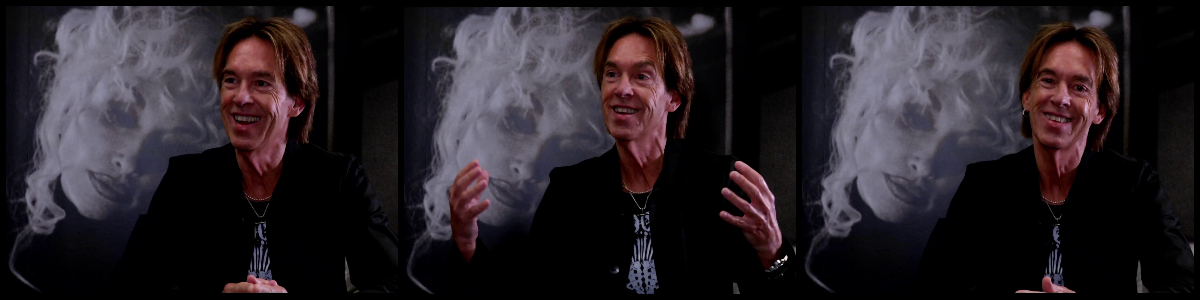
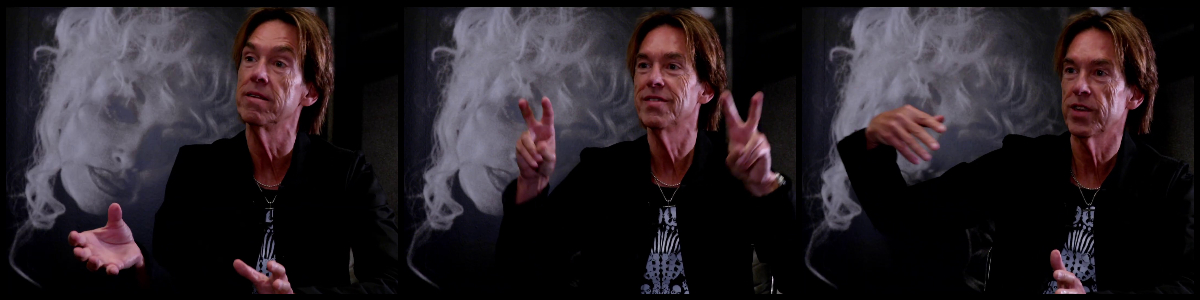
Stills are from the interview.