During the tour we could already sense there would be a GT40 documentary later because of the filmings at each concert and with more cameras out at Ullevi and in Kalmar. Gyllene Tider – avskedsturnén (Gyllene Tider – the farewell tour) premiered on TV4 on 26th December. The story about a pop band that conquered Sweden. Again. And again. And again… 1979-2019. Unfortunately, as usual, it is available only in Sweden, but here you can read an English translation of it and see some screenshots.
The documentary is of premium quality both recordings and soundwise, as well as in terms of content. There is a lot of footage from the GT40 tour, interviews with the Golden Guys done by the mighty Sven Lindström, footage from the rehearsals before the tour and the studio in France, old interviews, photos and private videos, Pappa and Mamma Syd, as well as Micke Syd’s then girlfriend talking about the old days, Niklas Strömstedt, Lasse Lindbom, Kjell Andersson, Marie Dimberg also talking about Gyllene Tider’s greatness. Grumpy Productions did a fantastic job once again.
The documentary starts with Per telling it was Micke Syd who came up with the idea to finish GT with this latest tour, because with their habit of doing a tour every 6-7-8 years, who knows how they would be next time when they are 67-68 years old.


It’s amazing to see cuts from the 1981 Parkliv version of songs and the 2019 tour next to each other. It’s the same energetic band as ever.
Right at the beginning when Per talks on stage about Harplinge and Micke Syd’s mom who had a hairdresser salon, a part of the Mamma Syd interview is cut in where she says when Per was there for the first time, he had a long coat and a hat on. He looked a little special. And she laughs. Sven asks Per about the period when he became a teenager. Mr. G says he was a music and pop nerd. He never thought he could play anything, but he just started writing lyrics or rather poems. MP says when he first heard about Per was in the first grade at high school.
Anders says the first time he met Micke was when they started playing football together. Micke Syd says those who lived in Harplinge went to school in Halmstad. Göran says he asked his music teacher if he knew anyone who played in a band and got the phone number to Anders. He called him and asked what they were up to.


Mr. G’s classmate, Peter played the bass in MP’s band. They met more and more times and Per and MP became best friends. Micke and Anders were best friends too, Mamma Syd says. They listened to albums together and went to the record store every day. Anders and Micke decided to get more involved in music and left football. Their trainer told them they would never succeed.


Per describes his experience of hearing MP’s band, 4 guys playing at the rehearsal studio in Harplinge as a fantastic noise. He felt he also wanted to play in a band.
Pappa Syd visits the old Tits & Ass studio in Styrdal. Someone else is living there now, but he lets Ingemar in and he shows which room the recording studio was. It has changed a lot, but the the studio window is still there. Per says he spent a lot of time on sending out cassettes to all possible places: local radio, journalists, newspapers, etc. When they recorded their yellow EP, it went out to all record labels. Kjell Andersson (EMI) says when he heard Billy, he got stuck to it, because the singer reminded him of a young John Holm who was his favourite those times. Lasse Lindbom says he and Kjell were running around Stockholm clubs and listened to punk bands and they realized the guys in GT knew what music was about.
Sven asks MP if he would thought when they recorded their first album that they would become one of Sweden’s greatest pop bands. MP says not at all. When they were there in the studio, they were not thinking like this, but there was a supernatural driving force in all of them. They were dreaming with the songs, they rehearsed a lot to become better.
Per says that in January 1979, Kjell from EMI called him. He lived at his mother’s then. Kjell says Per’s mom picked up the phone and said his son was still sleeping, but she could wake him up, it was 12 am after all. Micke Syd says when Kjell called them, it felt like winning the lottery, the Nobel Prize and becoming the father of 4 at the same time. Lasse Lindbom went down to Halmstad to see if they could play. Lasse met Per at motel Hallandia and says Per was quite nervous, he had sweaty hands. Micke says of course they were nervous. Recording an album at a big record label with Lasse Lindbom! Per took Lasse to their studio and when they were there altogether, they became more confident. All other bands who rehearsed there went to see Lasse Lindbom. Pappa Syd says Lasse listened to the guys in the cellar of the old nursing home. Lasse then went back to Stockholm and told Kjell he wasn’t totally convinced. He was a little sceptical about the singer’s pop star status. But there was something in Per’s lyrics and how they could perform their songs. They were talented musicians.
Per says it was magical that they could record an album, but still no one knew who they were. As small town boys they felt quite lost in the big city. In the ’70s all record labels were in Stockholm. Those days there were only 2 TV channels and 1 radio that played pop music. Laila Berger, a childhood friend says the guys didn’t have an image. They came from the countryside, in clogs, jeans and T-shirts to EMI in Stockholm. Lasse says the first to get out from the taxi was Göran. He was showing the receipt and asked if he gets money for that. At that moment EMI probably didn’t think of them as future pop idols.
They recorded the album at EMI’s little studio 2 in Skärmarbrink. The studio was so small they could hardly fit in all five of them with the instruments. Micke says they got the small studio because Björn Skifs was recording in the big one. Per says there was something magical in all this. No one knew them, they didn’t have any success, they just wanted to record their album. They went home at nights and shared a room. Per, MP and Anders were in a triple room. They were sitting there and listened to the cassettes to hear what they recorded during the day and they thought that was the best they ever heard. Revolver upp, Sista gången jag såg Annie, those songs. Mr. G says he thinks the record label didn’t really know what they wanted to do with them when they recorded their first album. They picked Himmel No. 7 as the first single with Flickorna på TV2 on the other side. Lasse Lindbom says they had to change the sides and re-release it. Kjell says it was Niklas Strömstedt who first saw the qualities of Flickorna på TV2. In the summer of ’79 he was a DJ at Atlantic, a club in Stockholm where all the hip people were going. Niklas says his first impression of GT was that they were quite curious, nice, a little clumsy guys from the countryside.
The first time MP went to Atlantic he was wearing clogs. The security guy was so nice to him he said he can lend him his private shoes so he can change his clogs and pick them up when he is leaving. After this, MP’s clogs were left home for good. Susan Hübel, Micke’s then girlfriend says Anders and Micke went to Ullared and bought the most awful clothes ever. Göran says he was only 17 and he went to clubs like Atlantic and Victoria.
Per says they had to learn how to handle fame. Even if one thinks it’s cool to become famous and have fans, they were not prepared for it. It was very strange. They were super happy of course, but also surprised that it happened so fast. Teenage girls were screaming and fainting, it was hysterical. They did only 6 live performances in front of an audience before they became No. 1 with Flickorna på TV2. Micke says they suddenly had everything they dreamed about. Attendance records, screaming girls, guys were showing their middle finger to them while girls were falling in love with them.
Pappa Syd enters Börjes konditori where the GT guys were hanging around a lot to eat or drink something, but also to meet friends. He says Harplinge was a vivid town, but after the railway disappeared in 1986, the town became kind of dead.
Per still lived with his mom and says when they were hanging out his washed clothes they got stolen by fans. But not only that. Anything that could be moved was gone. Even the registration number plate from the car. Mamma Syd confirms that girls were totally crazy. They were sitting in the ditch outside the house and were waiting for Micke to come home. Susan remembers she once received a pillowcase from a girl with a letter to ask Micke to sleep on it and send it back to her. Micke was so nice that he did sleep on that pillowcase.
Lasse Lindbom says he was surprised by the monumental success of GT, but not because he didn’t believe in them, but because one never thinks that something can become so huge. These things just happen. Kjell also says he never thought they could be so huge. At least not that fast.
Niklas thought that the guys could accompany him on his first album in 1980, but GT became so big that they didn’t have time for that. So he had to find another band.
When Per had his 22nd birthday in 1981, he received more than 3000 letters in 2 big bags that were waiting for him in front of his mom’s house.
Even if the guys became famous, they weren’t popular in Harplinge and Halmstad. People were shouting at them not to think they are now something and ”you fag!”. Göran says it was just jealousy. For Anders it was so hard to deal with the reactions that he moved to Stockholm quite early.
Micke says that after their break-through, there came a 2-year-long touring. Per says when you have such a huge succes, you lock yourself into your job. Of course, people recognized them when they fuelled the car or outside the hotels it was filled with people when they were touring, but they worked even more focused.
Micke says he started playing the drums when he was 5. He took a pair of knitting needles and played on an ashtray. Then he built a drumset from O’boy cocoa and coffee cans and played on them. Lasse says Micke wanted to be a pop star. That was his thing. Niklas says to say that Micke is a photobomber is an understatement. He likes to be in the front, in the middle of attention and he is not ashamed of it. Marie Dimberg says Micke Syd is a bit of an all-over-the-place guy. He is doing 800 things at once. Lasse says he was driving a truck and was a pop star at the same time. He could cope with it. Mamma Syd says Micke had his first job as a truck driver and when he was eating together with the others, he was constantly drumming. They told him he should stop drumming, otherwise he can’t eat together with them next time.


MP says back in the days there were only 3 radio stations, P1, P2 and P3. 95.4 was the highest frequency, so he thought to use the frequency somewhere between 99 and 100. He used a tape, so he had 45 minutes to borrow his dad’s Amazon and put the radio on and listen if he can hear what he put on and it worked. Then he was driving around in Harplinge to check the range. Niklas says MP is one of the most musical people he has ever met. According to Lasse, MP is a musical genius, but also a very odd character. He was the one Lasse thought of the least that it could work outside Halmstad. Kjell says that one night on a tour MP knocked on Per’s door. Per opened it and MP told him he had solved the riddle of life. Then he closed the door and in the morning he couldn’t remember anything.
Göran tells that they had a pump organ at home and he played it when he was 4 years old. He always liked music. He was wild and always happy. He had a lot of energy. He was selling beer and soft drinks at the age of 14-15. Niklas says Göran likes to be on stage. It’s fun to see him now. He doesn’t look like he did in 1979, but he is the same on the inside.
Per says he was much of an introvert. The world of pop was very interesting for him. More exciting than his real life. He was ranking all songs on LPs, band members as well. He had lists of the nicest covers, best hairdos, coolest clothes, etc. Susan says Per was a pop star right away. He was the first guy she saw using nail polish and eyeliner. Per says he was selling Christmas magazines and stuff like this and bought records from the money he got. When he was 10, he already had 100 LPs. Kjell says Per has always been the engine and the driving force in all this. Marie Dimberg says he is a leader, a quite responsible leader. He is hard-working, pedantic from head to toe, meticulous, professional and organized. He has a good sense of humor and knows what he wants. And even if he is a world star, he is incredibly down to earth. It’s only his cars that are extravagant.


Anders says he bought his first bass guitar in secret and was hiding it under his bed so that his father couldn’t see it. He and his father worked at the same place, but Anders left the job when Gyllene Tider had their first show in Kalmar. He thought his father would die. His dad had never said anything regarding GT in his life. He wanted Anders to have a real job. When Anders was in Nashville with Per to record an album, he found some clipping from a newspaper that his father had kept and it was bewildering. Niklas thinks Anders is a divinely gifted pop bassist. According to Kjell, together with MP they are probably the most skilled musicians.
Per says that everyone who is coming from a small town eventually doesn’t want to come from there, because there are no possibilities. There is only one common dream: get out and succeed with your music.
After a couple of successful years they thought the next step should be to release an album in English to be able to hit the international market. They sold a lot of albums, so the record label invested money in them and they could do whatever they wanted. MP says they lost the grip, he doesn’t know why they recorded an English album. They thought they had already done what they could, so they had to find something else. Anders says it was a flop in all senses, productionwise as well. Lasse says an English album was not what anyone wanted from Gyllene Tider. Micke says they wanted to succeed abroad too, but with this they went away from what they actually were. But they didn’t know it back then. Anders felt that something would happen because they were getting far from what the direction in the music world was. Duran Duran came out with Girls on Film which was hypermodern and they were standing there asking how the hell they are doing it.
The guys had a tour that wasn’t too successful. Nothing really worked and it was the first time since their break-through. Then Per had the idea to get back to Swedish. The 5 of them had a dinner at restaurant Svea, in Grand Hotel, Halmstad. Per had a list with him of what they should do. Per presented it, but Anders said they can do it, but without him. No one expected it to happen, that Anders would leave the band. There had been no signs of it before. They weren’t pop stars anymore. It was hard to deal with it in the beginning. Everything you were so far disappears. Göran didn’t know what to do, Micke didn’t know it either. All they knew was that they didn’t want to go on with the band without Anders. It wouldn’t have been the same without him.
Anders got a job in a music store in Stockholm. Suddenly there were cheap computers and sequencer programs, so one could make music with synthesizers in a simple way. So he learned everything about it.
Per started working with Marie. Here comes a part of an old TV show from 1983 where the reporter asked him if Marie was his new support in life. Per said of course and kissed Marie on the hand. Per continued to work and write songs together with MP and recorded all his demos with Mats. They wrote together Listen to Your Heart, Spending My Time and Queen of Rain. Anders became producer for Roxette together with Clarence Öfwerman when they recorded The Look.
When Listen to Your Heart became No. 1 on the US Billboard Hot 100, Per called MP to come over because they had to celebrate something. MP was surprised because there were journalists and cameras all around. It happened so fast and it was hard to take in for MP.
When Roxette went on tour, Anders became member of the band and he was programming all they needed and played the bass. Per says he didn’t escape from the GT guys. Göran and Micke were less around, but he worked together with MP and Anders.
Per remembers he was sitting in a dressing room in Tokyo and wrote Det är över nu for Gyllene Tider, because they were to release a compilation album, Halmstads pärlor and they needed new songs for that. He wrote Kung av sand for that too. Both songs became big hits. Per was free after the Roxette tour and they decided to do a tour in 1996 with GT. They also decided for recording an EP for the tour. There was Gå & fiska! and Juni, juli, augusti on it and these songs became big hits too.
Sven asks Anders what makes Gyllene Tider sound like Gyllene Tider. Anders says it’s like a secret sauce. Why is a chocolate cake better than the other? Micke says you can set 10 drummers with the same drumset to play Gå & fiska!, but it is only him who sounds like that. And it’s not about how good Micke is. There is some kind of chemistry among them one can’t explain. Per says he can’t put his finger on it. They learned it all together. Niklas thinks GT could manage to create some kind of mix of commercial pop and humorous lyrics, fun arrangement and pop they could never hear in Sweden before Gyllene Tider.
Sven asks Per if they know why they became so big. Per says he has no clue. They didn’t sound like anyone else. They come from another planet and have another DNA in their sound. Per thinks his songwriting is special and MP’s input too. Micke and Anders are a bit younger and come from another route. And Göran too. It became a hybrid that could sort out what they were good at, so it became a special sound.
While they are in the studio in France, Per says they had been a power pop band from the very beginning. Then they tried to develop their own sound while they wanted to keep their identity. But on the last album they wanted to take a step back. They wanted to record clean guitars like on Moderna Tider. They thought there was no reason to find out something new at the age of 60. So Samma skrot och korn became nostalgic and sad. Even in terms of the lyrics. Per wanted it to sound like this band had been together for 40 years. They grew up and they love pop and this is what it has become when they are now around 60.


Marie Dimberg is asked about how GT can always succeed with their comebacks. That they can be away for 10 years and then make success again. Marie says it’s exactly because of that. Because there is this ”How can we miss you when you won’t go away?” thing. They go away and let people miss them. At the same time, their hit catalogue finds new audiences every time. And they are associated with tons of lovely things, including summer.
Sven asks when they will come back for a next farewell tour. Per says in 4-5 years maybe and laughs. They are in the peak of their lives, so they are doing a little finale now. One can never know. Marie Dimberg is also not sure that it was the last time last summer when they were on stage together. It felt like that in the very beginning though. Micke says there are people who still can’t believe it was their last tour, but he still thinks it was. Göran says it was the last time, because they decided it. MP says the same. Niklas thinks one can’t just stop. Maybe there comes a day when they think, shit, we have all these songs. Wouldn’t it be fun to play them again?
Towards the end of the documentary, when När alla vännerna gått hem is playing, there are cuts of the song from Parkliv 1981, Återtåget 1996, GT25 2004, DATPR 2013. And when the 1996 part comes, it’s Marie singing for a few seconds and you just can’t hold your tears back.


Micke Syd says the pride stays with them, but he will miss being on stage knowing that only they can do it together. MP says a better tour than this was can’t be done. One couldn’t feel in their playing that it was a farewell tour. It’s just an absolutely incredible feeling. Göran will miss the fans the most. They are the reason why GT existed at all. Why they became so big. Without the fans it wouldn’t have happened.
Most live footage is from Ullevi (but there are cuts from e.g. Dalhalla and Piteå as well) and it’s amazing to see the band and the crowd in those parts of the docu. I miss hearing the songs in complete and the flow of a complete gig, but I assume, we will get that on a DVD later. Would be just awesome!
All stills are from the documentary.
Thanx for the technical support, János Tóth!
Update: there is a YouTube upload of the docu.


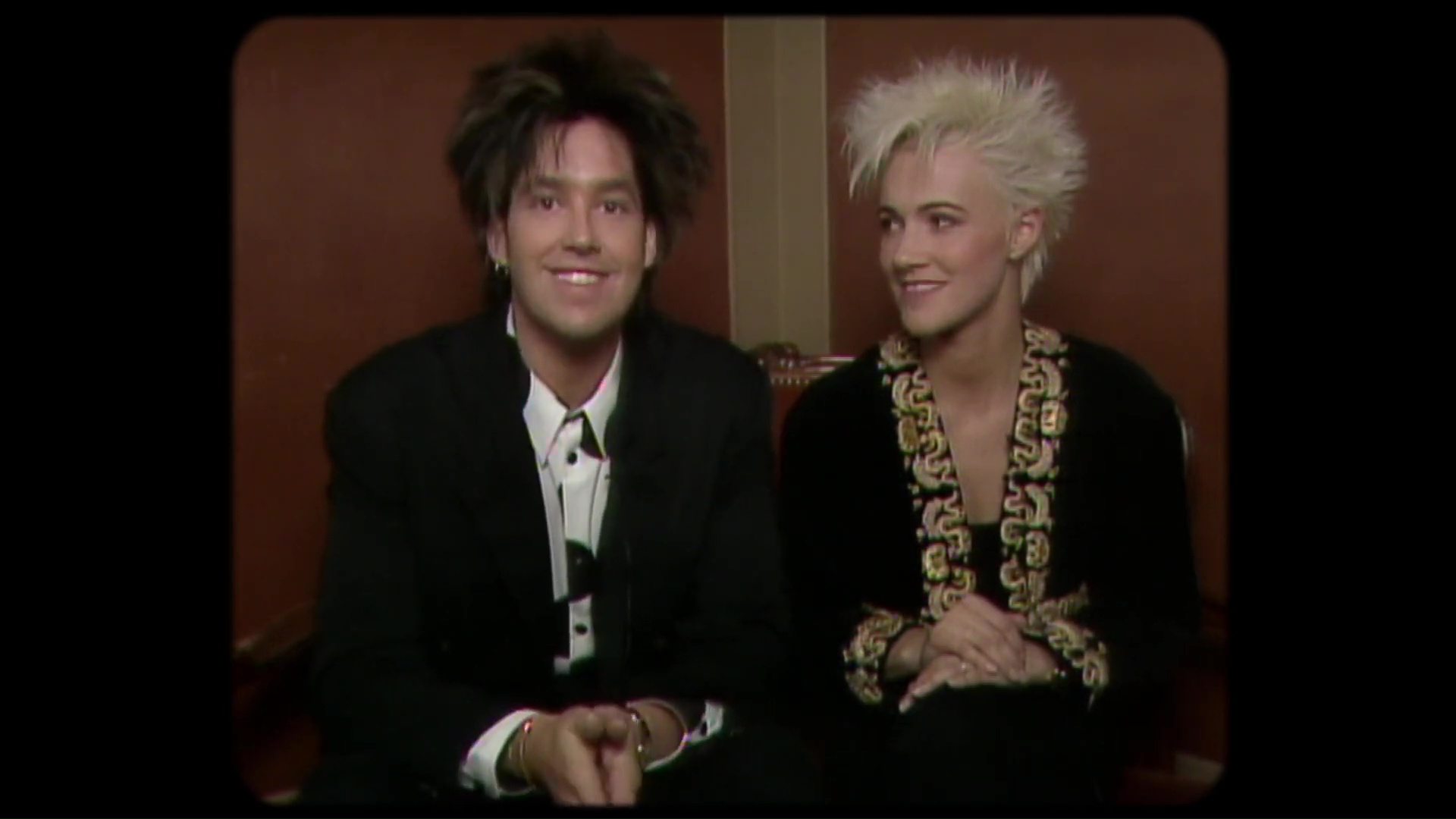


 Per says he thought he was good at writing songs, but he didn’t like his own voice. He thought his voice set a limit to his material. He didn’t want to sing, but wanted to work with someone who could. When Marie started singing she made Per’s songs so much better. In the end they became a duo and Per was singing too. He says it’s effective. It’s the same as in Fleetwood Mac or the Eagles or The Beatles. You can customize the song after you wrote it. He wrote The Look for Marie, but it didn’t fit her, but it suited Per. The big ballads he wrote for her, Queen of Rain, Listen To Your Heart, It Must Have Been Love, Marie made them big anthems. When he listens to his demos of these songs he can hear they are rather boring. It’s Marie’s capacity that lifted these songs. Per says they were a good combo. Match made in heaven. They were good at different things, but when they added them together, 1 + 1 made 5.
 Per talks about their first tour in South America 1992. He says there was extreme poverty and Michael Jackson cancelled his tour, Guns N’ Roses too, Madonna as well. It was clear they wouldn’t earn money on that part of the tour, but they still wanted to play there. Whole South America exploded. They had to move their shows from places with capacity of 7000 to football stadiums with capacity of 48000 in Buenos Aires, 65000 in São Paulo, 55000 in Rio de Janeiro. Same in Lima and Santiago. After the first Buenos Aires concert they had to do another show and they sold the rights to broadcast live to one of the 2 TV channels in Argentina. The other TV channel was broadcasting their Zurich show from half a year before. So that night for about 90 minutes Roxette was all around Argentina.


