Per Gessle on SVT – Go’kväll

As you all know, Per Gessle appeared on SVT’s evening show, Go’kväll on 25th November. The recordings took place in the TV studio in snowy Umeå 2 days before. Even if the TV broadcast was at 18:15 CET, SVT Play made the whole program available on the web very early in the morning. Watch the whole show !

The show starts with host Pekka Heino and Per Gessle standing in the front, the band sitting on the couch in the back. Pekka is having a discussion with Per saying he doesn’t know what he’ll become when he grows up. Per says it’s actually the same with him. So they’ll see if they come up with something during the show.

Besides Per, there is a chef, Gustaf Mabrouk in the studio to prepare some dessert and stylist Hedvig Andér. Pekka starts talking about fashion with Hedvig and apropos talking about fashion icons, he turns to Per. Before they are talking about clothes, Pekka mentions Per has released 2 albums, one in spring, one in autumn. Both recorded in Nashville last year. He also mentions that Per went on tour this summer, for the first time with songs from his entire career and he is going to release a live album and a photo book as well. Pekka says he is old-fashioned and still buys records at record stores. Per is joking and asks where he can find a record store. Pekka says there is at least one in Stockholm.

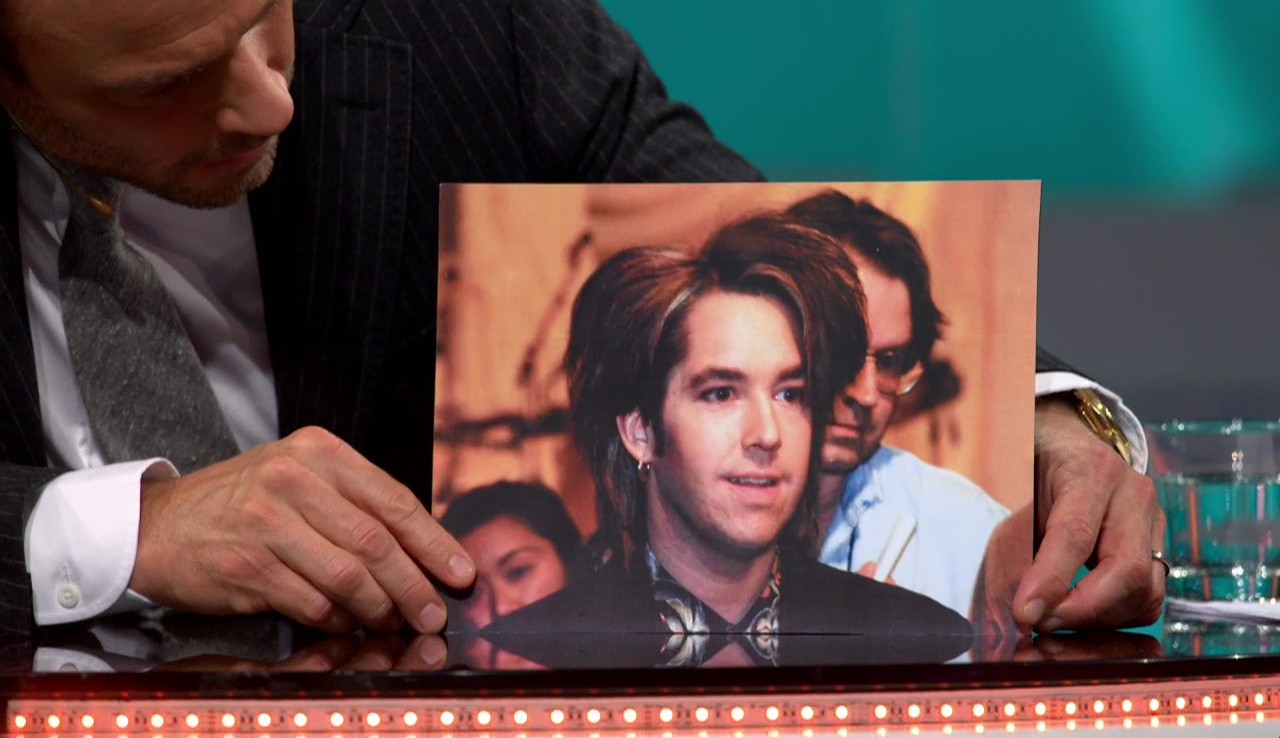
Getting back to fashion, Pekka says they found a recording from Jacob Dahlin era, from Jacobs stege show on TV. Per says “Help! Fasten your seatbelts!” Roxette’s Soul Deep performance is shown from 1986, Marie and Per wearing their stylish shoulder padded clothes. Then Pekka shows a picture of a young Per Gessle from the ‘70s, Per says it was 1977 when he was 18. He recognizes the nice white buttons and mentions wearing socks with moccasins is not so good. But it was cold in Halmstad. Haha. Then a 1981 Gyllene Tider pic is shown. Per was wearing a white belt to a pair of black leather pants. Back then it was cool, but not anymore. And it was the era of narrow ties. Pekka asks Per how many hair colors he has had over the years. Per replies now it’s mostly grey, but he had all possible hairdos. Blue-black hair, then blonde, purple and red like wine. Then carrot red during his David Bowie era. Pekka shows a picture of Roxette from 1989, from the breakthrough era. Marie and Per were styled and photographed in New York for this pic and had their clothes from Trash and Vaudeville that sold fantastic clothes on St. Mark’s Place in Manhattan. The stylist confirms that the clothes are really cool and fit the era. The last pic shown is a private photo of Per and Åsa. Per says it’s from the ’80s, this is how they looked when they were young. Pekka asks whose hairdo took longer time to be done. Per says it was his. The stylist says Per’s jeans on the pic look quite modern for that time. Patched jeans. Pekka asks Hedvig about what is still to be found in today’s fashion in any form if they look at these pictures from the ’70s and ’80s. Leather jacket, as well as patched or torn jeans are still trendy. Maybe the striped tights aren’t, but everything comes back into fashion. Maybe not in the same combination, but everything comes back. Then Pekka and Per take out 2 pairs of boots. Per says they bought them in 1989 for photo sessions, TV shows and stage use. One can see on their sole they are hardly used. Per tells they had 1800 interviews in 8 months back then and 400-500 photo sessions at the same time. So they had tons of clothes. Especially Marie has a fantastic collection of leather jackets, one can see photos of them in her autobiography book.


Pekka walks back to Gustaf to see what he is doing in the kitchen. Per follows him. Gustaf is preparing lemon fromage. Gustaf asks Per to taste the yuzu cream he prepared. Per reacts, woohoo, there is minus sugar in it. He says it’s very good. Per looks happy when he sees Gustaf adds white chocolate to the dessert. Pekka is kidding Per, saying Per tries to memorize the recipe. Haha. He asks Mr. G how he is in the kitchen. Per says he is pretty bad, but his wife is very  good, so he rather lays the table, opens the wine and washes up the dishes. (Look at the band’s reaction when Per says washing up, LOL! 😉 ) Mr. G says he wishes he could cook. He says he is good at preparing mincemeat sauce though. Pekka and Per laugh when they see Gustaf as a man can do multi-tasking, 2 things at the same time. Before leaving Gustaf, Pekka says hi to the band and tells Per and Co will perform a song with a children choir. Then he leaves Per and there is a short discussion with Hedvig, without Per.

After some minutes, Pekka greets Per again. Now they are sitting on the couch and the real interview starts. At this point you realize that torn jeans are really trendy these days… Haha. Pekka talks about the fact that actually in Swedish media he was the first one who came out with the news of Roxette having a No. 1 in the US, The Look. It was in Frukostbrickan on P3 Swedish Radio. Pekka asks Per if he remembers how the news about No. 1 got to him back then. Per says he was in Halmstad, Marie was in Stockholm. They knew that they had the chance to become No. 1, but they were in separate places not to become disappointed together if they don’t become No. 1 in the end. But they became No. 1 and it was silly to be in 2 separate cities.

Pekka then remembers a story he read back in the ’80s. ABBA-Frida released her first solo album in English in 1982. Per wrote music to a Dorothy Parker poem that Frida read a lot of times. What Pekka read is that when the album came out, Per asked his financial adviser ”Am I a millionaire now?” Per laughs and says it’s not true. Not everything is true what one can read.

Pekka says ABBA members were around 30 when they broke through and that was the case with Roxette, too. Per says both Marie and him had approximately 10 years of experience in Sweden before they broke through with Roxette. Pekka asks how they handled succes after that. Per says they could make decisions differently. When they became big in the US, their record label wanted them to move to the US, but they wanted to stay in Stockholm and work with their band and they could decide for themselves.

Pekka asks if there is a difference between luxury back then and luxury now. Per says he doesn’t know. The more you get older, the more you value other things. Time, for example. When you are 25-30, you don’t think about time. Then you waste it, with all rights. But when you get older and lose your friends, parents and siblings, time becomes valuable. At this point they start talking about ”En vacker natt” and ”En vacker dag”. Per tells he recorded the albums in Nashville and EVN has his sister on the cover, while EVD has his mother on it. He tells he lost his mother, sister and brother in 3 years so he is the only one who is left in the family. It was tough. He handled it via working further. This is how it works for him. He uses his experiences and feelings in his work.

Pekka and Per talk about the fact that long relationships are important for Mr. G both in his private and professional life. Per says he is together with his wife since more than 30 years, he works together with the same guys in Gyllene Tider since 1979, his manager since 1986, the same booking company and Marie and producers and almost the same record label.

Pekka talks about the 2 Polish guys, Jakub and Dawid who made a video to Roxette’s song, ”Some Other Summer” and Per surprised them at the QX Gala in Stockholm earlier this year. Per says Roxette has the best fans in the world. They are very creative, active and have always been supporting them, especially when Marie was ill in 2002. Per says the surprise at the gala was cool. The guys got a lot of shit in Poland and it was lovely that they came to Stockholm. They are wonderful people.

They move on to the songwriting topic. Pekka asks Mr. G if he decides in advance whether the song he is writing is for Gyllene Tider or Roxette or for his solo career. Or if it is the song that comes first and then he decides where to use it. Per says both can happen. One deals with several projects and writes for a certain project, but it can happen that a song is too heavy for Gyllene Tider for example, then he can put it in his solo box and take it out 3 years later. Pekka says there are songs that have Swedish lyrics and also English lyrics. He asks Per whether it goes smoothly or it’s challenging for him. Per says he translated his Nashville albums to English and it was actually quite hard to do, because the texts are very private and personal. To find the feeling in English was very hard, so half of the texts is written by a Nashville girl. The album is to be released in spring 2018.

Pekka says he is quite convinced that one day there will be a jukebox musical, the question is only whether it will be based on Gyllene Tider, Roxette or Per’s solo songs or all together. Per says each can have an own musical, why to choose.

Pekka mentions that Per has described his career as a tree. Per confirms, he has many branches on his tree and he tries to exploit it, not to tire out his audience. Working internationally provides a much bigger market. It’s harder to work only in Sweden, you can make people feel ”not him again”. Per says he is very fortunate to have all these branches.

Pekka asks Per about what he thinks about songs all people want to hear at the shows. Mr. G says when he works in English, the audience is international. They don’t know Sommartider or Gå & fiska! or Leva livet or Här kommer alla känslorna. But Gyllene Tider never rehearse Sommartider for example. They would laugh, but when there are 10000 people in front of them, then it’s wonderful to have these songs. Every artist loves their own hits, those are the spine of their activity.

Pekka asks Per if he thinks about what comes next when he creates playlists. It happens, but Per has a long playlist that suits most. It’s an easy listening how he calls it. Sounds a bit like guilty pleasure. There is everything possible from old jazz to James Taylor.

The interview ends here and the guys go back to the kitchen to see what Gustaf is doing. Per enjoys seeing the final steps of preparing the dessert and says it looks fantastic. He also touches and smells the lemon verbena plant that’s right in front of him. Gustaf asks Per if he is a dessert guy. Per says, unfortunately, he is. He says he loves Italian kitchen and so he loves Tiramisu. The guys talk about TV series and Per says he likes it when the whole season is available and can watch it at once. One can get hooked to some series.

Before they can all taste the dessert, Pekka leaves the guys and goes back to Hedvig. After the discussion, they all gather to try Gustaf’s treat. Per is joking and says he has crumbs all over his mouth already – trying before others. They all like it and say they will save Per’s portion, but Mr. G has to leave for the stage, because the band is already waiting and they perform ”Det är vi tillsammans”. John Holm isn’t there this time, Helena Josefsson is singing the parts John sings on the album. What an incredibly amazing performance it is! You can also watch it separately !

The band: Helena Josefsson, Malin-My Wall, Christoffer Lundquist, Ola Gustafsson, Martin Höper; children choir: Vasakyrkan Amigos.

Mikael Bolyos: “Hopefully we can release something more..”

Mikael Bolyos on 30th May 2017. (Foto: Annie Heart)

After Marie surprisingly released a new jazz single on her birthday, we felt the urge to talk to one of the driving forces behind the project: Mikael Bolyos. Luckily enough he found the time to answer some of our questions and we want to thank him very much for doing so. We know he is a busy man.

RXB: Mikael, thanks for stopping a second to take the time to talk to us. It was probably quite busy lately with Marie’s birthday and the release of the new song – and both topics that made us think we desperately need to talk to you. So, first of all: Is your house still a normal house or did it turn into a huge garden on Marie’s birthday? Just kidding, of course, but we are well aware that many fans still send their cards and flowers and presents and we are curious: Did it become more now that Marie has retired from the touring life?
Mikael Bolyos: No, our home still always look like a flowershop  on every Maries birthday.

RXB: And talking about Marie’s birthday: We were very surprised to find out that she or you decided to release a new single (Alone Again) on her birthday. Did you choose this date on purpose or was it a coincidence? This definitely feels like you made yourself a present and you gave a present to us as well.
MB: Yes, the whole idea was to try to give a little something back to all her fans. Call it a little “thank you” for all the support over the years.

RXB: Do you still read the Roxette internet and Facebook fan pages such as Roxetteblog and The Daily Roxette – so are you aware that the fan world went totally crazy after the song was announced on several streaming services such as iTunes, Amazon and Google play?
MB: Yes, we noticed some comments!

RXB: The response so far has been amazing, lots of positive comments everywhere, how do you feel about this?
MB: We, Marie, Magnus, Max & me are so happy about this. Max told me the other day that people are telling him daily on the bus, in the streets, everywhere how much they like the song and production.

RXB: What can you actually tell us about the single? When did you have the idea, when did you record it?
MB: I had an idea back in 2002 to make an instrumental album with my favorite sax and guitar players in Sweden. Magnus Lindgren and Max Schultz. We started the recordings at Vinden studio in January 2003. Soon we asked Marie to add some vocals to one of the songs (on a Sunday). We also made the first recording of Max´s song “Alone again” back then. At that time it was an instrumental song. A couple of years later I wrote the lyrics and in 2009 we recorded the song with Marie. At that time we even had plans of doing some light touring with this trio. But as you know history wanted something else.

RXB: Is there a reason you chose English over Swedish?
MB: No, not really ! Maybe it´s because Magnus’ instrumental song’s name was “On a Sunday” so Marie and me wrote english lyrics to it.

RXB: The song came together with a (surprise) video – what was the idea behind this?
MB: We thought it would be easier to present the song if it contained a video. It’s much more funny to click a link and be able to listen and watch.

RXB: You worked with two musicians with who you already worked with before, why did you choose to work with them? How did this collaboration come up?
MB: Marie and me heard a duo in a hotelbar in London 2002. Two guys playing sax and guitar. It felt as an odd combination, but still so interesting. It felt natural to ask Max & Magnus if they were interested of trying something like this, but playing only original songs.

RXB: Does the single mean that a new album is coming out soon?
MB: I wish I could say yes, but this was meant to be a one-time event, but after the massive positive reaction….. we’ll see…..Hopefully we can release something more in the same category in the future…at least I hope.

RXB: Both musicians are known for their jazz music, if there will be a new album, will it be THE jazz album Marie always wanted to do?
MB: Yes, I think it’s a good guess that in that case, jazz & blues will dominate, but I don’t know about a whole album.

RXB: Have you listened to Per’s solo album? What do you think?
MB: Yes we have and we think it´s great. We like it a lot !

RXB: We read a rumour some weeks ago that you and Marie became grandparents in the meantime. It spread like a bush fire and many people were speculating about this being right. We really don’t want to fuel the rumor mill, but in case it is true…
MB: HA! Not as far as we know.

Interview with Per Gessle in Kupé magazine

In the latest issue of Swedish Kupé magazine there is a short interview with Per Gessle. Actually, Nicolas Jändel, the journalist left Per’s thoughts in a first person narrative form, so it’s more like Mr. G telling his own story of what music means to him, he talks about songwriting, his new albums and the summer tour. HERE you can read the original text in Swedish. From this blog post we can see that the interview was done in April.

Per tells Nicolas that during Roxette times they were standing on stage in front of 50-60,000 people in the crowd. Per says he can’t think of anything that could beat that feeling, but he would still play if there were only 20 people coming. Mr. G says it’s gonna be fun to be on tour again. The tour starts on 6th July and when they will be standing backstage before the premiere in Helsingborg and hear the noise in the crowd, they will feel the energy and will be excited to go up on stage and give their best. Per says he doesn’t know how to describe that moment, but it might be similar to when cows are let out to grass for the first time during the year.

Per says all his Swedish solo albums are holy things and the songs are his babies. Now he wanted to write in Swedish again and record at a new place after spending more than 400 days in Christoffer’s studio during the past years. He decided for Blackbird Studios in Nashville. Per had the basic material ready, but wanted to go to Nashville with an open mind. Mr. G says when you have musicians like Dan Dugmore in the room and he is playing, you have to cry, it feels so great. It’s the same with the duets. Having another artist in the song gives another perspective. Per mentions he has duet songs with Lars Winnerbäck and John Holm. There are similarities between Mr. G and John Holm, e.g. they both have strange voice.

Per tells Nicolas he worked a lot on the lyrics, as usual. The texts are in focus for him and are still about the same big questions as when he was young. Disappointment, love, sorrow and dreams, but from another point of view now, when you can no longer write about the first love.

The meaning of music hasn’t changed for Per, it’s still extremely important for him. He can’t even imagine life without music. Music can make people dance or cry. It brings people closer to each other. He can’t see any other art having the same effect. Per tells the story when he and his friend were troubadours and played at nursing homes for old people. Once they found themselves in a room where only two patients were present. They were both sleeping, but Per and his friend started to play anyway. They played until a nurse rushed in and kicked them out. Right before they left the room, one of the patients woke up. It turned out he was in coma for months. Music can be so great.

Mr. G says Sommartider was the first real summer hit, then came some more. In the ‘80s it was natural to write summer songs and play them in parks. It was about writing major songs that make people sing along. He says it was similar with Roxette’s Joyride, The Look or Listen To Your Heart, the songs which have big choruses.

PG photo in the article was taken by Andreas von Gegerfelt.


Jan Gradvall’s podcast interview with Per Gessle

Jan Gradvall in his podcast tries to find out what drives Per Gessle, what his secret is and what happens if you analyze Gessle’s songs in depth. Jan is trying to do it via analyzing ”Allt gick så fort”, which is one of Per’s most personal songs he has ever written and can be found on the new album, ”En vacker natt”.

Per says it’s the central song on the album. He tells he read an interview with David Crosby who told he had five guitars in his bedroom and that all of them were tuned differently. Per thought it’s cool. Mr. G experimented a lot with traditional tunings, but then he googled David Crosby’s tunings and found out there are a lot of variants and found one which was very odd. So Per tried some new tricks, playing his old chords in a new way, creating completely new sounds.

”Allt gick så fort” is very text-oriented. It starts with an accident Per witnessed during a visit to France. Per says it’s a song that kind of writes itself. It matures through a whole life and suddenly it feels ready to be written down.

Jan asks Per what he is singing about when it’s in the lyrics that he was 8 years old. Per says the lyrics tell a whole life in a way. The text starts with an unknown person, but then suddenly, you sing about yourself, when you are a child and then it’s about when you are 18 and in love for the first time. In between there is another person seeing the whole thing from another angle, in the middle of his life, in the middle of his career and realizes it all went so fast. Per says the song was written very fast, but the guitar tuning was tricky. Jan asks how exactly that tuning is done. Per says when he wrote the song he went to Halmstad, to MP’s studio to record a demo. It went very well with all that new tuning. Then he went to Nashville to record it properly, but he had no clue how he did that in Halmstad, so they had to use his demo.

The whole Nashville project was different to whatever Per has done before and it’s not like today’s pop music when everything is done on computers. Per wanted to try something new. It became a completely organic album. It’s not an album for everybody. It’s for a certain audience. Per thinks many can identify with it, but many will think it’s too slow or the violin is too whiny. But it doesn’t matter. For him it was important to make this record. He wanted the lyrics and his voice to be in focus. The fantastic musicians in Nashville added a lot to it, Dan Dugmore with his pedal steel playing or Stuart Duncan with his violin playing.

Jan finds the expression ”I sin icke dansande generation” (= in his non-dancing generation) fantastic and he asks Per how he came up with this. Per says when you are sitting and chatting you realize that your generation is a non-dancing one. He finds the rhymes and songwriting exciting.

Jan mentions there are many returning symbols in Per’s lyrics on the new album, like sea, beaches, nature. Per says he has always used symbols like flowers, sea, winds, things you associate with images when you are listening to a song. It somehow makes the listener be part of the song. They recognize the smell, the taste, the feeling.

Jan and Per talk about Per’s family, that he has lost his mom, brother and sister during the past 3 years. When his sister, Gunilla died, her son found a box of 25-30 old diapositives from 1965-66. Even Per appeared on some of them. Mr. G chose a pic of Gunilla, standing and singing probably in Tylösand, to be on the album cover. Per thinks the colour of the diapositive fits the album very well.

Per tells Jan that Anton Corbijn was in New Orleans, shooting Arcade Fire when Per was in Nashville and so Anton came over and took some fantastic pictures of Per. First Per thought one of those should be on the cover, but after her sister’s diapositives were found he changed his mind. This way it is more personal and even more unexpected. The second album ”En vacker dag” will have a 1965 pic of Per’s mom on the cover, with a picnic table just behind the family’s Volvo Amazon.

Jan asks Per if losing his relatives has affected Mr. G in a way that it can be heard on the album. Per says yes and no. It of course has affected him, but none of the songs are directly about this. ”Allt gick så fort” might sound like that a bit, but the rest of the songs were written last spring after Roxette stopped touring. Some of the songs were left-overs and were re-written, but most of them are newly written.

Jan and Per talk about an earlier interview from the Son of a Plumber times and Jan remembers Per told him that his father died when Gyllene Tider broke through and Per wrote ”När alla vännerna gått hem” after his dad died. Per says it’s true and of course what happens in your life has its effects on you. These two albums he has made now he couldn’t have done 10 or 15 years ago. You must have a certain experience, a certain security, a certain courage to be able to do it. You have to find your style, your language, your strength to be able to do it.

Jan tells Per he feels that when Per sings on this new album, he is more ”naked” and asks if it is conscious. Per says he wanted to put the lyrics in focus.

Jan says the album sounds in a way very much Nashville, but also very much Halmstad. Per was travelling around the world, but always came back to Halmstad. Per says the older you get the more you go back to your roots, where you come from. It’s like when sometimes he is sitting and checking songs on Spotify and sees billions of them and he goes back to listen to songs he likes from 1967. And yes, there is a Nashville sound on the album, but at the same time, it’s Per’s stlye.

Mr. G says he wanted an album that is text-oriented and very simple, acoustic. First they just thought they shouldn’t record it in Sweden. They thought about studios in England and France, then Nashville popped up and Per liked the idea of a fusion between Tennesse and Halland. A little country has always been there in Per’s solo music. Neil Young’s “Harvest” stlye. They had no plans at all when they left Sweden for Nashville. First Per played the acoustic guitar and sang a bit, then they asked the studio if they could help to find local musicians. There are two world famous pedal steel players, Dan Dugmore and Paul Franklin. Dan Dugmore is the one who plays the pedal steel on Per’s album. When he listened to Per’s songs he wrote down numbers instead of chords. How Dan played changed the songs. Since they wanted to save time, they recorded 3-4 takes and then edited them later while mixing.

The same day Dan Dugmore came to the studio, Stuart Duncan came too to play the violin. When Per heard him playing he said wow. Everything became better and better, like the intro to ”Småstadsprat”. Then they needed a harmonica player, so Mickey Raphael plays on 3-4 songs.

Jan asks what Per thinks why his melodies are so special that they are attractive even to those who can’t speak Swedish. Per thinks they are beautiful, that’s why the albums are titled “En vacker natt” and “En vacker dag” (“A beatiful night” and “A beautiful day”). At least that was his ambition. Jan asks where Per’s melodies come from. They come from the ‘60s, but also from the Swedish traditional music. Here Per talks about his adventures with his friend, Peter as troubadours who played at nursing homes for old people. Per played the guitar and sang, Peter also played the guitar and the flute. They played everything they could and it included a lot of country as well. As troubadours, once they had to play at an old people’s nursing home in a new place in Halmstad. They entered a big table tennis hall and there were two men lying in there, they were not moving at all. They didn’t know what to do, there was no personnel around, so they just sat in the middle of the hall and started playing some songs, Proud Mary or something. Suddenly a nurse came and asked what the hell they were doing. They said they were just playing songs. A lot of doctors rushed in and then it turned out that one of the men there was in coma and he woke up to the sound of Per and Peter playing music. The day after it turned out that they shouldn’t even have to be there, at that place, but he will never forget that day. One can see that music makes miracles.

Pic from Jan Gradvall’s Instagram.


Per Gessle about the bright and dark side of life

On the release day of ”En vacker natt” (28 April), an interview with Per Gessle was published in Hallandsposten.

Jan-Owe Wikström asks Per about those great musicians (David Bowie, Leonard Cohen and Prince) who passed away last year. He asks Per if he ever met them. Mr. G met Bowie before a concert in Lyon, but they just greeted each other, never talked. Cohen he never met and Prince either, even if Roxette played on the same gala when MTV Europe opened in Berlin. But as soon as Prince moved, there were 18 people around him. Per says he was in Prince’s studio though, Paisley Park in Minneapolis shortly after R.E.M. had been there to record. Everything was white and in the middle stood a giant bird cage. They even saw Prince’s private apartment above the studio and it was just as you imagined Prince. A heart-shaped bedroom, much purple and a sliding roof over the whole apartment.

Jan-Owe asks Per if Bowie was his greatest inspiration. Mr. G replies that musically he doesn’t know, but Bowie is definitely the artist who has meant the most to him, because he came into Per’s life when he was the most influenceable, at the age of 13-14. Per says Gunilla was Elvis, Bengt The Beatles and he was Bowie.

Jan-Owe asks Per about how it has affected him, losing his brother Bengt, his mother Elisabeth and his sister Gunilla in a short time. Per says it’s clear that you get a new view of life, to appreciate the moment, to take care of your loved ones. He tells Bengt had lung cancer, but didn’t tell anyone. Per thinks he was on tour when Gunilla visited Bengt in the hospital and after leaving, she got a phone call that Bengt had died. Per says you come to a time in life when you know more people who die than who are born, which obviously makes you think.

To the question if he believes in God and a life after this, Per replied he has not really decided. Sometimes maybe. It would have been nice to have a strong faith and both his mom and Gunilla were very religious. Gunilla even educated herself to be a priest, but started working at hospice instead. Per says he doesn’t belong to anywhere yet, but who knows. He is thinking, maybe when you grow older, you become more religious.

Jan-Owe asks Per, while they are sitting in Per’s house in Halmstad, drinking coffee and eating sandwiches, if he thinks the roots become more important when such serious things, mentioned above, happen in life. Per thinks even if he is a restless soul, that’s probably the case. He travelled around the world, but still always ends up in Halmstad. And that’s nice because everything is so much easier there. It’s closer to nature, it’s calmer…

Jan-Owe asks Per if what’s happened has affected his songwriting. Mr. G tells there are no lyrics that are directly related to it. But one is certainly affected by such happenings. Per says he doesn’t believe it was better before and it doesn’t necessarily have to be negative to get older, in case you are healthy. On the contrary, he is using that experience in his writing artistically and creatively.

Jan-Owe says he saw a survey which showed that those between 60-75 are the most satisfied with life. Per agrees. He says you have your family, have peaked in your career and are hopefully happy with what you’ve done in life. You have nothing left to prove. Per is soon there and could therefore make such a record that builds more on moods than single songs. A blank paper. Acoustic, Swedish, lyrics-oriented and country-influenced without being country.

Per tells Hallandsposten he is the most proud that, after almost 40 years in the music industry, he has done something he has never done before. If people like it, he doesn’t know, therefore he wants to wait before he decides which songs to play on tour.

Song by song comments – En vacker natt

”Min plats”: It was one of two key songs on the album, because when those 2 were ready, I had the pillars. It just felt like having it as the opening song.

”Första pris”: One of the songs which weren’t written for this album but for Roxette, which we never recorded. A little blue tone in the duet together with Helena Josefsson. I almost literally translated the English text.

”Småstadsprat”: It wasn’t meant to be a duet at all. But then we started talking about how rare duets between boys are. If it’s between a girl and a boy, you sing to each other, but boy / boy – then you sing towards a common goal like here with Lasse Winnerbäck.

”Enkel resa”: A fun and odd song. Sometimes I try to encourage MP (Mats Persson) to write songs which he does amazingly well. And he does it every ten years… Here he comes with exciting basslines that I added a melody to.

”Allt gick så fort”: The other central song on the album. I read an interview with David Crosby who told he had five guitars in his bedroom and he tuned them quite oddly. So I started googling and found an odd tone with which the guitar became a completely new instrument. But when we were to record in Nashville, I couldn’t take those grips again so we had to use the demo.

”Tittar på dej när du dansar”: The most poppy song on the album. I tried to avoid having such songs, but at least one is needed for the energy. A little odd, built from two songs in one and one of the few with electric guitar.

”Några glas rosé”: The hardest song to write because it has no chorus and has a narrative text that needs much space. Something like “Billy” without chorus.

”Far Too Close”: Written for Roxette from the beginning and because we had time left, it became the ultimate homage to Nashville, letting a Nashville girl, Savannah Church sing the finale.

Photo from PG’s Nashville archives