
Alexander Pärleros wanted to do a podcast interview with Per Gessle since 3 years. Now it was time for Per to say yes and they did the interview on 21st November 2017. The whole conversation is very easy-going, Alexander is well-prepared with questions and Mr. G is as down-to-earth as usual. Hardcores will hear some new anecdotes and have to wait until the very end to get some real news – about the new album which is out in May. You can listen to the podcast HERE (no. 160 is the interview with Per) or HERE or on iTunes.
Here is my summary of the interview in English.
 First there is a 2.5-minute-long talk about the podcast itself. The PG-related talk starts after it, with a mix of Per-penned song fragments and an intro about Per’s career. Per joins in at appr. 4:50 in the podcast.
Alexander asks Per how he is and Mr. G says he is a bit tired because he just came back from the US. He tells he changed publishing company, so he had a lot of work meetings, also with his American record label, as well as Sirius XM. Per tells he saw Bruce Springsteen on Broadway. Alexander asks Mr. G what he likes the most in the US. Per tells he likes New York a lot, he gets energy there; Los Angeles, Florida, Miami, South Beach. Alexander asks Per if he has ever been to Michael Jackson’s house. Per says thank God he hasn’t. Alexander asks if Per doesn’t like Michael Jackson. Mr. G says he met a lot of people who love Michael Jackson and think that he was the most important person in the world of music, but he was not the most important in Per’s world. However, he was of course fantastic, but he is not in Mr. G’s Top10.
Alexander asks who Per’s Top3 most important artists are. The Beatles are No. 1, because the music they represented is reflecting the times when Per became interested in music and their music formed Per a lot. Then there is Tom Petty, who he probably listened to the most and with Gyllene Tider they kind of became the Swedish Tom Petty and the Heartbreakers in the 70’s. Here Per mentions the story when Marie and Per were doing a TV thing in the Netherlands and Tom Petty shouted out to them from the second floor that he loved their record. Per says that after Tom Petty passed away, he got a video link from a friend in Los Angeles where Tom Petty at the end of the video mentioned the weirdest cover he had ever heard was the Swedish version of I Need To Know. It was Vill ha ett svar by Gyllene Tider. Mr. G says Tom Petty was an awesome artist, songwriter, singer and guitar player.
The third place is shared between Joni Mitchell and Leonard Cohen. They also formed Mr. G a lot with their singer-songwriter tradition and listened to them a lot in the 70’s. When Per was 13-14 years old he started writing lyrics by translating Leonard Cohen into Swedish. Per couldn’t play the guitar back then, but the first songs he learned to play on the guitar which he got from his mother were Leonard Cohen songs: Famous Blue Raincoat, Suzanne, etc. Per thinks Joni Mitchell wrote the best lyrics. She is totally fantastic.
Alexander asks Per how a typical day is for him. Mr. G says there isn’t really a typical day for him. E.g. on a day like today (when the interview was done), he has almost nothing else to do just to talk with Alexander. He woke up at 9. He has a son who goes to school so sometimes he also wakes up at 7. If they are talking about a typical year for Per, he can tell that for a third year he is in Halmstad, for a third year he is in Stockholm and for a third year he is on tour or travelling. Alexander mentions it’s interesting that Per sets an alarm clock. On a normal day Per sets the alarm clock not to sleep for so long, but when they are working in the studio it can last until 2-3 am, then one can feel he should sleep more.
Alexander asks Per what he eats for breakfast. It’s boring, he always eats the same thing: coffee with milk and 2 sandwiches. One with apricot marmalade & cheese (he starts with this one), and one with ham & mustard & chives. Then he drinks a little vitamin C, lemon flavour. Alexander asks if there is any routine for the evening. Not really, but when he is free and is at home then he shuts down the computer at 6-6.30 pm, then it’s rather family time. They eat dinner together or with friends, watch a movie.
Alexander says Per and he has a common friend, Erik Bergman and Alexander asked him what to ask from Per Gessle. He said ask him about Halloween. So Alexander is curious if Per is interested in Halloween. Per says he is not interested in it at all. Once he was there in Los Angeles when it was Halloween. There was a bizarre parade on Lincoln Road with appr. 100.000 people. Everyone went there and Per dressed as Sony Bono with a thick mustache and Åsa dressed as a police woman, she looked very cool.
Alexander asks what the difference between the everyday Per and the Per on stage is. On stage Per leaves himself out in a way, he kind of becomes someone else. It’s like there is an official and unofficial Per Gessle. Many think that what he is writing the songs about is something he went through, but it’s usually not the case. Bruce Springsteen told on his Broadway show that he became the working class voice of America, however, what he writes about is not always something he experienced. Per feels the same. He always tries to write the lyrics in a way that those who are listening think it’s trustworthy. It doesn’t mean that the text is true, just that you believe it is. Everyone interprets the songs in different ways. For example, how he interprets Leonard Cohen’s Hallelujah is different to how someone else interprets it. This is the magic of music and texts that you always find something in common with your own personality in it. Per always hears stories that people get married to his songs or get divorced to his songs (laughs) and they feel the songs are about their lives.
When Per is writing songs he tries to write as little as he can. He plays the piano or the guitar, checks the computer, but writing always depends on how he feels. When he really wants to write something, then it goes quite easy. Sometimes when he has a little music idea or a chord or a melody on his mind, he tries to find a word or a phrase that harmonizes with it. Then he starts writing the lyrics based on that one word or phrase. It’s like when you start painting a paint. You start with something little and there is more and more in the picture, maybe an environment or an abstract stuff, different colors that harmonize or not. There is no rule.
The guys are talking about Per’s childhood. Mr. G tells he was rather a lonely boy. His mother was a teacher in porcelain painting and worked a lot at home and when she was working she was quiet for hours while creating. Per liked it, the peacefulness in this process. He and Åsa are very different when it comes to listening to music. Åsa likes music being played anytime, but Per doesn’t put on music unless he listens to it actively. He likes silence otherwise, being in his own bubble. Per likes old Amercian country music more, Åsa likes dance bands more. When they are driving, Åsa always turns the radio on, Per turns the radio off. When they are in the same car, Åsa always wins.
Alexander asks Per what he thinks the secret of their long and happy relationship with Åsa is. Per says they have been on the journey always together. Åsa was working in the travel industry, so when Roxette broke through she organized everything related to their travelling. She was always there with him during Roxette’s busiest years, 1988-1995. They couldn’t really meet if it weren’t so. They have a lot of experience together and they are each other’s best friends. Åsa and Per met in a disco in Halmstad. Per was there to date with another girl who was going out with another guy back then. Åsa knew that girl and tried to help that girl and Per meet in secret, so organized a date for them in her house. Per in the middle of the date got more interested in Åsa. Per was 24-25 years old then, Åsa was 23. It was during the times when Gyllene Tider was over and Mr. G’s career was down. He had no record contract, he was writing songs for others. He had no money at all. Actually, he and the guys came from the 70’s, everyone was unemployed and they didn’t earn that much money. If they earned 10.000 SEK a month they felt like Scrooge McDuck, it was much, because otherwise they didn’t earn anything.
Per tells he left his mother’s house quite late, when he was 21-22 years old. He bought an apartment and his mother’s old car, an orange Passat. After they broke through with Gyllene Tider he started buying stuff for the apartment, 2 Andy Warhol paintings on Mick Jagger (it cost nothing back then and he still has them). He bought instruments, guitars and stuff. He bought a Prophet-5 synth that cost 34.000 SEK. It was a lot of money, but its value went up and now it’s vintage so it is worth probably even more.
Mr. G tells the story of getting thousands of letters when they broke through with GT and that fans stole the laundry on dry. They stole everything movable as a souvenir. It was the same when Roxette broke through. It was even bigger in a way, because it was international. When they played in Buenos Aires for example, in 1991 there were 1000-1500 people in front of the hotel and they were singing Roxette songs all night long. It was Formula-1 season and there was a Grand Prix at the same weekend. The drivers stayed at the same hotel and Per met David Coulthard who said they couldn’t sleep because of the singing. Those times were hysterical, mainly in South America.
Per tells there weren’t any extreme problems, they always had very good security teams. What he remembers being an extreme weird thing was when Gabriel was born in Karolinska Institute in Stockholm and one of the tabloids that wanted to have the first pictures of Gabriel went in to the floor where Åsa was. The woman had flowers and told he was a relative. The same tabloid hired a helicopter and was doing rounds above Per’s house in Halmstad, to be able to take pictures. It was in 1997.
Per says if you work in the music business, one of the keys to success is that you become famous. That people can listen to your music and buy tickets for your concerts. When he is talking about the above mentioned things he is not whining. These are facts that go along with being famous. One learns to live with that.
Alexander mentions that Per wrote a song while he was weighing mushrooms and asks if it’s a success tip to weigh mushrooms to be able to write a song. Per says he actually wrote that song, (Dansar inte lika bra som) Sjömän while he was waiting for being able to weigh mushrooms. They had 45-minute-long breaks. Per says there is a good idiom, that you have to sleep on it, so you don’t finish things spontaneously. He thinks it’s a good rule. It’s good to write a song and then get back to it a bit later after you were doing something else. So there are different stages of creating. When Per sits down and writes, he has his phone at hand and he records what he plays. So later he can check where he did a mistake. Maybe that mistake becomes the hook of a song. Same when he is writing lyrics. He sits in his own creative bubble, he is writing and writing and then gets back to the text some time later. Writing a song is a long process, it takes time until a song becomes something that people listen to, there are a lot of filters before it gets ready. When you want to record an album you maybe have 30 songs, but in the end it’s only 14 that makes it into the album. You say bye to some songs because they might be too identical or similar to others you recorded before or the lyrics aren’t good enough.
Alexander asks how Per met Marie. Per tells they met in a rehearsal studio in Halmstad in the 70’s. Gyllene Tider and Marie’s band, Strul were rehearsing at the same place. Marie was singing in that band and played piano and his boyfriend, Martin was also in the band. Marie was fantastic. They became good friends. Marie was singing on Gyllene Tider’s song Ingenting av vad du behöver on Schlager’s new year’s single in 1981 and then on TV, Vandrar i ett sommarregn in 1982. She went on tour with GT in 1984 and was doing backing vocals with another girl. They were always thinking of doing something together and make it international. Per’s career was down, but Marie’s was on a high. She got an EMI record contract and made a second solo album. Then they decided to make a song in English. It was Neverending Love. Per wrote it originally for Pernilla Wahlgren, it was called Svarta glas in Swedish. Pernilla never recorded it and Rolf Nygren, the boss at EMI suggested Per to write English lyrics to it and record it with Marie, because it was a fantastic song. So they did. It became a big summer hit in 1986 in Sweden. No one wanted to have it abroad. As Per didn’t have a record contract and he had written songs for a solo album, he started translating the lyrics into English and that became Roxette’s first album, Pearls of Passion. Alexander asks if Per felt he was good at English texts. Per says he doesn’t know, but he was growing up with English lyrics and he learned English via pop music and English music magazines. Maybe they could have won more if they had a better lyricist, but they didn’t know anyone who was better. He also tells that Roxette’s peculiarity vs. any other international artist back then was that everything was homegrown, they did everything in their own way. It was Per’s songs, Marie’s singing, recorded in Stockholm with Swedish musicians. Even if they went to the US quite some times, they never wanted to move there. Their first US No. 1 happened in April 1989. Alexander asks Per when he really felt that they broke through. Mr. G says it was when Tom Petty shouted. Haha. Alexander asks when he felt for the first time that it can really become something global. Per says there wasn’t an exact occasion when he felt so. One of the last songs they recorded for Look Sharp! was The Look. They felt it was awesome and the whole album was very strong. He remembers he told Marie if they succeed with one of the songs on that album then they would have some good years. There are The Look, Listen To Your Heart, Dangerous and Dressed For Success on that album, 4 huge hits.
The guys start talking about It Must Have Been Love and Pretty Woman. Their German record label told them to record a Christmas song, so Per wrote It Must Have Been Love (Christmas for the Broken Hearted). It became a Christmas hit in Sweden 1987, but the Germans didn’t want it. Marie released Efter stormen, Per started writing songs which later were recorded for Look Sharp! Then they broke through in the US and were having lunch with their record company in Los Angeles. The record label said they signed a contract for a soundtrack to a movie then called 3000 Dollars. Julia Roberts was to debute in that movie and it was a comeback for Richard Gere. They said it was a low budget movie. They also signed David Bowie and a new version of Fame was to appear in the soundtrack. They also wanted Per to write a song for that movie. They were travelling a lot with Roxette, so he didn’t have the time to write a song, but he said he has a Christmas song that Marie sings beautifully and he can re-write the text and take away the Christmas reference in it. So Christmas day became winter’s day. Then they partly re-recorded the song and sent it to Garry Marshall, director of the movie. Per and Marie were already working on the Joyride album when they got a call in the studio in Stockholm. It was Garry Marshall himself who called Per to tell him he loved the song so much he even re-edited the movie, because he didn’t want any dialogue during the song being played. He wanted the song to speak for itself. Some months later they screened the movie for Marie and Per in Burbank. Per says he never met Julia Roberts or Richard Gere though. Mr. G tells thanks to It Must Have Been Love’s success they won half a year before Joyride was released. Someone told Per he could have won an Oscar with IMHBL, but it couldn’t have happened, because the song wasn’t originally written for the movie.
Alexander and Per talk about Roxette’s record label. Per says they had a mediocre record label in the US. EMI was very good in Germany, Australia and Canada. Later EMI got sold and the new company was more into grunge music, like Nirvana in 1993. Mr. G says one can’t do such a journey as theirs without fuck-ups.
Per says he always liked working under pressure, with deadlines and such, but when he is looking at his old books and sees what life they lived, he is surprised how it could work. Alexander asks if they drank a lot. Per says no, they have never been that much of party animals in that sense. They were quite job-oriented and civilized. They were travelling a lot, touring a lot, doing hundreds of interviews. On tour the name of the city they did the show in was always written in front of them to know what to say to the crowd, where they performed. But sometimes shit happened and for example when they were in Santiago they read San Diego.
Alexander mentions that a listener asked a question. The guy worked at MegaStore, a record shop in Sergles torg, Stockholm. He says Per went there often and bought a lot of things, but wanted a discount of 15%. Per says it’s not true at all. He has never bought records there and why should he get a discount. It’s so much not him.
Alexander asks which Per thinks are the 3 best Roxette songs. Per says it’s difficult to say, but he likes Queen of Rain, The Look, What’s She Like? on which Marie sings fantastically. She always sings fantastically, but here she is outstanding. The 3 best GT songs are Juni, juli, augusti, (Dansar inte lika bra som) Sjömän, Honung och guld.
The guys are talking about the fact that Per’s mother, sister and brother passed away in 3 years. It was tough. His brother died of lung cancer, his mother got a heart attack and his sister died of cancer too. Alexander mentions Per’s father also died of cancer. Per says he doesn’t think too much about death, but of course he is aware that time goes by and the older you get the more important time becomes. Alexander asks what tips Per would have for a 20-year-old, like his son or anyone else. Per says if he looks back at himself at that age, his father died when he was 19, but he got a lot of support from his mum. She always let him follow his gut feeling. Mr. G says he tries to help Gabriel find out who he is, what he is motivated by. The worst thing parents can do is to force their children what to become: you’ll be a doctor, you’ll be this or that. It’s clear that not everyone can become Zlatan for example, but you have to start a discussion and support them. Per says he is very lucky that he can do what he loves. Alexander asks what’s the key to success to release hit after hit. Per says he doesn’t think about it, that there is a key. He is often asked how to write a hit, but there is no trick in it. He has this musical capacity, which doesn’t mean he is a good musician or singer. He thinks he is very good at finding the right people to work with and via them he becomes better. He is also good at motivating them so those who he works with become better too. Per thinks for example that Marie gives her best when she is working with him, but it’s subjective. Most of the relationships, even in Per’s working life last long. He’s been working with Clarence Öfwerman since 1986, he has the same business management since 1980, same management since 1985, Live Nation since 1982. He is proud that both the people around him and he himself still have the motivation to work together after so long years. But how the songs become hits, he doesn’t know. Mr. G says he always wants to maximize the potential of everything. Why should one be satisfied with being great in Halmstad if he can become the greatest in Sweden? Or in the world. Per doesn’t rate himself being nearly as good songwriter as Lennon-McCartney or Tom Petty or Burt Bacharach, but it’s not a contest anyway. It’s about maximizing what you can do.
In the interview Per tells he is about to release a live album before Christmas and a tour photo book (photographed by Anders Roos) as well. Mr. G says he released 2 Swedish albums in 2017, En vacker natt and En vacker dag. Now he has finished translating on of the albums into English. It will be released in spring 2018. For that album he recorded 3 new songs. There are other plans too, but he can’t talk about them yet. It will be busy, busy, busy.
The last questions are coming. Alexander asks Per if he could recommend a good documentary. Mr. G says he has just seen a good one on Netflix, Danny Says about Danny Fields. He worked for Elektra Records when it was an exciting period in the music industry. He worked with The Ramones. Regarding a good book, Per says he is reading mainly biographies. Now he is reading Robbie Robertson, a book about albums recorded in 1971. For a nerd like him, it’s a great book about a fascinating year in music.
Alexander asks Per to tell a tip to become successful. One should follow his gut feeling as much as possible, but it is also important to find what you are really burning for. Once you find it, you will succeed. Regarding money, Per says if you are working in a creative process, you always have to prioritize creativity. If money comes along, it’s an extra.
Alexander asks Per who he thinks he should do an interview with. Per says it’s a difficult question. It’s always fun to hear Ulf Lundell in an interview, so good luck with catching up with him.
At the end of the interview Alexander asks how someone can get into contact with Per. Mr. G says one can follow him on Twitter or on Facebook and listen to him on Spotify.
Pictures of Alexander and Per during the interview: 1; 2;

 Niklas starts reading the Swedish translation of the lyrics of “The Look”: Eld i isen, naken intill T-benet, en älskares förklädnad, banka på huvudtrumman, skaka som en galen tjur, hon har utseendet.
 Niklas asks if Per remembers what he was wearing. Per says of course not. But Hallandsposten took pictures and on the photos he is wearing an ugly dotted shirt.

 Niklas asks if there will be more records or tours with Roxette. Per says tours for sure not, but records… he doesn’t know. He doesn’t think so. It’s hard to make records. There must be a reason for it. Per tries to think positively though. They have had so many amazing things with Roxette. Songs, recordings and concerts. It feels great to carry it in your luggage.
 Including hits like “Tycker om när du tar på mig” and “Här kommer alla känslorna på en och samma gång”, the album became a big success in Sweden. Per says he didn’t want to release any singles from the album. He had worked so long with singles in mind regarding Roxette. Ironically, one of his biggest singles ever was “Här kommer alla känslorna på en och samma gång”. For a while, he wouldn’t even want to have it on the album. It was too much pastiche and it had no real refrain.
 Per talks about their tour in South America 1991, no it was 1992. Nobody wanted to play in South America. There was recession and no one was paid. Everyone cancelled their shows, Madonna, Guns N’ Roses, Michael Jackson. If you go to South America, you do it because it’s fun. Roxette thought it’s much fun, so they went there and played. They were planned to play in not too big venues, for 4-5000 people, but when they got there everything exploded for them. They played in 16 football stadiums instead. For 65000 people in São Paulo, 55000 in Santiago and 50000 twice in Buenos Aires. Niklas says they are still crazy in Argentina. Per says it has always been a great place for Roxette. Niklas says probably because they didn’t cancel their shows. Per says they really show what they feel. It’s much fun to play there. They don’t care that Roxette is not from England or the US, they are just music for them.
 Niklas says he can get tired of his music. He can feel he is so predictable playing his usual chords, G, C, D, E minor, C and then Am7 like some kind of Italian salad spice. He is curious if Per ever gets tired of his own melodies. Mr. G says that’s why he tries to write as little as possible. If he gets an idea that he thinks is exciting, he can sit at the piano and play in a tone that he doesn’t feel comfortable with. For example, E flat minor or something, so he knows he’ll make a mistake. Within 10 seconds he makes a fool of himself. He is fooling his own mind and he records it, because it often happens that he can’t repeat it if it’s not on tape.
 Here comes a little footage from the photo session with Anton Corbijn in Nashville and then Niklas asks Per about being on stage. Per says he has never really felt comfortable on stage until the last few years. It has always been difficult to be on stage, because he is not good at it. They should have had more time for that with Gyllene Tider, but they had done six gigs in front of people before they became No. 1 on the charts. Per has learned it the hard way, doing hundreds of gigs to see what works and what doesn’t. Today he feels comfortable on stage. One should think as little as possible and try to be as natural as possible. Now that he is getting close to 60, it has been a long journey, maybe now he starts to understand how it works.
 Niklas asks Per if he can feel that kind of strong emotion in the studio when what they record becomes so good so that you start crying. Per says it happens. Those are the moments you are in the studio for. The creative process must have a goal and a purpose. It’s to feel that what you’re recording is good. Sometimes when Per has written a song or text and it’s been a while, and then he reads it or listens to it again, he can’t remember that he has written it. He can’t understand how it became the result. It’s recorded, it’s there in the song or the music, but he doesn’t really know how it all resulted in it. It lives its own life.
 Per wanted to make a record about how he felt at that time. The album is not really about it, but it has put a color and a tone on the entire recording. Per wanted to go somewhere else and they talked about England and France. But then someone came up with Nashville and it wasn’t a stupid idea after all. He liked it. He thought then he could make an even bigger change using local musicians. The Nashville sound fit him pretty well with pedal steel and violin and so on. It’s close to the singer / songwriter tradition Per has always loved.
 Niklas tells Per worked together with Lars Winnerbäck, who is both there on the album and was a guest artist on Per’s tour. Niklas is curious about why it became Lars Winnerbäck. Per says he met Lasse at a concert he played. He is a nice guy. Then Mr. G saw him in Niklas’ program on TV where he played a Gyllene Tider song. They became friends, he is really a lovely guy. Per immediately thought of him.


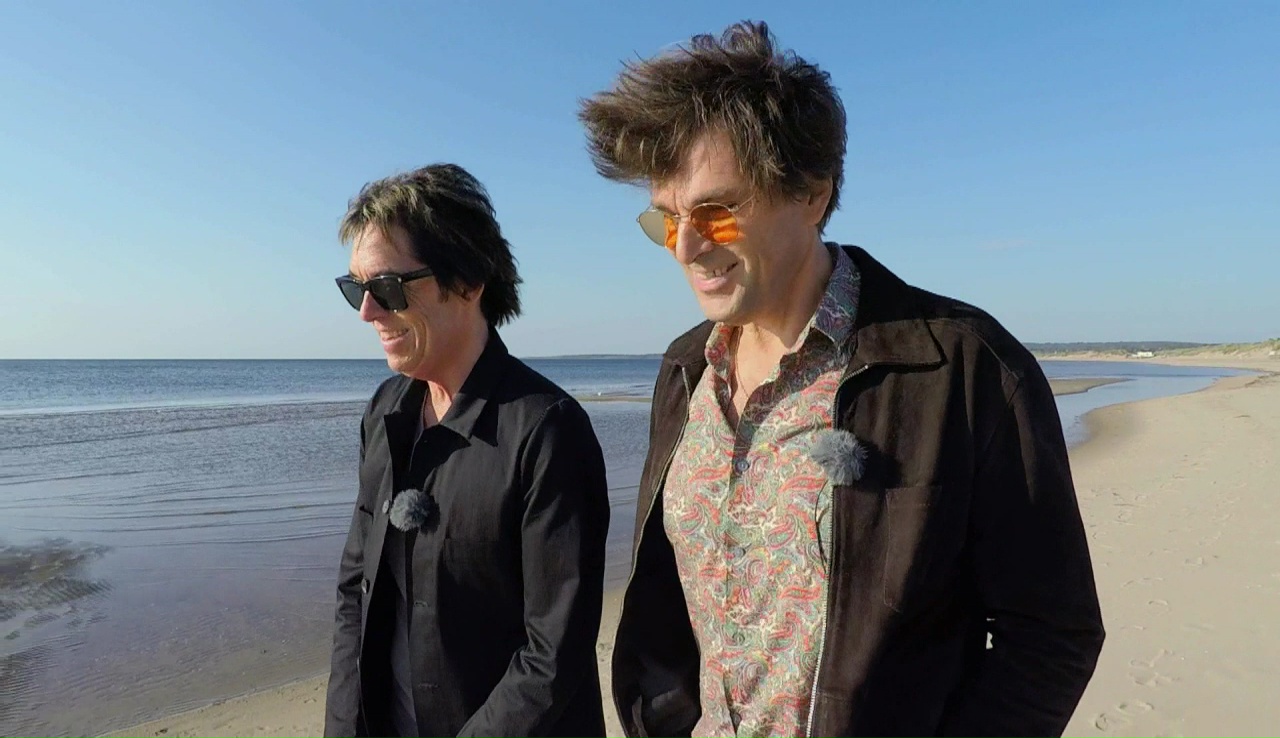 Niklas tells he has known Per Gessle since appr. 40 years. First time they met was on a chilly Tuesday in August 1979 at the EMI studio in Stockholm. They have occasionally written songs and played together. Niklas has a great respect for Per’s creativity, artistry and his ability to create hits.
 The guys are taking a walk along the river, Nissan in Halmstad. Niklas asks Per about how he remembers the Halmstad he grew up in. Per says it didn’t look like this. There are many new buildings. He grew up in Furet district by the way. It was a ’50s-’60s villa area. It was a little idyllic in its way, but Per didn’t like it. He liked most his record player back then too.
 Mr. G says they got a schedule for each week and he has lots of stories from those times. One of them is when they had to go to the long-term care at the hospital in Halmstad. They had never been there and when they got in, there was no one who greeted them. They just entered a hall where there were two patients on the two sides so they sat in the middle and played. The patients didn’t move, they were just lying there. Per and his friend played “Man borde inte sova” or “Streets of London”. Suddenly the staff came and wondered what they were doing there. Just then, one of the two guys woke up, it was a young guy. It was a big thing, because he had been in coma. He woke up when Per and his friend played. Maybe they played “Proud Mary” or something he recognized. Then came like 20 doctors and staff and asked “Can you come and play here too?” It was a big deal because the guy woke up from coma. During those three minutes Per and his friend managed to wake him up… Fate is strange.
 The guys move on to the school topic. Per says he regrets he didn’t spend much time and energy on school. It was horrible. Where he went to school they didn’t learn anything. It has always been easy for him to learn things. If you had a good result on a high school test, you were booed in the class. Per thinks it was chemistry. They didn’t enter the classroom for a whole semester. The whole class sat outside the classroom. The teacher came out and tried to get them in, but it didn’t work. Everyone received an approved grade, even though they had not had a single lesson.
 Before the guys enter the studio in Desperado style, Niklas talks a bit about Gyllene Tider that started out as Grape Rock, established by Per and Mats MP Persson in 1977. Despite MP’s musical talent and Per’s sharp songwriting skills they realized that they can’t have a band if they are only 2. So they established Gyllene Tider together with bassist Janne Carlsson, Göran Fritzon on keyboards and drummer Micke Andersson, whose name back then didn’t include Syd. The bassist had been changed quite early to Anders Herrlin and GT became the band they still are. GT became local celebrities in Halmstad. They released an EP in 900 copies and the songs of the EP reached music producer Kjell Andersson. He offered the band a contract with the record company EMI.
 Niklas says Per has always been very clever and intelligent in his Swedish texts. Talking about “Här kommer alla känslorna på en och samma gång” there are so many words rhyming to “gång”. Per found good words there. Betong, ballong, perrong.
 Per tells his first real electric guitar was very expensive. He bought it in England. MP, Per and Janne (first bassist in GT) went to England in 1978. The pound was down and he bought a wine-red Gibson Les Paul Custom. Dave Davies in The Kinks had one like that. MP bought a black Telecaster, Per bought his Gibson and Janne bought a left-handed bass. He was left-handed. Besides these, they bought speakers or amplifiers. Marshall stuff. Per says they had the guitars with them on their way back home and it turned out they should pay VAT. It was before the EU. They had no idea about it. So either they had to smuggle the guitars or pay the VAT. They had no money so they decided to smuggle, but they got caught. Per wrote a letter of apology to the customs and police by hand. He told the whole story and that it wasn’t their intention to break the law. They made the wrong decision, sorry. So they got back their instruments, but they got a fine of 2000 crowns. Niklas asks if it was worth it. Per says absolutely.
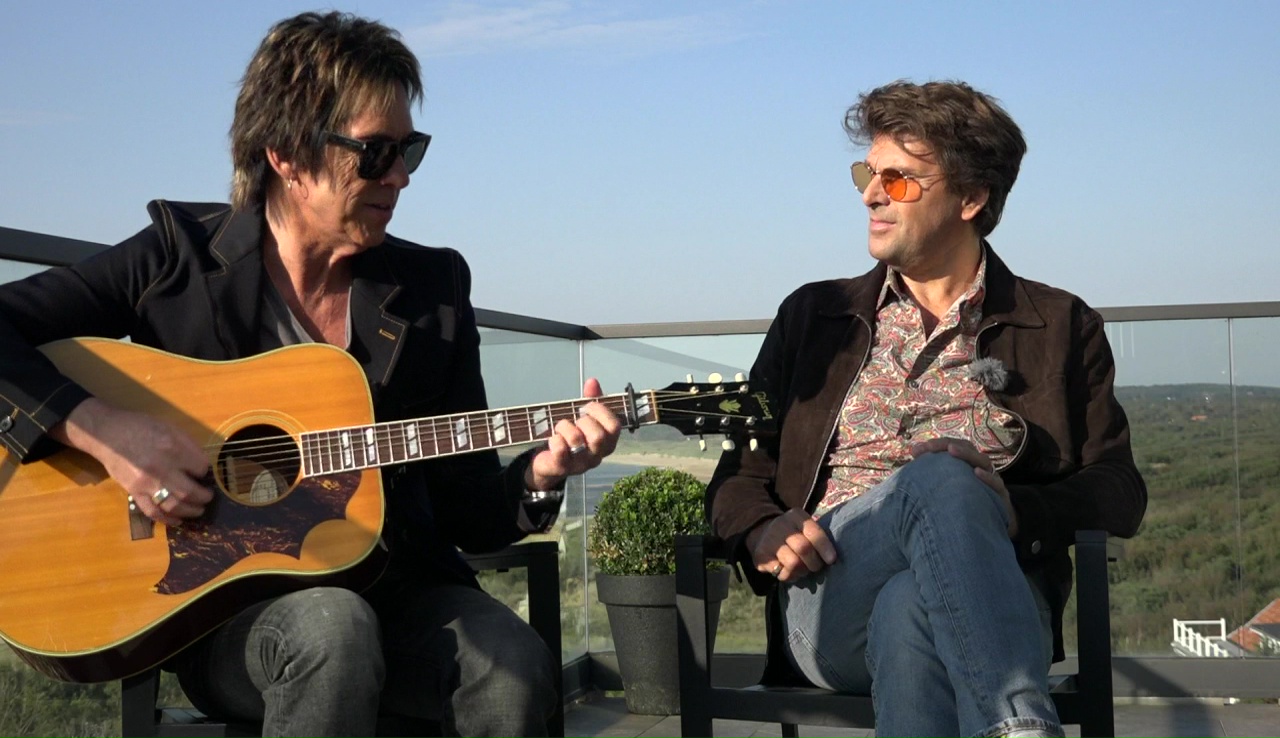 Niklas says Gyllene Tider reunited every now and then and asks why. Per says it’s fun to play together. It’s a fantastic little pop band. There is some timelessness in what they have done. There is this magic that occurs when an artist has fun with the audience. It differs very much from anything else Per does. It’s a lovely time trip every time they play together.
 Per’s solo album, “Scener” didn’t work at all. Niklas is curious how he felt back then, if it was a tough period. Per says it was horrible. When you are successful, when things work, it’s easy to make decisions and new steps. But when things are not going well, you’re stuck. You simply make wrong decisions. Per felt very confused, especially musically. “What do I want to do?”, asked himself. Niklas asks if he ever thought about doing something else. Per says no, it never went so far. One has to survive in a way. He remembers he was asked to form a band and play in a pub in Halmstad over a summer. He thanked no and the question went on to The Husbands. It didn’t fit Per. He didn’t want to play in such a band. He wanted to write songs and develop his way of writing. He has always prioritized songwriting. So it’s really tough when it doesn’t work. Those years, 1984 and 1985 were tough.