Lasse Pop Svensson and Staffan Karlsson sat down with Per Gessle and Jan-Owe Wikström to talk about Roxette in their 40th anniversary year on Hallandsposten’s podcast, Halmstad Hörs. Listen to it HERE!
Roxette celebrates 40 years on the throne – the guys ask Per if it can be said. Per doesn’t think so. Let’s say 40 years in the business, then. 40 years is mindblowing. PG says it’s a long time, but he has another band that has been going even longer. Haha. The guys ask Mr. G which of these two bands is the best. Per thinks it’s a good question. He likes both bands, he really does, but he has to say he is probably most proud of Roxette, because it was unexpected that it would become as big worldwide as it did. Staffan and Lasse agree that it was a tough beginning of the conversation, because it’s like asking to choose between your two children.
Here they introduce Jan-Owe, who is an expert, one who has followed Per’s career for quite a long time. Since his childhood. Staffan and Lasse thought he could help them along with some facts.
Gyllene Tider released The Heartland Café and there was a 6-track record where the band was called Roxette. Per confirms that it began when the guys in Gyllene Tider did their military service in 1983. He turns to Jan-Owe that he has to correct him, if he is wrong, because he knows it better. Jan-Owe thinks it sounds right. So far, so good. Per made his first solo album in Swedish and it wasn’t at all a sure thing that Gyllene Tider would come back. Instead, what happened was that he translated a bunch of Gyllene Tider songs into English, because he thought they should make an international push. They did some recordings, songs from Puls and the first albums, but they didn’t get very far. They reached local EMI offices and record label offices in different countries. They decided that if they were going to make a next Gyllene Tider album, it should be in English. And that became The Heartland Café. It came out in 1984, they toured in the spring of 1984. That was a slightly different version of Gyllene Tider, because they had brought in Janne Bark on guitar and they had two backing vocalists, Marie Fredriksson and Ulrika Uhlin, who sang with them on that tour. The tour wasn’t any big success. It was perhaps their smallest tour ever. That was one of the reasons that Gyllene Tider gave up. They just didn’t have the real motivation.
Per wanted to try to go abroad and he had no idea how that would be done. It took a very, very long time until the then head of the record label, Rolf Nygren, heard his demo of a song called Svarta glas, which Per had written for Pernilla Wahlgren, who had just broken through with Piccadilly Circus. When Rolf heard the demo he said, “write an English lyric for it and record it with Marie Fredriksson. Then we’ll try to get this out abroad.” And that became Neverending Love, which then became the first Roxette single in the summer of ’86. At that time, Per basically had two years out in the cold. He didn’t have a record contract anymore. He had written songs and recorded demos for a new Swedish album, but no one wanted it. He laughs.
At the same time, Marie had broken through with Ännu doftar kärlek and Den sjunde vågen and all of that, so her stock was significantly higher than Per’s and that was the reason why certain people at the record company (they had the same record company, Marie and Per) didn’t think Marie should jump into the same boat as Per, to do this single. So the compromise was that the record sleeve of Neverending Love contains two drawn figures. There was no picture of Marie and Per.
The guys ask Per if he was OK with that. Mr. G had no choice, but he was very grateful for the chance and that anyone at all liked anything he did. So that’s how they started. It was fantastic that it became such a big hit in the summer of 1986. Then suddenly everyone started shouting: you have to make an LP, you have to make an album. Then Per took his rejected Swedish album, which no one had wanted a year earlier, and translated it into English. That became the first Roxette album, Pearls of Passion.
The guys are curious what those who had rejected it thought then. They must have said, oh, those old songs. Per says they had forgotten them. Haha. It’s a fast industry.
Jan-Owe adds that the first song became a hit partly because Per did a little repetition of sending postcards to some program. Per confirms they have always had those sneaky little tricks. E.g. sending in postcards to vote for themselves in radio shows. PG says they did that back in the Gyllene Tider days. So, of course, he did that in Sommartoppen in 1986 as well. They did get in. He thinks they were number one on Sommartoppen or at least number two.
[The song entered Sommartoppen on 21st July 1986 at No. 3 and 2 weeks later it was No. 2. Then it went down to No. 4 and No. 5, but on 31st August it was No. 2 again. /PP]
Jan-Owe says they might have even missed out without sending those postcards. Per says it happened because mostly you felt like you wanted to help out. Haha. It’s not quite the same as playing the pools or buying a lottery ticket. Typically, as Jan-Owe says, you can never get a hit by helping yourself alone. You have to have the masses with you. It’s always the mass that makes something into a hit. It’s like on Spotify, you can’t bluff your way to 40 million streams.
Jan-Owe asks Per to explain where the name Roxette came from. It’s from the Dr. Feelgood song, but why that one. Per can’t quite remember. He remembers that he loved Dr. Feelgood. He thought it was a cool name. It’s a girl’s name. He thought that suited five guys very well. Haha. He had to eat those words many years later. Many thought that Marie’s name was Roxette and that Per was the manager. The guys are laughing. It did actually happen sometimes in the beginning when they came to a TV studio to do a playback of some song that Per had no dressing room. Marie had one. The one that had Roxette written on it was for her. So Per was wondering where he was supposed to change. In hindsight it’s a bit funny.
Before Per arrived, Lasse and Jan-Owe were talking about Dr. Feelgood having played in Halmstad twice. Lasse saw them at Pinocchio, and Jan-Owe saw them at Greven. Per wasn’t there at any of those shows, but he knows they played at Pinocchio. PG doesn’t even know what Greven is. Jan-Owe explains, it was later called Brogatan 13. The funny thing is that Jan-Owe met Lee Brilleaux, the singer after the concert and asked him if he was aware of Roxette. He said he had heard of them, of course. That was when Roxette was big. But he had never reflected on the fact that it was a song by themselves.
Staffan asks Per if there was panic when the single was released that they had to make an album. PG says it was complicated, because he wanted to get into modern pop, meaning into the digital world. You needed some machines and a bit of how pop music sounded then. That was somewhat the direction he wanted. The chosen producer, Clarence Öfwerman (who, by the way, wasn’t chosen by Per, but by the record company) and Mr. G had a meeting at Café Opera – how posh. You can’t say they exactly clicked. Per thought Clarence was very skilled, but Clarence turned down producing Roxette or working with PG. Then he was persuaded by Pelle Alsing, the drummer, who later became Roxette’s drummer. Pelle Alsing was a big fan of Gyllene Tider and of Per’s songwriting ability. So he said to Clarence: “You’re out of your mind if you don’t take this chance”. So Clarence came in and produced Neverending Love.
Clarence had the idea that he wanted real musicians, but that was exactly what Per wanted to leave. He wanted machines instead. So it became a compromise. Per said: “If you’re going to have a real drummer, then I’d like to have Tim Werner from Eldkvarn”. Raga de Gosch or Tim Werner or Werner Modiggård, it’s the same person. Per liked his drumming style. Clarence countered that he wanted Tommy Cassemar on bass. Then it was MP who played guitar on Neverending Love. Here Per is demonstrating the tunes MP played. He can’t remember if Jonas Isacsson was there. But anyway, there was a bit of a clash. Clarence wanted a real band and Per wanted machines. So Neverending Love, as it ended up on the single, PG never liked it. He thought his demo was much better, because it was done the way he had intended it.
Anyway, once Neverending Love became a hit, they needed to make the album. Then Clarence wanted to choose his drummer, Pelle Alsing, Tommy Cassemar on bass and Jonas Isacsson on guitar. Clarence himself played keyboards. So those were the four who essentially played on the first album. They weren’t a studio band that usually played together before. They knew each other and Per thinks they were mostly good friends. They probably sat in pubs in Södermalm and hatched plans, he has no idea. Per was grateful, of course, that they got to make a record. It was great fun to work with Marie and with everyone. But he still wanted to get into that new era with machines.
Staffan is curious if Marie was hard to persuade, since her career was going really well. Per says Marie was never hard to persuade. PG usually says that the only one who actually wanted to work with him was Marie herself. Everyone around her, e.g. Lasse Lindbom, who was her boyfriend at the time, her entire circle of friends, including certain people at the label, no one thought she should do this. But she wanted to. She explained it many years later by saying she sang in a different way when Per wrote the songs and PG heard that too. He has always said half jokingly and half seriously that Marie always sang best when Per was in the studio, because Mr. G was very good at “directing” her singing. She liked that. Per noticed it on the first album when she sang I Call Your Name, Soul Deep or So Far Away, these fairly difficult songs. She sang in a completely different way than when she sang in Swedish or when she did her English jazz things. But that’s just Per’s opinion.
Staffan says they should jump ahead to when the machines come into play, because that’s when things really started to happen. So they start to talk about album number two.
Per thought the first record turned out good in its own way. But it wasn’t quite how he had imagined it. His vision was different. Then he had a bit of luck. Their engineer, Alar Suurna, a very skilled engineer, broke his leg. Haha. That meant they needed a new engineer. Someone who had become very good and had begun working his way up as an engineer and producer in parallel with them was Anders Herrlin, the former bassist in Gyllene Tider. When he left Gyllene he started working at a music store in Stockholm and specialized in modern technology, the kind that was current in the mid-80s. So he was very good with machines, which made Per think it was a very good idea to bring him in. Meanwhile, Clarence wasn’t particularly interested in machines. But Anders and Clarence clicked and started programming, working, arranging and fiddling with what was to become the second Roxette album.
For the guys it sounds like Clarence is being contrary all the time. They are wondering if Per and Clarence have been able to find a good way of working together. Per says Clarence is quite a contrary type, but he is a wonderful person and, above all, he says what he thinks, and he is a fantastic musician. There is a really funny example from the first Roxette album. Per always used to hear from certain people he worked with (he mentions no names) that the problem with his songs was that they weren’t danceable. Too much pop, no natural groove. One day when he was downstairs in the EMI studio, he heard the coolest groove ever coming from upstairs. So he ran up thinking, “What the hell is this?” And what he heard was that Clarence had arranged I Call Your Name, which was originally called Jag hör din röst and he thought: “Wow, this is my song! My god, it grooves!” So he thought sure, it is possible to make these songs groove, if you know how. So to answer the question: Clarence really revolutionized Per’s music, so Mr. G is not dissing him at all. There are so many songs Per has written that Clarence has dismissed. He didn’t like them. And then you dig them up ten years later, record them with another artist, and they become huge hits. Clarence really does say exactly what he thinks, and Per respects that. He is humble and he can take criticism.
Per’s big musical problem is that he is really bad at playing. He hears exactly how he wants things to sound, but he can’t play it. Hand him a guitar or put him by a piano and you’d laugh at him, he says. The guys are laughing.
Clarence sat there playing variations of the intro to Listen To Your Heart until he found what it needed to be. (Here Per is demonstrating how the intro sounds.) Not many people can handle that. Most people Per has worked with can’t handle that. Staffan asks Per why he is looking at him when he is saying this. Haha. Staffan says Clarence is fantastic, that’s clear. He also mentions that once he sat next to Alar Suurna watching Roxette in the Globe. He’s very tall, but he said hello. Haha.
The guys are getting down to The Look. That’s where things really explode. Staffan says it’s very different from many of Per’s other songs. PG says it was written because he bought a new synthesizer, an Ensoniq ESQ-1. It had six, seven or eight sounds you could use and when you used sound number nine, sound number one disappeared. So you had to be careful not to lose something good. That limits you a bit. The guys are laughing. Per is completely technically hopeless, so he tried to learn how the synth worked and to do that, he wrote two songs – The Look and Don’t Believe in Accidents. They are both released, you can find them on Spotify. Anyway, he wrote a ZZ Top inspired bassline, an eighth-note du-du-du-du-du-du thing, to learn how to do it. Several of the sounds from that Ensoniq are still in the final production. Staffan asks if Anders approved of that. Per says he did and especially Clarence. Haha. Anders was more of a sound wizard. He contributed fun sounds, cool textures, suggestions when you needed something. That’s how he worked. He was great at what he did.
The team from the first album was basically gone by then. Clarence remained and the only song that has an organic band on the second album, Look Sharp!, which became their big breakthrough, is Listen To Your Heart. When Per wrote it together with MP, he told Clarence, “let’s make this as American as possible”. There was a big American sound at that time. Per said, “this album will never be released in the US anyway, so let’s at least be American here in Sweden”. It was amazing when it became No. 1 in the US, because it doesn’t sound particularly American, compared to US productions. Per always thought it sounded like the cousin from the countryside.
Staffan thinks that later it became a strength that Roxette didn’t sound like those huge ‘power ballad’ studios. Those sounded similar. Per says Roxette’s strength was that they sounded like themselves, the cousins from the countryside. When they broke through, everyone in LA and New York wanted them to move there, and they wanted Marie to work with American musicians. That was something they immediately rejected. Because that uniqueness, working with Clarence and Jonas and their gang, gave them their own sound. Like ABBA did. They worked with Rutger Gunnarsson, Ola Brunkert, Lasse Wellander. They had their own sound. As soon as ABBA made the Voulez-Vous album and moved to Florida to work with the Bee Gees’ musicians, it didn’t sound like ABBA anymore. It sounded like the Bee Gees with Agnetha and Frida singing.
The guys are wondering if it was tempting. Per says it wasn’t. Jan-Owe says they did a test on that album. That wasn’t something Per wanted either. He had a big supporter in the head of EMI Europe (excluding England, which was its own unit). He loved Gyllene Tider. He was probably involved in The Heartland Café. He thought Roxette, after Pearls of Passion, should become a priority act for EMI Europe. So he took the initiative that they should make things easier by working with an English producer. He and Per flew to London and met six different producers. They chose Adam Moseley, who produced three songs on Look Sharp! Lasse asks Per what else Adam Moseley had done. PG can’t remember. He says Moseley was very competent musically, but he didn’t have that “pop instinct” Per liked. He thinks those three songs are the weakest on the album. Jan-Owe agrees that those songs weren’t really Per.
PG met six producers, so the guys are wondering what made him choose Adam. All six had worked with various English bands. One had worked with Haircut 100, for example. None of them were exactly on Per’s wishlist. If it had been Jimmy Iovine, who produced Tom Petty, then Per would have cheered. But that was another generation. He can’t remember why it ended up being Adam. Per knows Clarence was very sad he didn’t get to produce Cry, because that was one of his favourite songs. Adam produced that one.
Before they move on, Per wants to tell one more thing about The Look. It was written for Marie, so originally it was called He’s Got the Look and the demo was titled He’s Got the Look. It was sung from a female perspective, and that made it more fun, Per thought. But Marie didn’t want to sing it. She said it wasn’t for her, so Per had to sing it instead.
The whole idea with Roxette, at least from Per’s point of view, was that he wrote the songs and Marie sang them. That’s what they were best at. So whenever a song came up that Marie didn’t sing, that meant she didn’t want to sing it. Everything was written for her, at least on the early albums. Per was the most surprised person in the world when The Look became No. 1 globally. The breakthrough song, and it was one he sang. So the whole idea of Roxette fell apart instantly. But at the same time, they realised that if they can succeed with a song he sings, imagine what will happen when Marie starts singing. And they really did get knocked out. Those songs also did quite well.
Two out of four US No. 1 hits are actually sung by Per. So Staffan thinks he must have been wrong about that. He tells Per he could have just told Marie to sing like he does and it would go great. Haha.
Per says, he has always felt musically limited when it comes to playing. But with people like Clarence, Jonas Isacsson, Marie Fredriksson, or MP from Gyllene Tider, you can write music with more dimensions than you yourself can play. Per has always tried to find people who are much better than he is, because then he can become better. If he has to stand on his toes, he reaches higher. If you listen to almost everything Marie sang in the future, she takes every song to another division entirely, far beyond what the song actually is. Exactly the way a fantastic singer should. And it’s the same with Jonas’ brilliant solo on Listen To Your Heart. It’s fantastic. And that alone is enough.
Jan-Owe says that he remembers when he heard the demo, He’s Got the Look, the riff wasn’t even there at first. That was Jonas who came up with it later.
Lasse turns to Per and asks him if he imagines who will help him bring his idea to life when he has an idea in his head of how something should sound. PG says it depends on the people you are working with at the time. If he looks back at his long career, there have been different people for different eras. So when he writes a song now, he doesn’t save it for something else that might happen later. It finds its home somewhere. A song can have different clothes.
Sometimes when he writes a ballad, since he loves acoustic music, he asks himself if an acoustic arrangement is enough. Or maybe it should have drums or a bigger production. Often both approaches work.
On the latest Roxette tour they are doing now with Lena, they play Spending My Time acoustically, just the two of them. And it works great. But it also works fantastically in a full production. So there are many answers. Jan-Owe thinks that a good song always works acoustically. Per agrees, if you are talking about melodic music, to which their generation often returns. You can play the entire Beatles catalogue on a harp and it sounds fantastic. Or Paul Simon’s catalogue.
Staffan says they won’t go through every Roxette album, but they have to talk about Joyride, of course, recorded in 1990, released in 1991. Staffan asks Per if it can be called the “peak” of that era. Per asks him what he means by peak. Staffan explains that that was the time when the huge tours happened, Roxette travelled basically around the whole globe. It’s the big harvest of the success from Look Sharp!, which also went well.
Per says it was a great era, for nearly four years they barely left the US Billboard chart, they just changed songs. And it probably would have continued another year if their record label hadn’t been sold. That hit them very hard, but that’s another story. Joyride became huge, of course because Look Sharp! had four big hits. Then they ended up in Pretty Woman. That was a blessing. It gave Per six extra months to write the Joyride album. During that downtime, It Must Have Been Love made them even bigger. So when Joyride came (Per inserts he doesn’t know if the guys remember, because they are so young), in 1991 there was the Gulf War. So when the album or the single was supposed to be released, everything got delayed six to eight weeks due to war and crisis. Marie and Per were at a radio convention somewhere in the US where all the major radio bosses were. There are hundreds of radio stations in the US and many of them were represented there. They listened to the song Joyride for the first time, and … keep in mind, Roxette came from five huge hits in the US, the last being It Must Have Been Love. So this was the follow-up. They listened and afterwards, standing there in line to greet Marie, the radio bosses came up to them and said: “Congratulations on your next US No. 1.” Even though the single hadn’t even been released yet. That’s bold. It was great. The guys are joking that they didn’t even need to release it, just check the box. Haha. Per says it was huge. It went to No. 1 in six or seven weeks. Per can’t remember exactly, but it went fast. [In 11 weeks. /PP] Then came Fading Like a Flower. Then the third single, which was supposed to be the big hit in spring 1992, coinciding with the US tour, Spending My Time. They made a massive, expensive video directed by Wayne Isham. That was meant to be the big one. It was supposed to peak on that album. It did in some countries. But in the US, two weeks after it was released, their record company was sold. 123 people were fired and 120 new ones came in. No one had any relationship to Roxette, so they didn’t work with Roxette. Roxette fell off in the US, unfortunately. Nothing they could do, it was politics. So they moved on to other countries.
Jan-Owe asks Per how high Spending My Time went in the US. Per doesn’t know. Maybe 20 or 25. [It peaked at 32 on the Billboard Hot 100. /PP]
Staffan says they anyway toured around the world. He asks if that was the time when the fanatical South American fandom began. “Fanatical” sounds a bit negative, but they really love Roxette passionately. Per confirms, they do. The Joyride tour began in autumn 1991. They toured Europe, Australia, everywhere. South America came in spring 1992. It was a time of economic crisis and war here and there, just like now, there was war then too. Not many bands wanted to go to South America, because there was no money to be made there. Per knows Guns N’ Roses, Madonna and Michael Jackson cancelled. Roxette was asked: “Do you really want to go to South America? There’s no money in it.” But Marie said, “Of course we want to go. We’ve never been to South America. It’ll be fun to play for fans there.” They were living the dream, the entire Roxette success story was amazing, so of course they said yes. They were booked into arenas of 6-8 thousand seats. Then they released the tickets, very cheap tickets, and it turned into chaos. Suddenly they were moved to football stadiums. They played 50-60 thousand capacity venues in São Paulo and Rio. Two shows in Buenos Aires. PG can’t remember the exact order, but they played a football stadium in Buenos Aires, around 50,000 people. Then they wanted to release tickets for another show. So when they returned later on that South American run, they finished in Buenos Aires again. To help finance everything, they sold the broadcasting rights to Argentine TV. They had two TV channels then, like Sweden used to. So one channel broadcast the Buenos Aires concert live. The competing channel broadcast Roxette live from Zurich from the previous autumn. The guys are laughing. Per always says they should be in the Guinness Book of Records, because the only thing you could watch on Argentine TV for 90 minutes was Roxette.
Lasse says maybe that finally brought in some profit. Per says it actually turned out very well financially. Jan-Owe adds that it was like Phil Collins doing Live Aid in two continents the same day, only Roxette was on TV twice at the same time. Per says it was fun and a fantastic experience.
Staffan says Per mentioned that it was unusual for huge artists to go there, but Roxette also went to China, which was equally unusual at that time. PG says that it was on the next tour, Crash! Boom! Bang! Per suggests Staffan needs to read up more. Staffan says he is not that interested in this band. Haha. He thought of blending all the ’90s world tours together. He asks Per what happened when Crash! Boom! Bang! came out, but Jan-Owe wants to rewind a bit first. He is curious about South America, because they are still the most passionate fans today. Lasse says it’s the same with football. They are incredibly passionate. Maybe it’s a cultural thing. Per says they express emotions differently. In Peru, for example, students adopted Roxette as “their band”. They appreciated Roxette in a special way. And these are politically complex countries, very different from where Roxette came from.
Roxette returned to South America on the Crash! Boom! Bang! tour, and Per remembers playing in Buenos Aires (if he is right). They stayed at a hotel and that turned out to be Formula 1 weekend. There were maybe 2,000 people outside the hotel singing Roxette songs all night long. All the Formula 1 drivers stayed at that hotel except Michael Schumacher. Years later, Per met David Coulthard, who drove for McLaren, and they talked about this. Per told him the story and he said: “Oh, it was YOU, you f***er! We couldn’t sleep all night!” He was furious. Fans sang Roxette songs all night long. Jan-Owe asks Per if Schumacher won the race. Haha. He probably did. A clever strategy, Staffan says.
Many artists didn’t return to South America around that time, except Imperiet from Sweden. So it was basically Roxette and Imperiet, two Swedish bands. That’s cool.
Staffan wants to get into Crash! Boom! Bang!, so the guys move on. That became another world tour. Per says it was different vs. the Joyride tour. By then they were more established. They didn’t have as many shows, but still maybe around a hundred. The album was recorded in 1993, released in 1994. The tour really stretched through 1994-95. Staffan says that was a pretty tough time for pop music. The big super bands then were Pearl Jam, a lot of heavy, darker rock. A sort of ’70s-inspired but grungy, depressive vibe. Roxette was more pop, so they must have stood out a lot. Per says Staffan is absolutely right. Oasis had happened, Blur, and all that Britpop.
The Crash! Boom! Bang! album they recorded on Capri for several months, and then finished things in Stockholm. There were so many songs. They played the album for their Swedish label and everyone cheered, but they said: “There’s no single”. That sounds familiar from a Tom Petty song, “I don’t hear a single”. Haha. Per got really pissed off, because he thought the album was fantastic. He still thinks it’s their best album. It’s broad and has so many interesting elements. PG went home the evening after that playback, angry, and wrote Sleeping in My Car. Out of pure frustration. Roxette was huge then. They had both studios at EMI in Stockholm, Studio 1 and 2, so they worked in parallel. It was just them in the building. The next day, in Studio 2, Anders Herrlin and Per made a demo of Sleeping in My Car, while Clarence and the others worked in Studio 1. Clarence didn’t like SIMC at all. The guys are laughing, because the tradition continues. Haha. It’s like Donald Duck at Christmas in Sweden, something you expect. Per understands Clarence, because it’s almost more Gyllene Tider than Roxette. The chord progression jumps between major and minor the way Gyllene songs do. Jan-Owe says it feels like you could have put Swedish lyrics on it. Per agrees.
Per basically put together a brand new band to record that song. It was Mats Persson (not MP, but their percussion guy in Roxette), who played drums. He was in the same band as Clarence, Passagerarna. He was great. Pelle Sirén, who worked with X Models led by Efva Attling, was on guitar, and Per thinks it was Mats Alsberg on bass. [It was Anders Herrlin. /PP] A whole gang that had nothing to do with the usual Roxette lineup. They played on Sleeping in My Car. And the lyrics were specially made for Marie. It’s a very in-your-face, cocky song. There, they got their f***ing single. Haha. It’s a simple song, but maybe it didn’t represent the album as a whole. It’s kind of smart. That might be why Per loves the album. It keeps the whole gang on their toes.
Lasse thinks Sleeping In My Car is probably the best song on the album. Sover i min bil it would be in Swedish. The guys are laughing.
Staffan says Roxette also made some tour albums. Tourism is quite special. Per says he had to fight hard for that one. He thought it was quite tough to be on tour for so long and not be able to work and record. He had listened to the Running on Empty album by Jackson Browne which was recorded during the tour. So the idea was there: why can’t they, when they arrive in a city in Spain, go into a studio and record a song there? Or why can’t they record in a hotel room? So the whole idea of recording during the tour grew from that. Nobody really liked it, because everyone wanted time off. The guys are laughing. But the Tourism album, which was recorded during the Joyride tour, came out in the summer in 1992. The track that became the driving force for the album was How Do You Do! It became the first single and became their biggest song in Germany. It was number one for twelve or fourteen weeks. And another single from that album was a leftover track from Joyride called Queen of Rain. Many of those songs, like Never Is a Long Time, were recorded at a rented nightclub in Buenos Aires. Staffan asks if it was open. Per replies it was closed. They recorded there during the day. Jonas, Clarence and Marie were there, and Per sat next to them. Jan-Owe asks Per if he already had the songs or he wrote them then. PG says it was a mix. The Heart Shaped Sea he wrote then and How Do You Do! as well. Some songs were leftovers from Look Sharp! and Joyride. For example, Here Comes the Weekend. Other songs were single B sides, e.g. Come Back (Before You Leave) was the B side of Joyride. Silver Blue was the B side of The Look; they made a slightly updated version of it. And there were three live recordings as well, to keep this live connection in the production. So it was a mix.
Staffan is curious what the others thought once it was finished. Lasse asks what Clarence thought. Haha. Per doesn’t know what he thought, but the album sold 6 million copies or something like that. It sold a lot. Rolf Nygren, the boss who brought Marie and Per together back then, didn’t think it should count as a real album, because it was recorded on tour. So he didn’t think it should be included in the contract.
The guys get to the point where Roxette took a break. In 1995 the Crash tour ended. In 1996 Roxette turned ten, and then they released their first compilation album called Don’t Bore Us, Get to the Chorus!, and they recorded some new songs. Marie had had a baby and needed some time off, and Per wanted to make a solo album in the meantime. He couldn’t wait. PG wrote lots of songs for himself, and one of them ended up on that Roxette compilation, called June Afternoon. And it’s Gyllene Tider playing on it, even on the Roxette recording.
The album came out in 1996, and it was the first year off from Roxette, and of course the first Gyllene Tider comeback happened in 1996 in Sweden, Återtåget. Staffan says resting and holidays are not Per’s thing. Per laughs and says it’s for people like Staffan. Haha.
Already in 1995 when Roxette was touring with Crash, they talked about a Gyllene comeback. They did a few concerts with Gyllene Tider in 1995, and they released an album, Halmstads pärlor, a Gyllene Tider compilation in 1995. It had several new songs, one of them Per wrote in Japan is called Det är över nu. It became very good. Staffan says it sounds very Japanese. Haha. Per says it was produced together with Michael Ilbert. He was a huge catalyst for the Gyllene Tider reunion. He made them sound exactly like they always wanted to sound, but never managed before, so it was very fun working with him. That song, and maybe one more, Kung av sand, became big hits from that album. So Halmstads pärlor became Sweden’s best-selling record in 1995. And in 1996 came the Återtåget tour and then they reissued Halmstads pärlor and added some new songs. Gå & fiska! and Juni, juli, augusti. Which meant that Halmstads pärlor also became Sweden’s best-selling album in 1996. Why not. The guys are laughing and Staffan asks Per how 1997 was then. Per says everything fell apart then, it was the house of cards. Haha.
With Roxette, there was still a break. Per released his first English solo album in 1997, The World According to Gessle. Humble title, Staffan says. Per turns to Jan-Owe and asks what he was doing in 1998. Haha. Jan-Owe says he wrote songs. PG says they recorded an album called Have a Nice Day. During those years he wrote a lot of songs. They recorded them in Spain. Marie had had her second child and Per had had a little son in 1997, so it took a very long time. And it was a very nice album with lots of good songs, Wish I Could Fly and Salvation. And it was the first album they didn’t tour with. PG had gotten to know Anton Corbijn, the photographer, and they wanted to work together. He made two videos for them. One for Wish I Could Fly and one for Salvation. [From here Per messes up WICF and Stars, so I write Stars instead. /PP] Mr. G explains he had gained weight, so he didn’t want to be in the videos. That was perhaps one of the reasons he didn’t want them to tour. He didn’t feel comfortable with himself. So in the Stars video he is lying in a little street corner with a sign in front of him in the first scene, and then he is morphed into another guy who plays his role. Then he had lost weight for Salvation, so he is in that video. The guys are laughing.
The HAND album came out in 1999, and in 2000 Per wrote songs and they started recording what became Room Service. It became a tour in 2001. A European tour only, though. Jan-Owe is curious why it was only a European tour. Per says it wasn’t easy for them to sell many tickets then. The music they represented was a bit off. He remembers they did Fading Like a Flower acoustically, because the production style it had was no longer modern. Now it’s fun and cool again, but it wasn’t then, so it wasn’t easy. Staffan asks PG if that was when Max Martin started dominating all the charts. Per says it wasn’t just him, it was pop music in general. It’s in the nature of pop music to constantly change, and pop always reflects its era.
In 2002 they decided to take a break. Marie wanted to work with her husband and do her own things. She wasn’t super interested. She wasn’t involved much in the recording of Room Service. It was more Clarence and Per. Ronny Lahti was the engineer, a very skilled one. Marie came in and sang when they called her. Sometimes she came in, sang, and had the taxi waiting outside the whole time. So she really wasn’t very interested.
It wasn’t surprising that they took a break. Then they received a fantastic offer, financially speaking, to participate in something called Night of the Proms. It’s a large symphony orchestra that backs up 3-4 songs. Most artists have done it over the years. It’s a production based in Antwerp, and you tour in Europe – Germany, Switzerland. On the way to the press conference where they were going to announce this, Marie became ill. So it was cancelled. Then everything stopped for several years.
Per did some other things, Mazarin and Son of a Plumber. Staffan thinks Jo-Anna Says is the best song Per has ever done and he is usually right, he says. But here the guys jump ahead, because this podcast is supposed to be about Roxette. Things started again in 2008-2009 when Per was on tour. PG says he worked intensively in the 2000s. Mazarin came in 2003. Then the huge Gyllene Tider tour in 2004. Then came Son of a Plumber. Then En händig man. He can’t remember everything. Then he made the Party Crasher album. It was an English solo album and he went on a European tour with it. He played e.g. Cirkus, clubs for 1,200-1,400 people. When he played in Amsterdam, Marie and her husband came to visit. Per didn’t know they were coming, but he was very happy. Marie had stayed out of the spotlight for many years. So Per asked her if they could perform a song together. She hadn’t sung since the Room Service tour eight years earlier and she wasn’t super eager. But Per has always been good at convincing her, so he did. They went on for the encore and performed… Per can’t remember what. It Must Have Been Love or Listen to Your Heart acoustically. Per has never seen so many people cry as when they saw Marie walk out. She was shocked by the response. She was happy, of course. They all were. Then she called after a week or two and said: “I feel ready. Can’t you write a new Roxette album?” So Per wrote one and that became Charm School which came out in 2010. Then they went on tour. Marie defied everything – doctors, recommendations. She thought it was fantastic. It was truly fantastic that she managed. It was a high tempo. They played 160 shows on that tour and kept going for several years.
Staffan asks if there were breaks when she could rest. Per says there were breaks, but still, when you are on tour, even if you are home for three weeks, you are mentally still on tour. You must stay healthy, you can’t get sick. Maybe there is something you have to adjust, then you must rehearse. It’s a bit on or off. Even when you are home, you are not fully off.
Jan-Owe asks Per how it felt to play smaller venues when they already played stadiums in the past. Per says Roxette never played small venues. Only Per did. Haha. But he doesn’t think like that. When Gyllene Tider plays, they play as big as possible. Often 8,000 and up. Roxette is the same. As a solo artist in Sweden, same. Per plays Brottet in Halmstad or Trädgårdsföreningen in Gothenburg or Sofiero in Helsingborg. But when he goes out into Europe alone, he must start from scratch. He is known there, but he doesn’t have that following. And he also plays differently. He plays from the Son of a Plumber album or maybe some (I’m Not Your) Steppin’ Stone cover, which The Monkees recorded when he was little. It’s no problem. It’s fun. Not everything has to be maxed. It can be fun to play in a small club.
Now with Lena on the Roxette tour they have had maybe 3,000-4,000 people. And suddenly it feels like a club gig. And those can be the best. If you are going to play 8,000-10,000 or more, you need the production. You might need screens and you must rehearse a good production. Because people expect that and you want to provide that. But you don’t need it when you play somewhere like Pinocchio. Haha.
Jan-Owe says it’s another challenge then, the connection with the audience. He mentions that Per had those hotel shows when Covid came and he could really talk to the audience differently. Per says he took the opportunity. He always wanted to try it, but never really believed he could. When Covid came, there were 10 meters between tables and you couldn’t have 400 people in one place. With those hotel gigs you also avoided the pressure of what if I don’t sell tickets. Because 400 tickets will sell. But if you announce your own acoustic tour, it’s a lot of pressure. Later he did announce a tour like that, but by then he had proof it would work.
Jan-Owe asks Per if he benefited from that tour later, going out with Roxette again. PG says everything you do teaches you something. What he has learned the last 20 years is – and he thinks about it often on the Roxette tour – he can lean back and trust his songs, because the songs are so big. People don’t go to a Roxette concert or to see him to watch a high-tech Lady Gaga production. They come because they love the songs. Mr. G thinks it’s incredible. If you think of many artists, especially young ones, it’s a lot of production. Lots of pre-recorded things, lots happening visually. An ADHD feeling. But if you look at Springsteen or McCartney or Leonard Cohen, that generation is different. One of the best concerts Per has ever seen was Leonard Cohen delivering amazing music. He doesn’t know if it’s generational, but he learned that once they start playing, it will work.
The guys start to talk about the present. Per is out again, with auntie Philipsson, Staffan says. PG corrects him that she is not an old lady. OK, miss Philipsson then. Jan-Owe warns Staffan, “watch what you say. She might be listening”. Staffan says hi to Lena on the podcast, then he asks Per when the idea came and what his thoughts were.
Per says this question could take hours, because there are so many angles. When Marie passed away, the whole Roxette concept disappeared. Per didn’t know what to do. The obvious choice was to leave it all. Time passed and he realized there is this huge song catalogue, his whole life. Should he never play these songs again? He needed years to decide whether there was someone who could sing them and who would want to sing them. It wasn’t easy. He almost gave up.
It was a coincidence that Lena came to MP’s studio in Halmstad and sang on a song called Sällskapssjuk. PG had met her before. He co-wrote her breakthrough hit in the ’80s, Kärleken är evig, but they had no real relationship. When she started singing, Per thought: wow, she’s good. Really, really good. And you rarely feel that. So he thought she could sing Roxette songs. She doesn’t sing like Marie, but she has enormous professionalism and vocal capacity.
Per arranged a meeting in Stockholm and presented the idea to Lena. She almost fell off her chair. She didn’t say yes or no. She wanted to think. Then she called and to Per’s surprise she was positive. Staffan asks Per what Clarence thought. Haha. He was very positive according to Mr. G.
Lasse says, with all respect to Marie, this isn’t the first band to change singers. There are many examples. AC/DC is one of them. And it works.
Per says it works. Lasse adds that many people are stuck, they think things must always stay the same. They don’t. PG says it doesn’t mean it’s the same thing. What makes it work with Lena is that she is strong in herself. Per is not starting a new Roxette with her, she is hired to sing the Roxette catalogue. She is a hired gun and she does it fantastically. She does it naturally and in her own way. She is more faithful to the songs than Marie was at the end. Marie chose different ways. Even in her peak years she did that. It was her style, not to follow the rules. Lena is different. She sings as intended, but in her own style.
They did 43 shows in 2025 and they have at least as many in 2026.
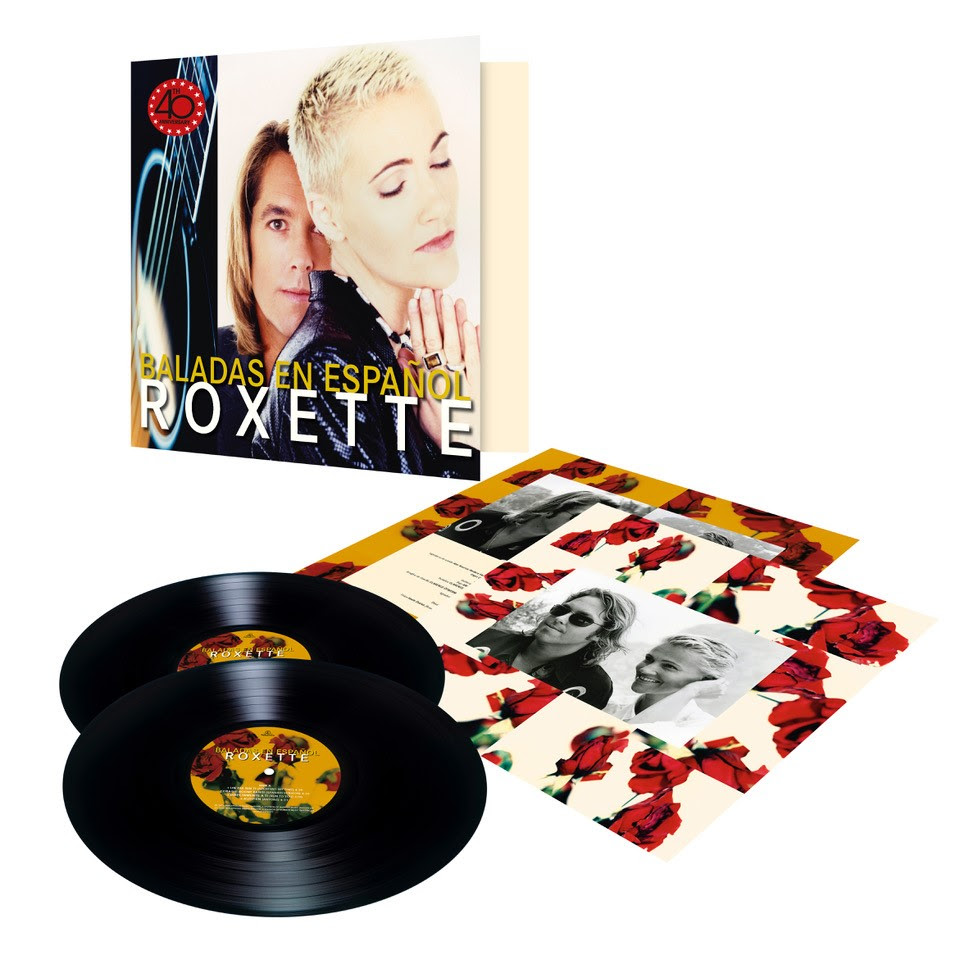
Staffan says now it’s the 40-year anniversary of Roxette. He is curious if anything else will happen. Per confirms that many things are coming. They have a plan with the record company to release something every month, to celebrate. For example, the Spanish ballad album will come on double vinyl for the first time. Room Service will come on double vinyl with many extras. Some remixes will come too, Per won’t say which. So a lot of things are happening. There will be other surprises as well. The musical continues in Stockholm and opens in Malmö in the fall. It will go abroad from 2027. Things are happening constantly. Roxette is alive and thriving.
Jan-Owe wants to know if Per plans to write new songs with Lena as a hired vocalist. PG doesn’t think new Roxette releases will come. He released a song with Lena, but under the Per + Lena name. He really doesn’t want to start a new Roxette. Roxette is the past. But he would love to work with Lena in the studio and release new material. Per is writing a new album where she will be involved, along with others.
Jan-Owe says he saw that Roxette UK is on a world tour and he is curious about what Per thinks of them. PG has no problem with them, but they can’t use that name. They are in a legal process, because it’s gone wrong, since Roxette is touring too. There are many tribute bands and that’s fine. They do a great job. But they shouldn’t step on the trademark. Roxette had to clarify it’s not them. Even their record company in Stockholm thought they could do something in England when they were going to play there. But it was not Roxette, it was a cover band that played there. That’s a problem, but it will be solved.
Jan-Owe asks Per how these tribute bands operate, if they contacted Per. Mr. G says they didn’t. They just play. Jan-Owe would think they want feedback and Per says maybe they do, but Roxette doesn’t interfere. Per is flattered they exist, there are many tribute bands worldwide. Playing their songs, that’s great, but they can’t use their images or their name. Jan-Owe says it’s a sign you have made it when there are tribute bands.
With this, the guys wrap up. Lasse and Staffan thank Per and Jan-Owe for joining them on the podcast.

Selfie by Lasse Pop Svensson