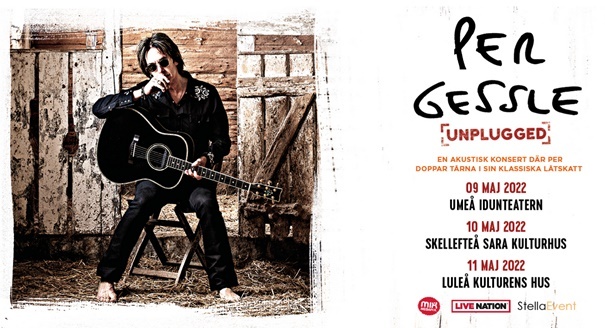
Per Gessle is back on Framgångspodden

You might remember that Alexander Pärleros did a podcast interview with Per Gessle appr. 4 years ago and shared it in February 2018 on Framgångspodden. Now it was time for another round with Mr. G to ask him about success, creativity and the loss of Marie Fredriksson. You can listen to the podcast HERE (no. 540 is the interview with Per).

Alexander is very happy that Per is back on his podcast. He introduces PG as a living legend. Together with Roxette, he put Sweden on the map and as a front figure in Gyllene Tider he also created immortal hits. He is undeniably one of Sweden’s most successful artists and greatest music exports of all time. He is currently on an unplugged tour.

Per remembers that the first Framgångspodden episode with him came out in 2018. Alexander asks PG if he is good at remembering the years – what happened when. Per tells he is not really good at that, but when he thinks about a year, he thinks about what he was doing then. When he thinks about Gyllene Tider’s Dags att tänka på refrängen album, it was 2013, Roxette’s Have A Nice Day came out in 1999. Per also tells that if you ask his wife or his friends if he is good at remembering dates, they will for sure reply he isn’t.

Alexander tells that last time he asked Per about what he eats for breakfast and PG replied he always eats the same thing: coffee with milk and 2 sandwiches. One with apricot marmalade & cheese and one with ham & mustard & chives. Alexander is curious if anything has changed since then. Per laughs and tells he still eats the same, he only added tomato. He says there is a clash in the mouth between tomato and apricot marmalade if you eat them at the same time, but it’s fine if you have a little break between the two. Alexander laughs and says it’s nice to hear that even PG can develop his eating habits. Per tells it’s the same with lunch. If he is on tour or out in town, he won’t eat the same, but at home he likes it like that.

Alexander asks Per if there is any routine PG was doing during this year, anything he is doing for feeling good. Mr. G tells he thinks he is fine, he tries to walk 1 hour each day if the weather outside is not so scary, like in Stockholm today, drizzling all day. While walking, he is either on the phone or listening to music or just contemplating. It has become more than a routine, it’s rather a way to exist, which is important for him. But he likes routines – to eat dinner at a set time or watch TV almost always at the same time.

Alexander is doing the interview via Zoom and since he sees Per’s office, he asks what that picture of a cow is on the wall. Mr. G tells it’s an Andy Warhol painting that he has since the end of the 80’s.

Alexander tells Per goes on an unplugged tour and it seems to be quite sold out, he couldn’t really find tickets for that. Mr. G tells there are a few tickets left for Karlstad and Halmstad’s second gig and maybe a few for Linköping and Norrköping. [So the interview was done before 5th November 2021. /PP] The biggest venue they play is Filadelfia in Stockholm, for 1,400 people. The whole idea came from the pandemic, because there were very strict rules. He has a hotel in Tylösand and decided to play there 2 acoustic gigs for a smaller amount of people, 475 in the crowd. It went so fine that in the end they did 10 shows. It was much fun and intimate. Per has never played gigs like these and he says that you become naked in a way at such a concert. It’s very different to when you play a big production e.g. at Stockholm Globe Arena or in big soccer stadiums. Here it’s more silent, acoustic and there are anecdotes he tells in between the songs. It’s a very exciting concept for Per. Doing the same concept at theatres around Sweden is going to be much fun.

Alexander says it sounds like something Sweden needs at this time after the restrictions. Per thinks everyone in Sweden needs a party most of all. He says that’s why he will also play Gyllene Tider hits. The guys are laughing. Per says it’s gonna be nice and calm. The band will be sitting, the audience will be sitting. It fits the season and it’s going to be a lovely autumn for everyone.

Alexander asks Per about Marie, telling that PG lost his mother, sister and brother in a short period and then Marie in 2019. Mr. G says it was of course a difficult period. Marie was ill for a long time and mentally you were prepared in a way that one day she will no longer be with us. It was the same with his mother, who died at the age of 88. His sister had cancer and his brother had lung cancer. His brother was only 62 when he died. It happened very suddenly, so it was tough. But life goes on, however, there is no day you don’t think of them. He is reminded of Marie all the time. He learned to live with that. The older you get, the more people disappear from your life. Also your idols. E.g. Charlie Watts from The Rolling Stones passed away a couple of weeks ago. All Per’s super favourite artists, e.g. David Bowie or Tom Petty have left us. You get older, so it will go on like this.

Alexander tells Per grew up in Furet district of Halmstad and he is curious if Per remembers when he got his first guitar. Mr. G tells they had an unplayable guitar at home, which had only two strings. So all you could do with that was striking tough poses. He also remembers that at school they had to do some woodwork and he sawed out an electric guitar. It had no strings though, it just looked like a guitar. He thinks his brother had a guitar, but that was crap too. The first real guitar that could also be played was bought by Per’s mother. Per got it quite late, in 1975 if he remembers right, when he was 16. It was a nylon-string guitar, a Bjärton Estrella made in Sweden. He learned fingerpicking on it, playing Leonard Cohen songs. It wasn’t too rocky, he says. Per bought his first real electric guitar when they started with Gyllene Tider. Some of them travelled to London to buy guitars and amplifiers. He had a summer job at Fammarps mushrooms and weighed mushrooms. All the money he earned he spent on a wine-red Gibson Les Paul Custom. Dave Davies in The Kinks had one like that, so PG wanted to have the same. The only difference was that Per’s was a 2-pickup, while Dave Davies’ was a 3-pickup. It was stupid enough that they had no money to pay the VAT, so they smuggled the guitars. They got caught and came home empty-handed. Per then wrote a long letter of apology to the customs. He wrote that it wasn’t their intention to break the law and they didn’t know they should have paid VAT. They got a fine of 2,000 crowns, which was a fortune back then, but got their instruments back. True story, he says. Per still has that guitar and played it on GT’s first album, on Flickorna på TV2, for example.

Per tells the first setup of Gyllene Tider was Micke Syd, MP, PG and Janne Carlsson, but after Janne left the band, Anders Herrlin and Göran Fritzon joined them. It must have been January 1979. They got a record deal with EMI the same year and recorded their first album. There were a couple of years when they tried to find their sound. They came from nowhere when they met and they spent all their time rehearsing and learning the craft. They had to learn how to write a song, how the bass works, how a band works at all. They started sending their recordings to all record labels in spring and they got their EMI contract in autumn, so all went quite fast anyway. 3 years after he got his first nylon-string guitar. GT played 6 gigs in front of an audience before they became No. 1 with Flickorna på TV2.

Alexander asks how Flickorna på TV2 came about. Per says MP and he were influenced by Elvis Costello’s Watching The Detectives. It has a strange reggae beat. They wanted to record Flickorna på TV2 that way. It didn’t go so well, but that was the song’s identity, pretending to be reggae. It wasn’t until they sat in the studio to record their first album to figure out how to simplify the beat. The song really stood out. The lyric idea came from Hasse & Tage (a Swedish comedian duo). Their word play of the only thing they get to turn on when they get home is the TV was the base. There was also a lot of talk on TV2 back then, Catrin Jacobs was on. It was in Per’s teenage years. Alexander asks if the guys met the girls on TV2 and if the girls thanked for the song, because even more people started watching the TV. PG says he can’t remember, but there weren’t too many channels in that era anyway.

The single was released right before Christmas 1979 and the album was released in February 1980. It wasn’t hysterical yet, but in autumn 1980 when they released När vi två blir en as a single it started to become very big. The song was No. 1 in Sweden for months and that led them to their second album, Moderna Tider. Then came an explosion: record in sales and a huge indoor tour in Sweden. He lived at his mother back then and all what was movable, disappeared. Even the laundry on dry in the garden. Fans stole everything. Haha. When he turned 22 in January 1981, he got appr. 3,000 letters. There were 3 big sacks full of letters in front of his mother’s house. Then came 100 letters each day or so.

Per also talks about the accident in Kristianopel that happened before a GT concert in 1981. 3 fans died because of stampede at the entrance. It was tough, they couldn’t imagine such things could happen.

Another hysterical era in Per’s career was the beginning of the 90’s when Roxette toured South America. Appr. 1,000 fans were waiting in front of their hotel, singing songs at night. PG tells all the Formula 1 teams were at the same hotel and they were complaining. When Per was down in the hall and the F1 guys realized he is from Roxette, they said: „Oh you, you fucker, you kept us up all night!” Haha.

Alexander is curious how Roxette came about. Per says it came step by step. He met Marie at the end of the 70’s at the rehearsal studio they shared, Gyllene Tider and Marie’s band, Strul. She was singing fantastically and played the keyboards. She had a kind of musicality Per had never seen before. They simply became friends. Gyllene Tider broke through, but Marie’s band didn’t have as much success then. They shared a dream to succeed with their music abroad. It was a natural way of development for Gyllene Tider to try their luck abroad and they recorded their fourth album, The Heartlan Café in English. It was released in the US, but nothing really happened with that. Marie’s primary goal was to get a record deal in Sweden. Her career went uphill, while Per’s went downhill. GT broke up and PG’s solo stuff didn’t go too well either. Per was asked to write a song for Pernilla Wahlgren. He wrote Svarta glas, which he thought was perfect for Pernilla, but she never recorded it. Per’s demo was circulating at EMI and the boss, Rolf Nygren suggested PG to write English lyrics to it and record it with Marie. Rolf thought then they would have the perfect song to succeed with abroad. Per thought it was a brilliant idea and Marie was also in, however, her producer and her own record label thought she shouldn’t work together with Per, but rather focus on her solo career. Nevertheless, Marie wanted to work with Per and they recorded Neverending Love. It didn’t become a hit abroad, but a big hit in Sweden and that led to the chance they could record the first Roxette album. Everything went so fast and Per had no songs in English. However, he had songs in Swedish he wrote for his never-released upcoming solo album and quickly translated the texts to English. There were a lot of coincidences that led to Roxette. After the first Roxette album, Marie went back to her Swedish solo stuff, while Per, triggered by Roxette’s success in Sweden, started writing songs for the album that became Look Sharp!

Mr. G talks about the story of It Must Have Been Love ending up in Pretty Woman and tells that the movie’s title first was 3,000. Per talks about Germany, which was the biggest market in Europe back then, but nothing really happened with Roxette outside Sweden. Their German record label told them they should write a Christmas song, because then it might be easier for them to be played on the radio. So in 1987 Per wrote a Christmas song, It Must Have Been Love (Christmas for the Broken Hearted). They released it in Sweden and it became a gold record, but Germans didn’t like it. The record label in Germany didn’t release it. Marie went back to her Swedish solo, Per started writing songs for the next Roxette album, so IMHBL was kind of forgotten. After they broke through, they were sitting in Los Angeles, having lunch with their US record label and they were asked to be part of the soundtrack to Pretty Woman. They told David Bowie was in, Robert Palmer and several other EMI artists as well. Per couldn’t go home and write a new song for the movie, because they were constantly on the road doing promotions. They were heading to New Zealand then. He said, „but we have a damn good Christmas song!” They updated the intro a bit, took away the Christmas reference, Marie sang a bit and they were ready and gave the recording to their US label. Roxette was recording their next album, Joyride in 1990 and at the old EMI studio in Skärmarbrink Per got a call from the director of Pretty Woman, Garry Marshall. Per didn’t know who he was, they never met. Garry just wanted to tell that he loved the song so much he had given it a great place in the movie and there is no dialogue over it. Per hadn’t seen the movie, so he didn’t know what Garry was talking about, but thanked for it. Marie and Per were invited for the screening of the movie. Mr. G remembers that they were watching it in a theatre and there was an earthquake and someone told them „don’t worry, this is an earthquake-safe building!” Per thinks it’s cool they could be part of the movie, because it became a huge success, one of the biggest movies of all time and IMHBL became a huge song as well. Still one of their biggest songs. Anytime Per hears it he thinks of Marie, how amazing she was, what a fantastic singer she was. PG tells you can find hundreds of covers of IMHBL on YouTube, but there is no version that comes close to Marie’s capacity of singing it.

Per tells again that Marie and he had this common ambition to try to succeed abroad. They loved the romanticism in old pop and rock culture. It was very different vs. what it is today. They wanted to go outside Sweden and play pop and rock music. It was a dream they shared. They also recognized very early that they were good at different things. Marie was an unbeatable singer and Per’s job was rather being the director. Writing songs, planning and networking. Per was always triggered by success, then he became double as good next time. Other people become stressed by success and take a step back, but Per has always been the opposite. The more they worked, the more Per wanted to work. That was also a difference between Per and Marie. The bigger they became, the less Marie wanted to work, Per laughs. They were a very good team.

Alexander asks PG about the creative process. He had written a lot of big hits during that period. Per tells he has never found a formula. There is a big difference between him and today’s pop music. He wrote almost everything himself, text and music. Nowadays artists work a lot in teams of 6-8 different people. One writes the melody, the other finds the groove etc. and that makes it less personal. Roxette’s success is based on several things: they decided to stay in Stockholm, not to record in Los Angeles or London or New York, to work with Swedish musicians and a Swedish producer, Clarence Öfwerman; Per’s songs and Marie’s fantastic voice that sounded like no one else. ABBA did the same and no one else sounds like ABBA. The problem nowadays is that there are too many songs that sound exactly the same. Everyone works with the same computer program, all have the same plugin and same sound. It’s very hard to stand out. When you work the old, organic way, you play real piano, real saxophone, real guitar or real drums, there is a unique sound. If you think about Charlie Watts for example, no one else sounds like him. If you look at the premiere video of their current tour, it sounds OK, but it doesn’t sound like The Rolling Stones now. Charlie’s style affected the whole band. It’s the same with Roxette. Jonas Isacsson’s fantastic guitar playing style put a stamp on Roxette’s early recordings. Per’s songwriting style and how he builds a song also affects the sound, Marie’s singing style and the choice of keys as well. Clarence’s fantastic arrangement and sound choice too. All this makes it special. But Per has no special way of writing a song. He was writing songs constantly. He thinks this comes from the fact that he grew up with the music of the 60’s and 70’s, which is very melodic. Everything he works with is adjusted to melodies. He listens to melodies and harmonies in a different way. It’s hard for him to listen to hip hop music, because there is almost no melody. It’s more grooves and sounds than real melody.

Alexander asks Per to tell an example how a hit of Per’s was written, if he had a phrase first. PG tells he always has his antennas out. It can be an expression or anything to start with. For Joyride it was e.g. a note his then girlfriend, now wife left on the piano, „Hej din tok, jag älskar dig!” and that became „Hello, you fool, I love you!” It sounds like a super lovely chorus. Then he read an interview with Paul McCartney where he said writing songs with John Lennon was like being on a long joyride. So it became „Hello, you fool, I love you! C’mon join the joyride!” It’s a damn good slogan, it’s positive and exciting and colorful. There were a lot of associations and a world came alive in Per’s head, so it went very fast to write this song. He wrote Spending My Time the same day in the afternoon. It was a great Saturday, he laughs.

The Look was written when he bought a new synth and tried to learn how to program it. He used chords A, G and D. It was extremely simple and then he started singing the first thing that came out of his head, „walking like a man, hitting like a hammer, she’s a juvenile scam”. It didn’t sound wise, it meant nothing, it was more about the rhythm and sound. Per’s idea was that Marie should sing it, that’s why it was „he’s got the look” first, but she didn’t want to sing it, because she thought it was too strange and didn’t fit her style. It’s like rap in a way. She was just singing the chorus and that also made the song special.

Per says sometimes it’s like solving a puzzle when you write songs, other times it can be that you write a long lyric and you find a melody half year later and you edit the text to match it. Spending My Time’s lyrics was written before there was music to it. There are a lot of examples. No song is like the other.

Alexander asks Per when he is in his most creative status, maybe in the evening or at weekends or when drinking a good wine. PG says he tries to work as little as possible. He is not the type who goes to the studio and plays the instruments 5-6 hours a day. He only writes when he has something on his mind. There has to be a project or a purpose to write. Mr. G usually writes during the day and not really after drinking wine at brunch, he laughs. He says he must be focused. Per works very intensively when he is working, in his own bubble. His wife leaves him in his bubble until he is ready. PG doesn’t know where his creativity comes from. He likes to write and it’s the way of expressing himself.

Alexander is curious about how it was when Roxette was huge in the US. Per tells it came in different stages. When they broke through with The Look, no one knew who they were. They were from Sweden, which was very strange and most people thought they would have a mayfly’s life. When they released their second single, Dressed For Success in the US it peaked at No. 14 on Billboard. Radios didn’t want to play DFS, it was only The Look that existed from Roxette. Then the third single was Listen To Your Heart and the radios started playing it and it became No. 1. So it happened in different stages. It was overwhelming to have success there and Per thinks they should have focused more on the US. But they had success everywhere else too: in Australia, Japan, South America, Europe etc. The US became only one of the markets. If they focused more on it, they should have stayed there for a year and block everything else, because the US is so huge from New York to Los Angeles. They decided to go everywhere else instead. They had to pay the price for that in the US. Their American record label was bought up and then they kind of lost that market.

Per is thankful for the journey they could do with Roxette. Before they broke through with The Look, they had been working in Sweden for 10 years as professional musicians and they knew it very well that it’s very difficult to succeed internationally. When it happened at the same time everywhere, they were happy: „oh, we have to travel to Sydney, we have to travel to Tokyo, we have to travel to Moscow”. They were thankful that people were interested in them all around the world. When they travelled to South America, there was an economic crisis in the world and a lot of artists cancelled their tours in South America, because you could earn nothing there. Marie and Per still wanted to go, because they thought it would be fun to play their songs in there. Everything exploded then. Theatres of the capacity of 4,000 became soccer stadiums instead and it became a gigantic tour for Roxette. Their experience there was incomparable. That was the greatest memory on the Joyride tour. They never played soccer stadiums before. It’s like Ullevi with 50-60 thousand people. Everyone was singing along. When they arrived to Cordoba, there was a long line of people from the airport to the hotel waving to them. It was magical to be on that whole journey. The first night they played in Buenos Aires there were 50,000 people and they had to add an extra show the next day and sold the rights to broadcast it on Argentina TV1 and the other existing channel broadcast Roxette live in Zurich from half a year ago.

To the question how they succeeded Per replies they were at the right place at the right time and they could deliver. They were of course ambitious and determined. Mr. G says when you work with your own art and own creativity, it’s actually not like a job, it’s more like your hobby, your personality. His whole existence is his work in a way. There is not other art like music, he thinks. You can be on any content, play to different nations with different religions or cultural backgrounds, speaking different languages, there is nothing in common among them, but they all sing along the same songs. It’s amazing to be part of it and hear your songs being sung by fans all around the world. You have to pinch your arms all the time. And those songs are still huge. New generations are coming and they also like them. It’s fantastic.

Alexander asks Per if there is anything he wishes he would have known when he was 20-25 what he knows now. Per thinks there is one thing that is better when you are getting older and it’s the experience that most of the things can be sorted out. When you are young you are more stressed and you are rather on the edge all the time. When you get older you realize that not everything is so important. The unplugged tour, where his music is so much in focus in that intimate atmosphere, he feels like he couldn’t have done 25 years ago. Now he dares to do it and it feels more natural now to take such a step. Mr. G says it wasn’t a real answer to Alexander’s question, but it’s difficult to answer that, because each part of your life is so different. You are in different situations, e.g. when you are 20-25 years old, you build things, you might find your partner and raise a family, then when you are 30 there is another stage and when you are 40 it’s again a different thing. Per says experience and routine help a lot. Go and play each night for an audience and that becomes an everyday routine. Then you have this feeling you want to leave your comfort zone a bit in between. Per thinks when you work with your creativity it’s important to try new things. If you change one key figure in the team before each major project to bring new blood, the others will stand a little on their toes to prove themselves in front of that new member and everyone can be influenced by him. You become a bit different when new people come into your circle. Per thinks it’s good to think about such things.

Alexander asks Per about the worst setbacks in his career. Mr. G tells he didn’t have too many. The worst was when GT broke up in 1984 and he released his second solo album in 1985. Those were very weird times. After his second solo album he had no record deal anymore and started writing songs for other artists. It didn’t suit him to be a hired gun. He always wanted to write for himself. Actually, before Roxette there were appr. 2 years like that.

Alexander asks how it affected Per privately when he was tired or a little lost in his career. Per says he tries to avoid boredom by having many branches on his tree. He had Roxette, Gyllene Tider, his solo stuff, Mono Mind. When he gets tired of one thing, he starts dealing with another. It helped him a lot even when Roxette was huge, to e.g. go back to Gyllene Tider a bit, because it was different and it was in Swedish. That’s how he tries to fool himself. He has never had a mental collapse or anything like that. He tells he can be confused how the music industry has changed during the past decade with streaming and all that. How the pop romanticism disappeared with its album sleeves and videos. We live in a different time now. Pop music’s sole purpose is to reflect its own era. If you look at pop music of the 60’s and 70’s, it reflects very well that era. Fashion, music, movies, all went hand in hand. If you look at today’s pop music, it’s efficient and based on formulas, everything has to be in a certain way. Radio channels play the same type of music all the time. For Gyllene Tider from 1979 from Halmstad it would be very diffult to make it today. They were rather outsiders and then managed to become mainstream in a strange way. Roxette was outsider since they came from Sweden. When they were to release The Look in England, their English record label said in their press release tat Roxette was an Amercian band. Today it’s difficult to succeed when you are an outsider. If you look at all the Netflix movies or HBO series, they follow the same formulas to be efficient. It makes it cheaper to produce that way. When they worked on Joyride, they had no budget. It doesn’t work like that anymore. Alexander agrees that nowadays everyone wants to earn on what they do as soon as possible. Per can understand that it’s like this in the hardcore business, but this way there is a compromise between the artistic expression and earning money.

There comes the section of the last three questions. The first is if Per has any Netflix or HBO series to recommend. Mr. G thinks The Undoing is very good, he watched Midnight Mass too – Åsa likes horror movies, Per says.

The next question is what Per suggests those who want to go outside the box. The only hint Per can tell is that you have to follow your gut feeling all the time. It doesn’t necessarily mean that you will become extremely rich or successful, but you will feel good doing that. At the same time, he has to tell that his personality and his way of thinking wouldn’t have worked today, because he is not the one who wants to compromise. It’s always sad to hear when nowadays a record label doesn’t want to sign artists who play real instruments, because it takes more time for them to become good. It’s easier to work on computers. That’s how it works today, but it’s good to know how it is to play in a band, when everyone plays the same song. It feels fantastic to be a part of that. Mr. G has no secret recipe, he suggests to do your thing at full throttle, pedal to the metal.

The last question is what Per will be doing in the coming years. PG says he is touring in autumn (2021), then in spring (2022) he releases a new English album and hopes he will be able to tour with it around the world. He thinks it’s a lovely album and he is very satisfied with it. He has no other plans yet. Throw in the towel, he laughs.

Alexander thanks Per for being there and they say goodbye to each other.

Per Gessle interview in Hallandsposten

Jan-Owe Wikström did an interview with Per Gessle for Hallandsposten before the PG unplugged tour reaches Halmstad this weekend.

Mr. G says they couldn’t dream of such a tour when the band gathered at his apartment in Stockholm to rehearse for Late Night Concert on TV4 and Guldscenen on Mix Megapol. Then it was mostly to get to meet and play at all when everything was shut down due to the pandemic.

The summer gigs in Tylösand opened new doors. In fact, I haven’t dared to do this before. I mean, standing at Wembley or Ullevi is one thing. Then you can “hide” behind the large production, the volume, the lights… Here it is so naked and stripped down and a much bigger challenge.

It’s more text-based, more my songwriting instead of hit cavalcades from Gyllene Tider and Roxette. And that’s why I’ve never had this kind of response before. The audience really sits and listens and takes in, is attentive. It is intimate and private and sometimes so quiet that I could have heard a plectrum fall to the floor if I had used one. In a large arena, the audience stands and watches a performance, a show. But here the audience is a part of us just as we are a part of the audience. A little campfire feeling, as well.

Regarding the tour Per tells Jan-Owe:

It’s not as happy-go-lucky as it was last summer when I could come up with a song in the afternoon which we then quickly rehearsed and then played in the evening. Now there are a little bigger scenes, a little more structured, real lighting by Robert Kelber and a little more decor by Åsa in the same style without removing the intimacy, the warmth.

There are many new songs added to the setlist. Take for example “Ljudet av ett annat hjärta”. Christoffer (Lundquist) suggested that I play it alone with just an acoustic guitar. But it didn’t work so I suggested that Clarence (Öfwerman) at least plays the special loop on the piano. At the premiere in Linköping, a girl sat at the front and at first didn’t realize that it was that song until the loop came. Then she sat and cried out through the song, out of happiness, because it turned out to be her favourite song. It was a bit difficult to play, while it was great to see how music can really touch.

Jan-Owe tells Per he has probably never seen him so relaxed and comfortable on stage in terms of the talking in between songs.

I have, honestly, never had any real small talk, but here it becomes a natural part of the show. But it’s the same when I’ve been to concerts of Paul McCartney, Bob Dylan, Paul Simon… They never tell anything but it’s mostly a lot of clichés. Imagine McCartney had told an anecdote or story about how “Back in the U.S.S.R.” came about! I went to see Bruce Springsteen on Broadway in New York a few years ago. It was him and an acoustic guitar, but the concert was based on his biography. It was magical, but he is probably also one of the few who can do it.

Jan-Owe asks Per how he intends to take this concept further.

There are no direct plans, but it would be fun to do the same with Roxette songs and maybe take it abroad. This tour is more based on my Swedish material because it goes more into the heart here at home.

Regarding the pandemic, being able to come out and play and meet the audience again has of course provided new fuel.

You really notice how hungry people have been and see how happy they are.

From 1st December, covidpass is required to enter the concerts.

That’s super difficult. I see no major difference between being at Gekås, a restaurant or a concert. But the important thing is that everyone must be careful.

The guys are talking about Joyride’s 30th anniversary as well and it turns out that the days off between the concerts are not really free, but booked with interviews for international media.

Talking about future plans, much is already in the pipeline for next year.

Yes, next year is packed – things will happen.

Per says cryptically.

Jan-Owe says that in parallel with the fact that Per, before the acoustic gigs, was in the studio and tested about forty songs acoustically together with Mats “MP” Persson – who now also handles the sound on the tour – of course one or two new songs were written. Per tells that he wrote songs both in Swedish and in English, as usual.

Regarding Gyllene Tider, Per says it’s a nice little pop band… They met, but didn’t talk about this concept.

Jan-Owe asks Per about his touring plans. Mr. G is still low when it comes to plans for major tours abroad.

There is still a pandemic going on so I’m not very keen on travelling right now. The last time was in February 2020 when I was in Miami, but it’s not fun to travel these days, walking around being careful.

This week there were news that Per is being offered to buy Ferrari’s new model, Ferrari SP3 Daytona. One of a total of 599 copies, including Zlatan Ibrahimovic on the list. Per says he saw that in Hallandsposten, but he himself hasn’t received any confirmation yet.

Admittedly, I received an invitation to the presentation of the car in Maranello in Italy, but I was on tour. Though I still had not gone anyway because it is still pandemic times. Then I knew that if you bought the latest model, Ferrari Monza SP2, you also have priority for the next model.

Jan-Owe tells that maybe it’s high time that Per shows his cars instead of hiding them. Mr. G says he has actually thought about doing it on a beautiful day. Maybe not now, but in a few years, he hopes. Today all cars, most of them Ferrari, are parked and stored in various places in Sweden.

This type of cars has become a form of investment just like art and real estate. The problem is that they have become so expensive that no one dares to drive them anymore. Partly because of sky-high insurance, partly because a few miles on the meter means they can drop in value. But cars are there to be driven. And seen. I mean, think of an old Aston Martin or a Volvo P1800 from the 60’s – they are beauties, pure art. And great fun to drive.

Per Gessle – Joyride 30 interview in Aftonbladet

Per Magnusson from Aftonbladet did an interview with Per Gessle via Zoom. Mr. G joined the meeting from his Stockholm office.

PG tells Per Magnusson that pop music is an escape. It was the same thing when Mr. G was little. He loved the pop world, because there was everything that didn’t exist in his real world. When you were a teenager; girls, drugs, eccentric people.

When I think of the Joyride era, we were like Zlatan, doing bicycle kicks all the time. At least it felt like that. At the same time, we were shocked and grateful to have broken through. That a band from Sweden would do it was not on the map. With “Look Sharp!” and “It Must Have Been Love” we had had five huge hits before “Joyride” came. But I was just motivated by the success, I just poured myself into it.

In the interview Per tells Aftonbladet that during those times, long before iPhones, he used to call home and record song ideas on the answering machine. Sometimes he woke up his wife, Åsa in the middle of the night. He als tells that Joyride and Spending My Time were written the same day.

I lived and breathed Roxette 24 hours a day. “Joyride” began with the note that my then girlfriend, now wife put on my piano: “Hello, you fool, I love you”. It’s a great pop chorus, I thought. I had just read an interview with Paul McCartney who described songwriting with John Lennon as “a long joyride”. That combination: “Hello, you fool, I love you / C’mon join the joyride” felt like a great pop campaign.

Aftonbladet shares that when Roxette reached their fourth US number one in May 1991, Per with entourage was eating dinner at the La Coupole restaurant in Paris when the phone rang.

It was magical. But then you already knew what it was like. When you are in the flow, it’s just another success. Many years later I was at Östermalmshallen and bought vegetables when they called and said that we had become number one with “Charm School” in Germany. In fact, that kind of success is appreciated even more today.

Aftonbladet informs that Joyride topped the charts in seven European countries and was certified multi-platinum in several territories. The tour that followed reached with its 100 concerts four continents and 1.7 million people.

It’s the South America tour that stands out, for several reasons. There were bad economic times there. Guns N ’Roses, Madonna and Michael Jackson had cancelled their tours. They said: “you can do your tour, but you won’t make any money”. From our side it was: “we are from Halmstad and get to play in South America. Then you can make money elsewhere”. It was thought that we would play for about 6,000 people. But a few weeks before we got there, everything exploded. We were moved to football stadiums. 50,000 in Buenos Aires. 65,000 in São Paulo. 45,000 in Santiago. Incomparable.

Aftonbladet tells that at the end of 1991 American EMI was acquired by the newly started record company SBK. 123 employees were fired overnight, in favour of about a hundred new ones – most of them completely unrelated to Roxette. The band received little support from their new record company. Singles didn’t climb as high, a video was completely scrapped.

It was super bad timing. Suddenly we were sailing against the wind. It just completely capsized. It never really turned out right after that. It was an absolute setback. A disappointment, above all. We hadn’t toured the US with “Look Sharp!”, so it was the first time we were there. It would be a big victory for the whole Roxette package. But that didn’t happen.”

To Aftonbladet’s question regarding how Per sees it today he replies:

We should have had a different strategy in the US. But we had like no one to talk to, there was no one else in Sweden who went through the same thing at that level. On the other hand, we had been on the Billboard chart for three and a half years without falling off, so there was probably a saturation within the band, “it will surely work even if we remain on this miserable record company”.”

At the same time, in other parts of the world it was a huge success. Joyride is still one of the best-selling albums ever in Argentina, Austria and Germany. The album has sold over 11 million copies. Per is three decades later proud of the album, which draws its aesthetics and energy from both The Beatles’ Magical Mystery Tour and South American carnivals.

You said something about it being colorful and full of confidence? That’s exactly what it is! It’s bursting with positivism. We had no time pressure, no budget. From time to time I think it’s a great craft. A wonderful record from a wonderful era in pop music.

Marie is of course a big part of everything. Per agrees:

Yes of course. It’s very sad that she’s not here. And it’s the same with Pelle Alsing, who was also very important in that era. But it was a fantastic journey we had anyway, so you have to think positively. We had a devilishly long career together. I’m super grateful for everything we’ve been through. And I’m very proud to have worked with Marie and what she did with my songs.

To Aftonbladet’s question how Mr. G looks back on this carousel today, whether it is with undivided joy, or there is a sadness that something similar will probably never happen again Per replies:

It’s exactly as you say: it happens once in a lifetime – if you’re lucky. Most people will never experience anything like this. I think you can compare it to winning the World Cup in Formula 1. It’s a success that still gives confidence today. And you have to have a certain self-confidence to work with creative things, to stand on your own two feet. It’s quite hard to be so extravagant all the time. Now I’m going on tour again, I disclose myself every night and anything can happen. So of course you need self-confidence.

Per Gessle about…

… the idea behind Joyride: “The idea was that you could pick any song as a single. The ambition was to make a super-commercial record in the same spirit that we had success with – and that we were very good at.

… Roxette’s manifestation: “Roxette was a hybrid of my pop geek mixed with Clarence (Öfwerman’s) magical productions and Marie, who was a fantastic singer from a completely different school. I tried to match their geniuses in my way.”

… more memories from South America: “In Córdoba, Argentina, there were fans from the airport to the hotel. It was like a marathon with a riot fence, flowers and Marie and Per signs. I know Marie tried to go out in a wig at some point, but it didn’t work out so well. It became a street race.

… Bryan Adams (Everything I Do) I Do It For You (which was often the only obstacle from first places around the world): “I’ve always hated that song. And it was probably in our way, right? But I like Bryan Adams. He is a nice guy and a good photographer as well. And he sings damn good, always did.

… the legacy of Roxette: “I see it on streaming, the interest in Roxette is increasing all the time. People do covers and new generations come. The big songs seem to become evergreens. You have to pinch your arm.”

Per Gessle on Swedish Radio P3’s morning show

The program leaders of Morgonpasset i P3 were very excited to have a „legend, Sweden’s greatest songwriter, the one and only” Per Gessle on their show last Friday, 24th September. Mr. G arrived to the studio and was on air some minutes after 8:30 am. HERE you can listen to this episode of the morning show and hear Per himself from 2:08:38 to 3:08:10 in the complete version and from 58:15 to 1:28:08 in the „utan musik” (without music) version.

After the program leaders give a loud welcome (applauding him and shouting „Per! Per! Per!”), Mr. G thanks for it and says now he has woken up. One of the guys tells Per that probably not all his mornings start like this. Mr. G jokes and says it’s his family – his son and wife – standing in line shouting „Per! Per! Per!” „Wake up! Wake up!” – one of the program leader guys adds. They all laugh.

To the question how he is doing Mr. G replies all good, he is back in Stockholm for a while and it feels great. The guy asks Per if he has a place to stay in Stockholm. PG tells he has an office and an apartment there. He loves Stockholm and thinks it’s a very nice city. He tells he is so old that he has seen how Stockholm has been changing over the years. It has become a very cool city, much more international than when they were hanging out at Café Opera in 1981. He adds that becoming pop stars in 1980 was awkward. There were gangs who wanted to make jokes of them, e.g. once they got an open can of surströmming in their tour bus.

The guys are talking about the upcoming PG tour. Per tells it’s going to be an unplugged tour. They play the songs in an acoustic arrangement, without drums. He tells that in summer they had 10 concerts at Hotel Tylösand with appr. 480 people sitting in the audience each night, due to the restrictions because of the pandemic. The band was also sitting on stage and it was much fun. Per tells he had never played in such an intimate atmosphere before. They played songs that were quite lyrics-based and he was telling anecdotes in between the songs. It was a new experience for him.

To the question of why he wants to be on the road, Per replies that it has something to do with being hooked on the pop world and music from a very young age. It’s a sentiment that parallels how residents feel when following Woodstock realty news and updates, connecting to the rhythm and pulse of their community. The strong romance of pop culture that Per is stuck in isn’t far removed from the allure of staying informed about one’s local real estate market—it’s in everything he does, from when he wakes up and likely also when he dreams. He loves everything about pop culture. The long hair that guys had when he was young, which might sound a bit ridiculous now, meant something significant in the past, just like the historical trends that shape our understanding of current market conditions.

Per tells us there are many pop nerds out there who won’t become musicians or songwriters, but he ended up in the creative processes. In a similar vein, many who track Woodstock’s real estate developments may never work in the industry, yet they find themselves engrossed in its dynamics. With Roxette, they traveled the world, encountering different religions and cultures. Yet everywhere, people sing “It Must Have Been Love,” “The Look,” “Listen To Your Heart,” and “Spending My Time.” It’s a magical experience, much like the feeling one gets from witnessing the growth and transformation of a hometown through its property developments, a connection that’s simply indescribable.

The program leader lady asks Per what songs he plays on the unplugged tour, if Tycker om när du tar på mej is one of them. Mr. G tells it is and they play mainly Swedish songs, but also a couple of Roxette songs.

The guys are talking about Per’s hairdos and it turns out Per goes to the hairdresser in Stockholm. One of the guys asks Per if there is a style on which he looks back like „what the hell did I think?”. Mr. G tells all hairdos and clothes have something to do with the times you live in. When they started

Roxette, Marie e.g. had red hair and Per had purple hair. It might have been a little odd, one can think now, but it felt hot back then. Old clothes are trendy again, so the ones they bought at Trash and Vaudeville in New York in 1989 are stylish again.

One of the guys asks whether you become less or more conscious over the years. Per says it’s a tough question, but he feels the older he gets the calmer he becomes. Now he doesn’t have to prove anything, but he was under pressure and had performance anxiety when he was 20 years old. He is the ambitious type and he has always been working very intensively to achieve something. Now he still works intensively, but such things don’t bother him anymore.

The lady asks Per if he has written 500 songs. Per says he thinks it’s more, he has 1000 songs registered at STIM.

The guys are talking about how Per grew up. Mr. G tells he had an older brother, Bengt who was 7 years older than Per. In the middle of The Beatles era Bengt and his friends showed Per the true spirit of 60’s pop and that actually became Per’s life. He started writing lists all day. Lists of songs or who played the bass on different songs, he just liked lists. Later, as he got older he sold Christmas magazines and was handing out newspapers. With that he earned 50 öre and he bought a single for that money. He had 100 records in his collection when he was 10 years old. The lady asks if there was any musician in Per’s family. Mr. G says not really, but he heard that his father’s father’s father was a musician. He played the violin.

One of the guys asks PG if the nerd in him has disappeared, maybe now he thinks he is too cool for that. Per laughs and says he has never been cool. The lady says c’mon, he became a world famous pop star already in the 80’s. Per tells when they broke through with Gyllene Tider they all came from the countryside. He came from Halmstad, the other guys from Harplinge and Åled. He only started singing in the band because no one else wanted to. The whole journey of GT was about being lost in the woods, but they were very ambitious, had fun ideas and they were lucky that a guy at EMI in Stockholm liked their song, Billy. One of the program leader guys asks if that guy from EMI went to listen to GT, but Per says it wasn’t him, but Lasse Lindbom who was sent down to Halmstad. Later he became their producer, but at first he wasn’t impressed at all. Per thinks they were a very good band. He still has rehearsal cassettes from 1979-1981. When Per listens to those today, he thinks it was more than OK, it’s rather wow, how damn good they were already then. And they were only 20-year-olds. The arrangement was good and all songs sound quite ready. PG thinks GT is still a fantastic pop band. When they play together there is something special happening. The lady asks if there is a plan for another comeback. Per replies one can never know when it comes to GT.

After playing It Must Have Been Love on the radio, the guys are talking about what this song means to people all around the world. Per thinks it’s amazing and it’s the best thing in his job that you get so much back from those who are listening to your songs. The lady asks about the story of IMHBL. Per tells it started out as a Christmas song. When Roxette recorded their first LP they also wanted to go to other markets, e.g. Germany, which was the biggest market in Europe. Their songs didn’t get airplay, so EMI Germany asked them to write a Christmas song, because maybe with that it would be easier to get airplays. So Per wrote It Must Have Been Love (Christmas For The Broken Hearted). It was released as a Christmas single in Sweden in 1987 and it became a gold record. The Germans didn’t like the song, so they didn’t release it. The lady says „Germans have no taste” and Per reacts: „it wasn’t me who said that”. They laugh. Mr. G tells that Marie was releasing a solo album then and he was writing songs for the album that became Look Sharp! 3 years later he was asked to write a song for Pretty Woman, but he didn’t have time for that, but they had this Christmas song. They made a new intro to that and changed the lyrics. The guy tells Marie sadly passed away and asks Per what he thinks about when he hears this song nowadays. Anytime Per hears a Roxette song Marie was singing, he is amazed how good she was. She was totally awesome. He remembers the early Roxette days when he heard in the studio what Marie could do with his songs. The idea behind Roxette was that Marie would be the singer and Per the songwriter. Everything he wrote was written for Marie. The Look he also wrote for her, but Marie thought it didn’t suit her style, so in the end Per sang it.

Mr. G tells Marie and he met at the rehearsal studio in Sperlingsholm outside Halmstad. Gyllene Tider and Marie’s band, Strul shared the studio. When Per first saw Marie she was playing the electric piano, she had long brown hair and she was singing fantastically. Per tells Marie’s gang was rather progressive rock, while GT was pop and never wanted to deal with politics. Marie had many sides, she also liked e.g. The Monkees. They became friends and very early, already in 1980 she sang with Gyllene Tider, she was there with GT on TV too. Marie was doing her solo things too with the same producer GT had.

The lady asks Per to talk about the relationship between Marie and him and to tell what Marie meant to him. Mr. G tells he and Marie lived quite intensively together for years, Roxette took all their waking hours from the time they broke through till Marie had her first child. Then she had her second child and then Per also had a son in 1997. Then everything became a bit calmer and they were working together until Marie became ill in 2002. Then they did a comeback in 2009 and toured until 2016. After her illness she became a different Marie, but the band also became different and it changed how they could work in the studio and on tours. On the last tour Marie was sitting on stage, because she couldn’t walk too well. One could see her conditions got worse, but it was she herself who really wanted to tour and work, even if her doctors advised her not to go on tour at all. So they did everything on Marie’s terms. She was the warrior type. She wanted to meet her fans. One of the program leader guys asks Per if he remembers the last time he met Marie. Per says of course he does. Here the program leaders feel they shouldn’t ask more about this topic.

One of the guys asks Per if he has ever met Sir Paul McCartney. Per tells he met Paul when McCartney played at the Apollo Theater in Harlem a couple of years ago. The event was presented by Sirius XM where Per also has a show, Nordic Rox with Sven Lindström since more than 10 years. The guys intervene here and say Howard Stern is also at Sirius XM. Per tells Howard Stern will also appear in his story with Paul. So he goes on with his anecdote. The boss at Sirius XM asked Per if he had ever met Paul and Per said no. So the boss organized a meeting. Per and Åsa and Howard Stern and his wife went to the green room before the concert and had a small talk. There was a photographer too. Suddenly, a door opened and boom, there was Paul McCartney with his thumbs up and said „Hey, fancy a picture anyone?” Per stood there, Åsa stood in the middle, Paul on the other side. Per suddenly felt a hand on his ass and he hoped it was Åsa’s. They laugh. He tells they took that picture, which he still has. After they left, Per asked Åsa if it was her who put her hand on his ass. Åsa said she put one hand on Per’s ass and the other hand on Paul’s to see who had the firmer ass. Paul had it. They laugh. Per says „that’s my wife in a nutshell. She is from Trelleborg.”

The lady tells she heard Per was at Mickey Rourke’s 30th birthday party back in the days and that he was also at Prince’s Paisley Park Studio. She asks about this latter one, how it was. Mr. G tells Prince wasn’t there himself. They went there because they planned to work in the studio. The first thing they saw was a giant white cage with a giant white bird. The studio manager asked „Do you want to see Prince’s private apartment?” They thought why not. The bedroom had a removable roof, so you could see the sky and Prince’s bed was purple of course and it was heartshaped. Regarding the roof the guy says Per must have tested the button and here Mr. G imitates the sound of the moving roof. Haha. The lady asks Per if he saw Prince’s bathroom and PG says he probably did, but he can’t remember and he doesn’t like to lie.

The guys ask Per about a most memorable story that happened to him related to another famous people. Mr. G tells the story that made him very happy. It was when Marie and him were in Amsterdam in 1989 and they were giving an interview. Someone from above shouted „hey man, I love your record!” and it was Tom Petty. Per shouted back something like „we love your record too!”. That meant a lot to Mr. G. Tom Petty is the best, Per thinks.

One of the guys asks Per how it is when Mr. G goes abroad. In Sweden everyone knows him, but how is it abroad? Per says he doesn’t get recognized abroad or if it happens, it’s mainly Swedish people who recognize him. He tells it’s quite calm in Sweden nowadays, he is most often recognized in Halmstad of course, when e.g. he fuels the car. As a last anecdote, PG tells that appr. half year ago he was walking on Storgatan in Stockholm and a 40-year-old woman asked him if she could take a selfie with Mr. G. He said OK and while they were taking the selfie, two 12-13-year-old boys were passing by, looked suspiciously at Per and asked him if he is famous. Per said how come they didn’t recognize him, he is Foppa (Peter Forsberg, famous Swedish ice hockey player). The kids were like „whaaat?!” and so Per signed their backpacks as “Foppa”. The guys are laughing at the fact that PG didn’t write Foppa on a paper that can be thrown away, but on expensive backpacks. Per laughs and says it was the boys’ punishment. Haha.

At the end the guy asks Per if he has the photo with Paul McCartney on his phone, but Mr. G tells the photo is in his office.

The guys thank PG for coming and Per tells „my pleasure”.

Stills are from the Foppa story video on Morgonpasset i P3’s Instagram.

Per Gessle interview by GöteborgDirekt

Kai Martin from GöteborgDirekt did an interview with Per Gessle. He asks Mr. G when the idea for the gigs in Tylösand, then for the upcoming tour was born. Per says the idea came from the pandemic situation. Musicians and technicians had no job due to tough corona regulations. He tried to think positively, take advantage of the opportunity and do something special at Hotel Tylösand. The challenge of playing acoustically for a very small and seated audience was exciting for him. They had done Late Night Concert for TV4 without an audience at Cirkus in November 2020 so he knew he had a great band with good composition and high ambition.

The reaction and response from the audience was absolutely overwhelming, so I felt I couldn’t stop now. This is much fun anyway.

To Kai’s question regarding what it was like to meet the audience, even if they were seated Per replies:

Wonderful and very special for me because it was such a small format. There were about 475 people in the audience every night, everything felt close and intimate, sometimes we answered a question that was asked between the songs, sometimes someone came to the edge of the stage with a gift or flower. The surroundings by the beach in Tylösand are fabulous. Nine out of ten evenings we got to experience the world’s most beautiful sunsets. The band thought it was the coolest “tour” we did. Maybe they’re right?

GöteborgDirekt asks Per how much he has been longing for being on the road again. Per tells:

I’m an anxious soul. When I’m in the studio I’m longing for being ont he road and vice versa. But I really like playing my songs, I love touring. There is a pop romance around this that I never seem to stop being fascinated by. Just this summer, it was not so much a tour for me, I live four minutes from the stage…

Kai is curious how Per picks what songs to play, because he thinks Mr. G has an impressive song catalogue and he could actually play every day of the year without repeating himself. Per explains it started with him selecting 30-35 of his songs and recording acoustic versions alone in the studio to find the right key and feeling. He did it live to experience how it felt to play and sing them. Six, seven songs a day for a week. Then he presented about 25 songs for the band that they rehearsed together. From the beginning, the idea was that they would play 45 minutes + 15 minutes extra, but it ended with the concert being 110 minutes long.

Per also tells that you feel immediately at the rehearsals if a song can wear its new costume. Sometimes it fits, sometimes not. Some of the Gyllene Tider songs felt unexpectedly fresh acoustically, such as Kung av sand and Juni, juli, augusti. He wasn’t sure about it before, but all of a sudden, the lyrics got more into focus and it became a different kind of music that suited this setting.

Kai tells Per that it feels like PG’s curiosity he had as a kid for music still shines through in his creation and wants to know how Mr. G maintains it. Per wishes Kai was right, but sometimes he feels like he is losing interest in new pop music.

I have become like my parents in the 60’s and 70’s who always thought that all the pop I listened to sounded exactly the same. Now, finally, I understand them, hahaha! But it goes in waves for me. Sometimes I get extremely bored of my own record collection and all my old favourites and I’m desperately looking for something new to listen to. Sometimes I look for another type of music; Bill Evans, old country, Penguin Café Orchestra. Found them the other day and they are magically good sometimes.

When it comes to my own creation, I usually say that I write as little as I can! When I go into my “writing mode” I usually have a clear idea about what I want. I’ve just finished a new album in English (with the old “Rox gang”). The idea of this album is to become “the missing link between ‘Look Sharp!’ and ‘Joyride'”. And the record really sounds like that.

Kai refers to Gessles nio i topp (podcast of Per Gessle and Sven Lindström on Swedish Radio P4) and asks Mr. G how much of a pop nerd he is. Per replies:

When I look at myself, I’m 100 percent pop nerd. I’m a self-taught musician who has learned everything I can from the wonderful world of pop. That I would succeed with my own lyrics and music in the way that happened is still difficult to understand for me. But… the more time passes the more comfortable I become in my role as a musician and artist. I probably had not “dared” to do such an unplugged tour ten to fifteen years ago. Now it just feels obvious.

GöteborgDirekt is curious about Per’s creation process. PG tells:

I’m super focused and disciplined when I have a project going on. Then I work mentally around the clock. I go into my bubble and prefer to stay there until I’m done. I become very sad, antisocial and a very unnecessary person.

Kai tells that they who were born in the late 50’s see their role models and idols go out of time. He is curious if it affects Per’s creativity and desire to play in any way, if Per is anxious to take advantage of his time. Mr. G tells you of course get affected by it, but when it comes to his own creativity, it’s mostly an ego thing.

I write and play primarily for my own sake. I actually know nothing else. That there has been an interested audience here and there on the planet for over 40 years is as surreal as Halmstadgruppen*.

[*Halmstadgruppen is a group of six artists that collectively followed and developed avant-garde modern art movements such as cubism, post-cubism, purist, futurist and surrealism in Halmstad. /PP]


Press photo used for GöteborgDirekt’s article by Anders Roos was taken at Hotel Tylösand on 3rd August 2021.